 Ultimate guide
Hydraulic System Maintenance for Agriculture: A Complete Guide
Last Updated: November 19, 2026
Quick Summary
Hydraulic system maintenance for agriculture is the scheduled inspection, fluid service, filtration, and repair work that keeps tractors, sprayers, combines, and loaders running through planting and harvest. Build a written checklist with daily, weekly, monthly, and seasonal tasks assigned to a named operator, and confirm final service intervals in the model-specific operator's manual.
- Walk the machine before every shift: check fluid level, look for drips, and scan hoses for chafing or cracks.
- The OSHA hazard bulletin on hydraulic preventive maintenance recommends weekly hose inspections for signs of damage.
- Never crack a fitting or remove a filter while the system is pressurized; relieve pressure at the valve first.
- Change filters at the manual's interval or whenever the restriction indicator trips, and never clean and reuse an element.
- Call for cylinder repair when a rod is scored, a barrel is dented, or a cylinder drifts under load.
Table of Contents
- Why Hydraulic System Maintenance Matters on the Farm
- Your Agricultural Hydraulic System Maintenance Checklist
- Tractor Hydraulic Fluid Change Interval and Fluid Selection
- Hydraulic Hose Inspection and Replacement
- Farm Equipment Hydraulic Troubleshooting: Warning Signs and Fixes
- Contamination Control and Filter Service
- When to Call for Cylinder Repair and Custom Machining
- Frequently Asked Questions
Why Hydraulic System Maintenance Matters on the Farm
Hydraulic system maintenance for agriculture is the scheduled inspection, fluid service, filtration, and repair work that keeps tractors, sprayers, combines, and loaders running through planting and harvest. Skip it, and a single hose failure can idle a machine during the one week it cannot be idle. The stakes are rising: the global hydraulic equipment market is projected to grow from $55.49 billion in 2026 to $80.08 billion by 2034, according to Fortune Business Insights market projections, which means more complex systems on more machines.
Your Agricultural Hydraulic System Maintenance Checklist
An agricultural hydraulic system maintenance checklist is a written schedule of daily, weekly, monthly, and seasonal tasks assigned to a named operator. The checklist works only if someone signs it. The single biggest mistake we see on farms is maintenance that lives in one person's head.
Daily and Weekly Checks
Walk the machine before every shift. These checks take under ten minutes:
- Check fluid level with the cylinder rods retracted and the machine level
- Look under the machine for fresh drips or wet dust patches
- Scan hoses and fittings for chafing, cracks, or weeping connections
The OSHA hazard bulletin on hydraulic preventive maintenance recommends weekly inspections of hydraulic hoses for signs of damage. That is a floor, not a ceiling. In dusty harvest conditions, we would inspect daily.
Equipment-Specific Maintenance Schedules
No single interval fits every machine, so build the checklist by equipment type and then confirm final numbers in the model-specific operator's manual. The table below shows the pattern most practitioners follow; treat it as a starting point, not a substitute for the manual.
| Equipment | High-Wear Hydraulic Components | Practical Service Focus | Typical Interval Guidance |
|---|---|---|---|
| Tractors | Remote valves, lift cylinders, steering orbitrol | Fluid level, inlet leaks, valve detent function | Fluid and filter per manual; often 400-1,200 hours, with oil analysis overriding |
| Combines | Header lift, reel drive, hydrostatic drive | Dust ingress at breathers, cooler cleaning, hose chafe at flex points | Daily blow-down in harvest; filter at manual interval or restriction trip |
| Loaders | Lift and tilt cylinders, quick-attach lines | Rod condition, pin wear, hose routing at pivot points | Grease and inspect weekly; reseal when drift appears |
| Sprayers | Boom fold, height control, pump drive | Contamination from tank area, valve response | Flush and sample before season; filter per manual |
| Implements | Wing fold, gauge wheels, markers | Cylinder rod scoring, hose abrasion on frame | Pre-season pressure test; inspect after each heavy use |
Log engine hours and match service to actual use, since calendar-based intervals alone can miss wear.
Step-by-Step Fluid and Filter Service
Turn the general advice into a repeatable workflow. The sequence matters as much as the parts.
- Prepare: park on level ground, lower all implements, shut off the engine, and let the system cool enough to touch the reservoir safely.
- Depressurize: cycle the control valves with the engine off to relieve trapped pressure, then open the reservoir cap slowly.
- Drain: place a drain pan, remove the drain plug, and let the fluid flow until it slows; capture a mid-stream sample for oil analysis if you are trending condition.
- Replace filters: remove the old element, clean the housing, lubricate the new gasket, and install the new filter hand-tight per the manual.
- Refill: add the specified fluid through a filtered transfer container, not a dirty funnel, and check the level with rods retracted.
- Post-service checks: start the engine, cycle each function through full stroke several times, check for leaks, recheck fluid level, and confirm the restriction indicator resets.
Watch out: never crack a fitting or remove a filter while the system is pressurized; trapped hydraulic energy can release suddenly and cause injection injury. Wear safety glasses and gloves, and relieve pressure at the valve before any service.
Monthly and Seasonal Service Tasks
Monthly work covers filter restriction indicators, fluid sampling, and torque checks on mounting bolts. Seasonal service is where most operations fall short. Before storage, change contaminated fluid, cap every open port, and cycle the cylinders to coat the rods. Before the season starts, pressure-test the system and replace every filter. A machine that sits for four months with wet oil will corrode internally, and no amount of spring maintenance reverses pitting that has already formed.
| Interval | Core Tasks | Typical Time |
|---|---|---|
| Daily | Fluid level, leak walk-around, hose visual | 10 minutes |
| Weekly | Hose and fitting inspection, noise check | 30 minutes |
| Monthly | Filter indicator, fluid sample, bolt torque | 1-2 hours |
| Seasonal | Full fluid change, pressure test, storage prep | Half day |
Tractor Hydraulic Fluid Change Interval and Fluid Selection
The tractor hydraulic fluid change interval is set by the manufacturer, and oil analysis should guide the timing alongside the calendar. Fluid that tests clean does not need changing. Fluid that shows elevated water or wear metals does.
Verifying Specifications Before You Pour
Viscosity is the specification that matters most, but it is not the only one. Cold-start pumping in winter and sustained heat in summer pull the oil in opposite directions, so use the grade in the operator's manual for your climate and never substitute engine oil for transmission-hydraulic fluid. Before buying, match the product data sheet to the manufacturer's specification list, not just the viscosity number on the jug.
Shared Transmission/Hydraulic Fluids
Many tractors use a common sump for transmission, hydraulic, and wet-brake functions, often called a transmission-hydraulic fluid or universal tractor fluid. In those machines the fluid must satisfy several systems at once, so a fluid that works well in a standalone hydraulic reservoir may not meet the friction and wear requirements of the transmission. Confirm the manual's specification for the shared sump and do not assume a general-purpose hydraulic oil is acceptable.
Mixing and Compatibility
Mixing incompatible fluids can gel additives and drop film strength. If you must top off with a different brand, confirm the specification ratings match before you pour. When in doubt, drain and refill rather than blend. Keep a small log of the brand and specification of every fluid added, because a future service decision often depends on knowing what is already in the system.
Reading Oil Analysis Results
Oil analysis is the cheapest way to avoid unnecessary changes and catch problems early. A useful sample reports viscosity at operating temperature, water content, particle counts, and wear metals. Rising water points to condensation or a cooler leak; rising iron or aluminum points to pump or cylinder wear; a viscosity shift points to the wrong fluid or overheating. Sample at the same interval each time so trends are comparable, and act on a single bad result by resampling before tearing into the machine.
Hydraulic Hose Inspection and Replacement
Hydraulic hose inspection and replacement is the highest-value routine on the farm because hose failures cause most sudden downtime and most fluid-injection injuries. Replace any hose with deep cracks, exposed wire braid, blistering, or a fitting that weeps after tightening.
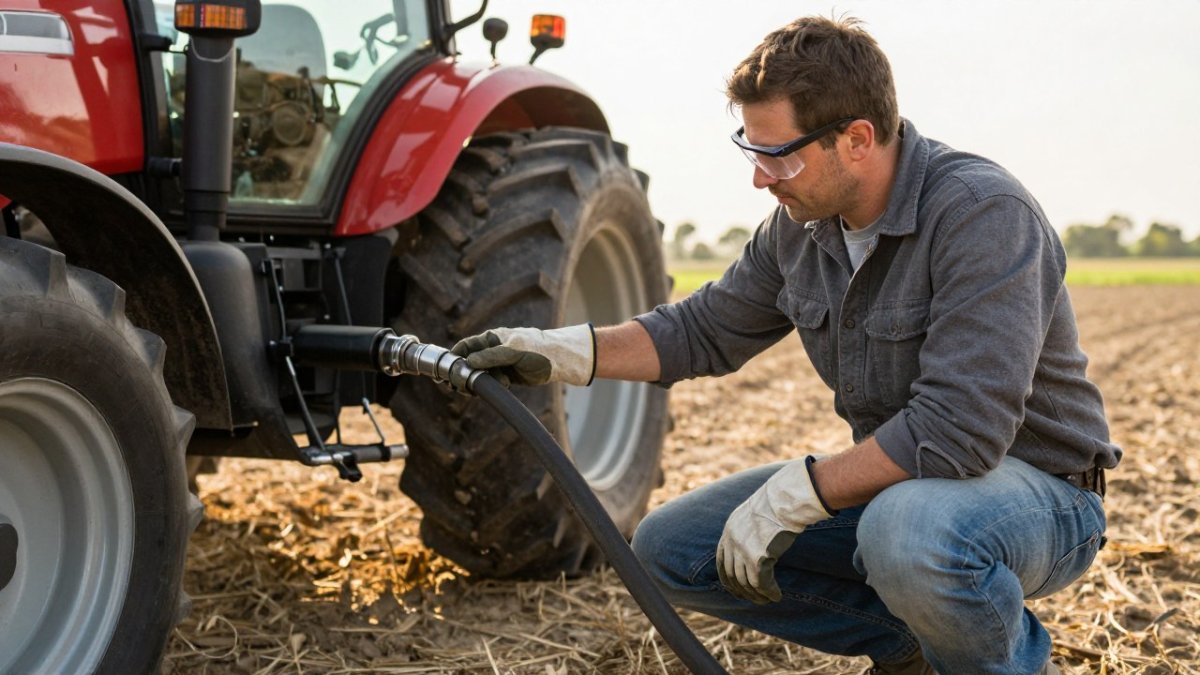
Route new hoses away from exhaust components and sharp frame edges, and use the correct bend radius. When inspection turns up a scored or bent cylinder rod rather than a hose, that is a machining job, and our rod and shaft repair service covers bent, worn, and scored rods along with bushings, pins, and adapters.
Farm Equipment Hydraulic Troubleshooting: Warning Signs and Fixes
Farm equipment hydraulic troubleshooting starts with three questions: is it hot, is it noisy, and is it weak? Each symptom points to a different part of the system, and diagnosing in that order saves hours of parts-swapping.
Overheating, Noise, and Weak Cylinders
Overheating usually means restricted flow or wrong fluid. Check the filter indicator and cooler fins first. A whining pump under load often signals aeration from a low reservoir or a sucking air leak on the inlet side.
Watch out: never troubleshoot a pressurized system with bare hands. Lower the implement, shut off the engine, and relieve pressure at the valve before cracking any fitting.
Contamination Control and Filter Service
Contamination control is the discipline that separates a 5,000-hour machine from a 15,000-hour machine. Dust, water, and wear debris are the three killers, and filtration is your only defense.
Change filters at the manual's interval or whenever the restriction indicator trips, and never clean and reuse a filter element. Store oil drums indoors and pump through a filter cart. A $3.2 million Department of Energy project to optimize tractor hydraulics, reported by Plant Engineering coverage of the DOE tractor efficiency project, underlines how much efficiency rides on clean, correctly specified fluid.
When to Call for Cylinder Repair and Custom Machining
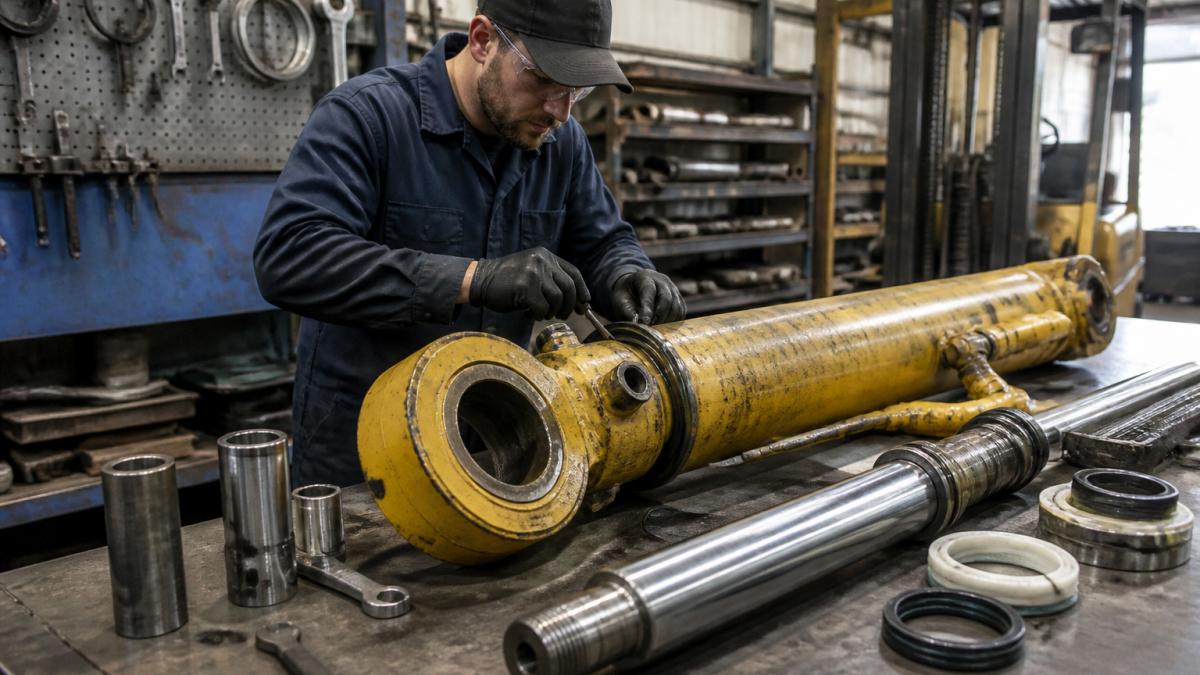
Call for cylinder repair when a rod is scored, a barrel is dented, a seal weeps after resealing, or a cylinder drifts under load. We handle hydraulic cylinder repair for leaking, damaged, or worn cylinders, and our rebuild and reseal service covers inspection, new seals, honing, reassembly, and testing. Before you commit, read our guide to cylinder repair turnaround time, or call or text us photos of the part for a straight answer on scope and schedule.
Your equipment will fail at the worst possible moment unless the maintenance routine catches the problem first. Build the checklist, keep the fluid clean, and know when a repair has moved beyond what a filter change can fix. Brothers Hydraulics LLC offers fast turnaround and the machining capability to manufacture hard-to-find components so your machine gets back to work. For current pricing, visit the Brothers Hydraulics LLC website or request a quote.
Frequently Asked Questions
What are the maintenance tasks for a hydraulic system?
Routine hydraulic maintenance covers fluid level and condition checks, filter replacement at the manufacturer's interval, hose and fitting inspections, and monitoring for leaks, noise, and overheating. Keep a log of every service so you can spot trends before a pump or cylinder fails. A written agricultural hydraulic system maintenance checklist makes these tasks repeatable across every machine on the farm.
How often should you change hydraulic fluid in farm equipment?
The tractor hydraulic fluid change interval varies by manufacturer, set by the manufacturer for your model. Dusty, hot conditions shorten that window. Check the operator's manual for your specific model, and test fluid condition if you are unsure. Contaminated fluid accelerates pump wear, so changing it on schedule costs far less than a rebuild.
How can you tell if agricultural hydraulic fluid is contaminated?
Milky or cloudy fluid signals water contamination, while dark fluid with grit or a burnt smell points to heat and particle buildup. Clogged filters are an early warning sign. Send a sample for lab testing if you suspect contamination, then fix the source rather than just replacing fluid.
What causes a hydraulic system to overheat?
Overheating usually traces to low fluid, a restricted filter, a failing pump, or a relief valve stuck open. High ambient temperatures and heavy working loads make it worse. Check fluid level and condition first, then inspect the cooler and relief settings. Persistent overheating damages seals and accelerates wear, so diagnose it early with a pressure and temperature check.
How do you safely inspect hydraulic hoses and fittings?
Lower the implement, shut off the engine, and relieve pressure before touching any hose or fitting. Wear gloves and eye protection. Look for cracks, bulges, abrasion, and weeping fittings, and replace any hose showing damage rather than patching it. Never use your hand to search for a pinhole leak under pressure; use a piece of cardboard instead.
When should a hydraulic cylinder be repaired or replaced?
Repair is usually the better call when the barrel and rod are sound and the problem is seals, scoring, or a bent rod. Replacement makes sense when the barrel is cracked or the rod is deeply damaged beyond machining. A shop that offers precision machining and custom parts can often restore older cylinders that parts suppliers no longer support, keeping equipment in service instead of idle.