 Ultimate guide
How to Use Precision Machining to Keep Mining Equipment Running
Last Updated: November 22, 2026
Quick Summary
Precision machining is vital for mining equipment because it controls the fit, finish, and tolerance of every load-bearing surface, preventing early failures under impact loads, abrasion, and constant vibration. A component machined a few thousandths of an inch off will not fail immediately, but it will fail early and take neighboring parts with it.
- CNC machining holds tight tolerances and consistent finishes so part ten matches part one.
- A journal machined undersize lets the bearing spin; oversize will not seat without force.
- Rough surface finishes create stress risers where fatigue cracks start on shafts.
- Heat treatment must follow machining, then finish-grind critical surfaces to final dimension.
- Ordering a close enough catalog part usually returns as a leak or premature failure.
Table of Contents
- Why Precision Machining Is Vital for Mining Equipment
- How CNC Machining for Mining Equipment Extends Component Life
- Custom Mining Equipment Parts: Solving Obsolete and Hard-to-Find Components
- Precision-Machined Hydraulic Components: The Heart of Reliable Mining Machinery
- Mining Equipment Maintenance and Repair: Reducing Downtime with Precision
- Materials, Coatings, and Heat Treatment for Harsh Mining Environments
- Get a Quote for Precision Machining and Hydraulic Repair
- Frequently Asked Questions
Why Precision Machining Is Vital for Mining Equipment
Mining equipment fails at the worst possible moment. A haul truck cylinder rod scores, a crusher shaft wears oval, and a production line stops while crews wait on a replacement part. Precision machining is the discipline that prevents most of those failures, because it controls the fit, finish, and tolerance of every load-bearing surface on the machine. In this guide, This guide breaks down why machining quality decides how long mining machinery survives, and how to specify it correctly.
The core problem is simple: mining equipment operates under impact loads, abrasion, and constant vibration. A component machined a few thousandths of an inch off will not fail immediately. It will fail early, and it will take neighboring parts with it.
Precision machining is the controlled removal of material from a workpiece to achieve a specified dimension, surface finish, and geometric tolerance. In mining applications, that control is what separates a component that lasts a full service interval from one that fails mid-shift.
Below, we cover how CNC work extends component life, why custom parts solve obsolescence, and where hydraulic precision actually pays off.
How CNC Machining for Mining Equipment Extends Component Life
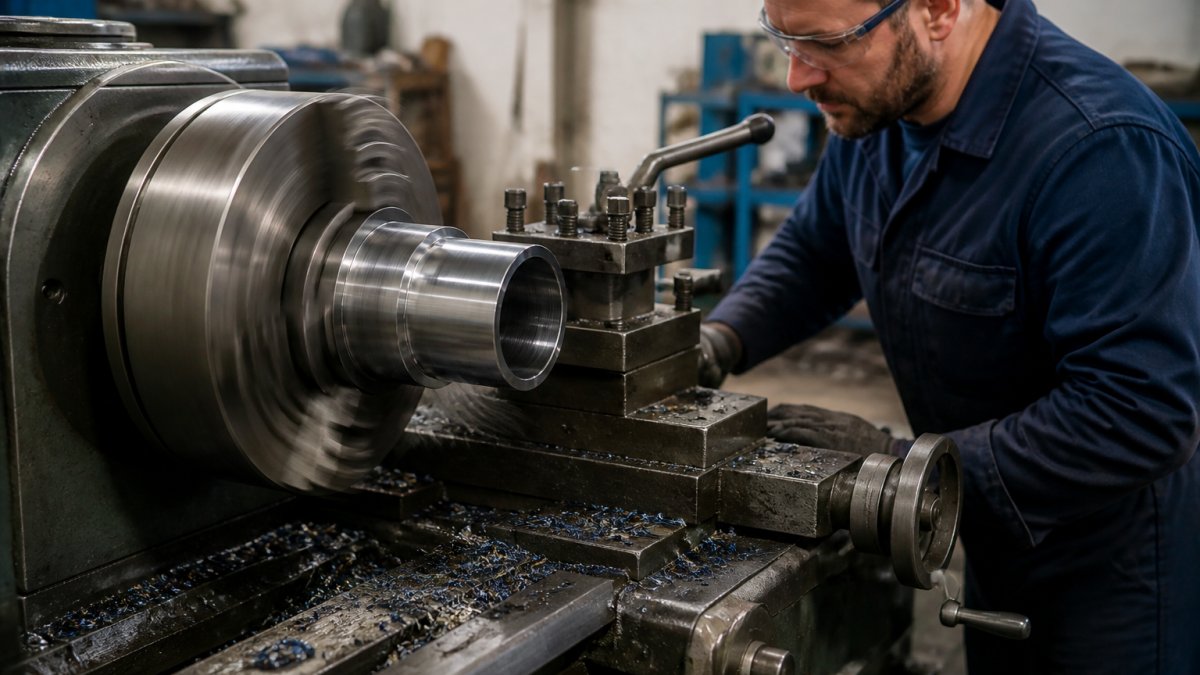
CNC machining for mining equipment extends component life by holding tight tolerances and consistent surface finishes across every part, run after run. Manual machining depends on operator feel. CNC depends on programmed toolpaths and measured offsets, so part ten matches part one.
Three factors drive the longevity gain:
- Dimensional accuracy. Bearing journals and seal surfaces must sit within specification. A journal machined undersize lets the bearing spin; one machined oversize will not seat without force.
- Surface finish. Rough finishes create stress risers where cracks start. A controlled finish on a shaft reduces the initiation points for fatigue failure.
- Part consistency. When a replacement part matches the original specification exactly, it installs without shimming, grinding, or field modification.
What most guides miss is that consistency matters more than any single tight tolerance. A shop that hits the print once is not the same as a shop that hits it on every order. Our in-house machine shop exists for exactly that reason: lathe work, custom parts in steel, aluminum and bronze, and hard-to-find components machined to print.
Where the tolerances actually land on mining components
General statements about "tight tolerances" are not useful on the shop floor. The practical question is which features on which parts carry the tolerance, and why. A few common patterns show how machining decisions map to equipment:
- Crusher shafts and eccentric bushings. The shaft journal and the bushing bore set the crush setting and the load path. If the journal is out of round, the bushing wears unevenly and the crusher starts producing off-spec material before the bearing fails outright.
- Conveyor drive pulleys and reducer shafts. Keyways, bearing seats, and seal journals must align so the reducer and pulley run concentric. Misalignment shows up as vibration, then as premature bearing and seal failure.
- Drilling rig rotary heads and top-drive components. Splines, seal bores, and bearing fits take both torque and impact. A spline cut with the wrong flank contact pattern concentrates load on a few teeth and shortens the whole assembly's life.
- Haul truck hydraulic cylinder rods and bores. Rod diameter, straightness, and surface finish control seal life. A rod that is straight but finished too rough will cut seals; a rod that is smooth but bent will leak no matter how good the finish is.
- Slurry pump shafts and wear liners. Shaft runout and liner fit determine how long the pump runs before vibration and leakage force a rebuild.
Tolerance, inspection, and traceability in practice
A machine shop that only talks about accuracy is telling you half the story. The other half is how the shop verifies the part and proves it later.
Why consistency beats a single tight tolerance
The economic case for CNC work is not that any one part is dramatically better than a skilled manual machinist can produce. It is that the tenth, fiftieth, and hundredth part match the first.
These are the mining components where machining decisions map directly to equipment life.
| Component | Critical features | Why it matters |
|---|---|---|
| Crusher shafts and eccentric bushings | Shaft journal and bushing bore | Out-of-round journal wears bushing unevenly |
| Conveyor drive pulleys and reducer shafts | Keyways, bearing seats, seal journals | Misalignment shows up as vibration, then bearing failure |
| Drilling rig rotary heads and top-drive components | Splines, seal bores, bearing fits | Wrong spline flank pattern concentrates load on few teeth |
| Haul truck hydraulic cylinder rods and bores | Rod diameter, straightness, surface finish | Rough finish cuts seals; bent rod leaks regardless |
| Slurry pump shafts and wear liners | Shaft runout and liner fit | Determine run time before vibration and leakage |
Custom Mining Equipment Parts: Solving Obsolete and Hard-to-Find Components
Obsolete parts are the quiet killer of mining uptime. Equipment built fifteen or twenty years ago often has no OEM support path, and a single discontinued seal gland or adapter can idle a machine for weeks.
That approach matters most for:
- Discontinued cylinder glands, pistons, and end caps
- Custom adapters and bushings with no catalog equivalent
- Shafts and rods fabricated to measured dimensions rather than a part number
A common mistake is ordering a "close enough" catalog part and forcing it to fit. That shortcut usually returns as a leak or a premature failure within a few months.
Precision-Machined Hydraulic Components: The Heart of Reliable Mining Machinery
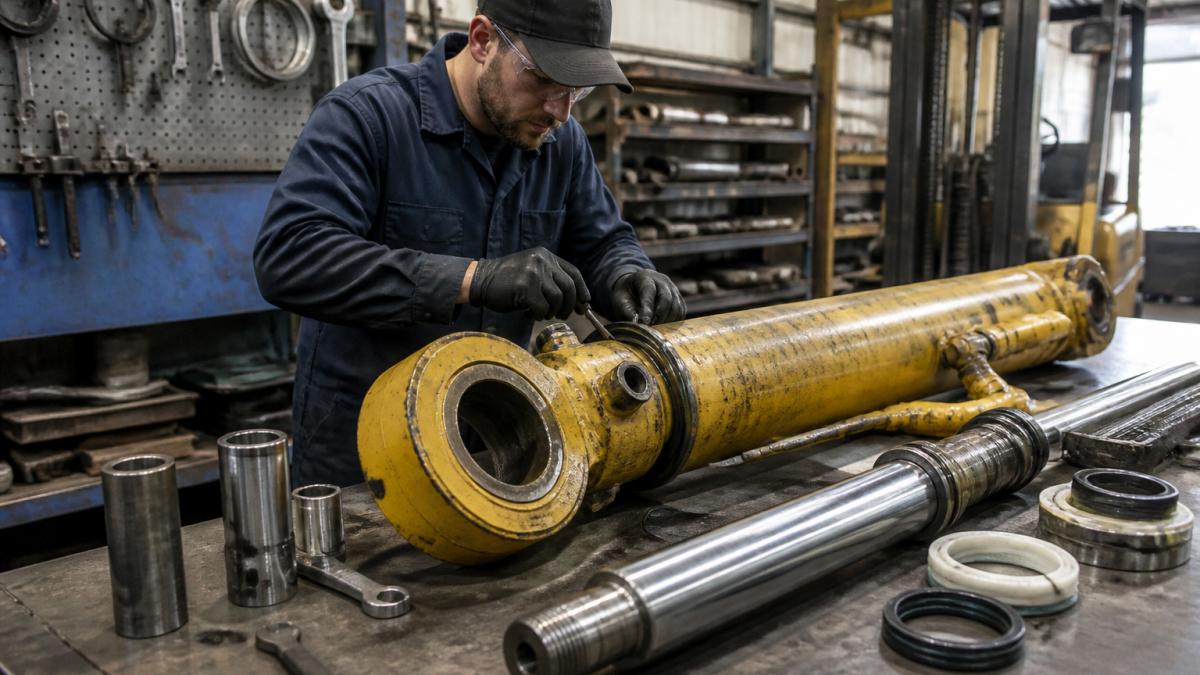
Precision-machined hydraulic components determine whether a mining machine delivers reliable force or leaks it away. Cylinder bores, piston rods, and seal surfaces work at high pressure, and small deviations show up fast.
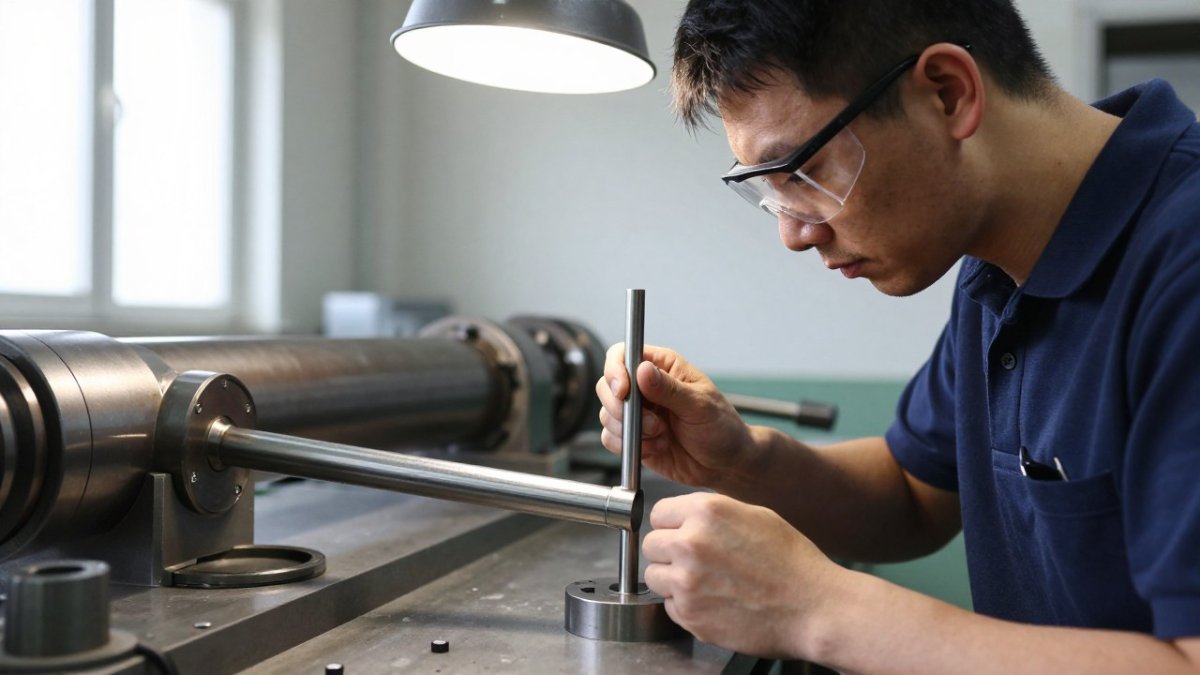
Rod condition is a common cause of cylinder failure. A scored or bent rod can tear seals and contaminate the fluid.
When a cylinder is beyond field repair, our hydraulic cylinder repair service handles leaking, damaged, and worn cylinders for construction, industrial, agricultural, and heavy equipment, putting precision-machined components back to work.
Mining Equipment Maintenance and Repair: Reducing Downtime with Precision
Downtime in mining is a scheduling problem as much as a mechanical one. Every hour a machine sits, the operation loses production it cannot recover later. Precision work compresses that window in two ways: faster diagnosis and parts that fit on the first install.
Preventive maintenance catches wear before failure. Measuring rod runout, checking bore dimensions, and inspecting seal surfaces during scheduled service identifies a worn component while it is still a planned repair. Unplanned maintenance happens when those checks are skipped.
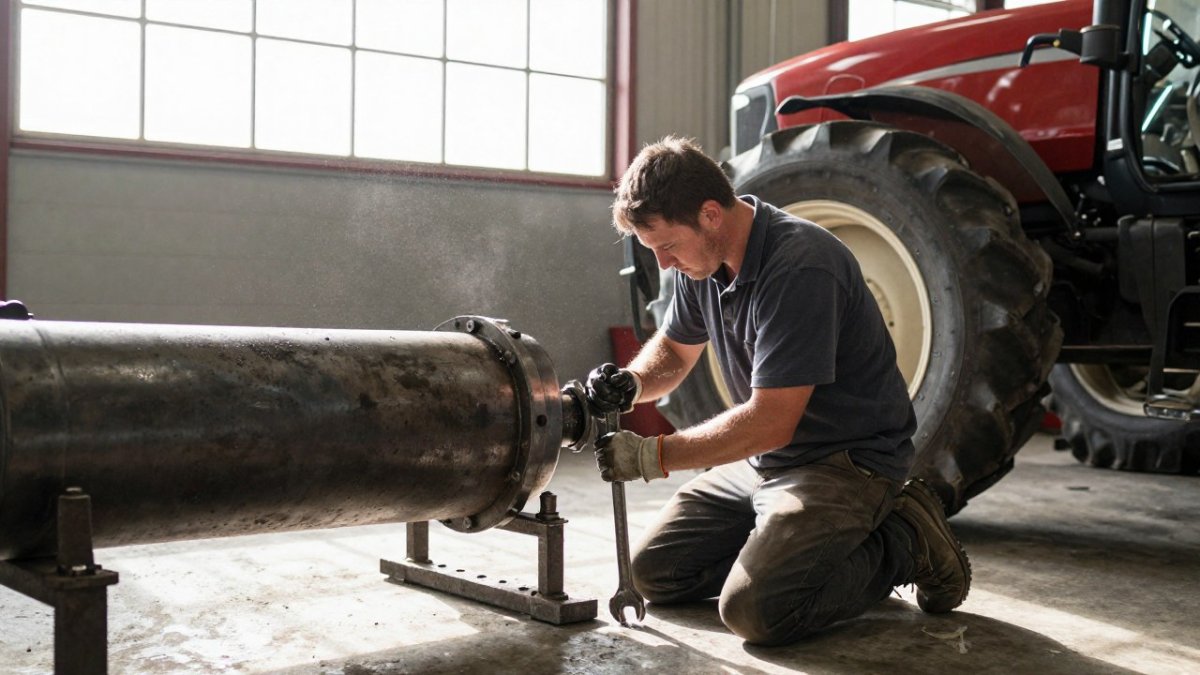
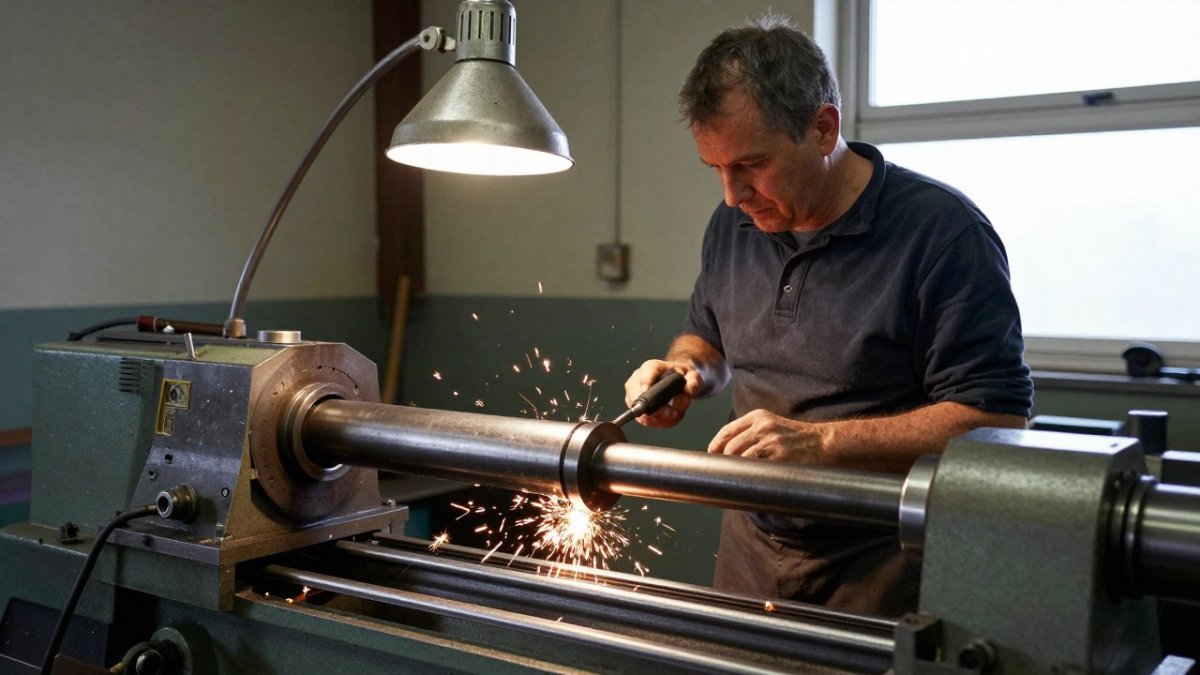
Turnaround time is where shop choice matters. A repair that requires re-machining a rod, fabricating a bushing, and pressing in new pins moves only as fast as the slowest step. Shops that machine in-house control that step. Our shaft and hydraulic rod repair covers bent, worn, or scored rods and shafts, plus bushings, pins, and adapters.
Materials, Coatings, and Heat Treatment for Harsh Mining Environments
Material selection is where mining applications diverge from general machining. A part that performs well in a clean plant can fail quickly underground, where abrasion and impact loads dominate. The useful way to think about it is to match the material and surface treatment to the dominant wear mechanism on that component, in that mine condition.
Match the treatment to the failure mode
Mining component failures commonly trace back to mechanisms such as abrasion, impact, corrosion, or fatigue.
How mine conditions change the requirement
The same component can need different treatment depending on where it runs. A common pattern is that underground operations emphasize corrosion and confined-space serviceability, while surface operations emphasize abrasion and impact from larger material handling. Wet conditions push toward corrosion-resistant coatings and sealed fits; dusty conditions push toward wear-resistant surfaces and filtration that keeps grit out of hydraulic systems. The practical takeaway is that material and coating choices should be made against the actual operating environment, not against a generic "mining" specification.
Heat treatment sequence matters
Heat treatment must follow machining, not replace it. A hardened part machined out of tolerance is still out of tolerance, just harder. The sequence is: machine to specification, heat treat, then finish-grind critical surfaces to final dimension. Skipping the finish grind after heat treatment is a common shortcut that leaves distortion in the part and shows up later as runout, vibration, or seal leakage.
Inspection closes the loop
Tolerance and inspection close the loop. Critical dimensions get verified before a part leaves the shop, because a component that fails inspection on the bench is far cheaper than one that fails on the machine. For coated and heat-treated parts, that means checking coating thickness, hardness, and final dimensions after treatment, not just before. A shop that records those results gives you a part you can install with confidence and a paper trail you can use if something goes wrong in service.
Get a Quote for Precision Machining and Hydraulic Repair
The difference between a repair that holds and one that comes back usually comes down to machining discipline: correct tolerances, correct materials, and a shop that controls both in-house. If a cylinder, rod, or obsolete component is holding up production, the fastest path forward is a direct conversation about the part.
Have the details ready: equipment type, component, and the failure you observed. Photos help. Call (602) 675-1710 or text photos of your cylinder or part during business hours, Monday through Friday, 7:30 AM to 4:00 PM.
We have been machining and repairing heavy-duty hydraulic equipment since 2013, with fast turnaround times. Pricing depends on the job, and current prices or a quote are available on the Brothers Hydraulics LLC website.
Precision work is what keeps mining machinery productive, and the right shop makes the difference between a patch and a permanent fix. Brothers Hydraulics LLC combines in-house machining, custom parts fabrication, and hydraulic cylinder repair under one roof, so a worn component does not wait on an outside vendor. Get started with Brothers Hydraulics LLC and get your equipment back to work quickly.
Frequently Asked Questions
How does precision machining improve mining equipment reliability?
Precision machining improves reliability by holding tight tolerances on mating parts, which reduces vibration, misalignment, and premature wear. When components like hydraulic cylinder rods, bushings, and pins fit exactly to original specifications, they distribute loads evenly and avoid the stress concentrations that lead to cracks and failures. CNC-produced parts also deliver part consistency from one batch to the next, so a replacement performs like the original rather than introducing a new weak point.
Can custom-machined parts replace hard-to-find mining equipment components?
Yes. When a part is discontinued or has a long lead time, a machine shop can reverse-engineer it from a sample or drawing and produce a custom replacement. This is especially useful for older equipment where original specifications are still available but suppliers have moved on.
What materials are commonly used for precision-machined mining components?
The choice of material depends on the load, abrasion, and impact the part sees. A machining partner should recommend the material based on the specific equipment and operating conditions.
How do you choose a precision machining provider for mining parts?
Look for a shop with experience in heavy-duty equipment and hydraulic components, not just general job work. Ask about their inspection process, tolerances they can hold, and how they document quality. Confirm they can source or manufacture obsolete parts and that they offer repair services, not just new parts. Turnaround time matters too, so ask for a realistic schedule. Request a quote with a clear scope so you avoid surprise charges.