 Ultimate guide
Fixed Price Hydraulic Cylinder Repair Services in 2026
Table of Contents
- Why Fixed Price Hydraulic Cylinder Repair Services Matter
- Signs of Hydraulic Cylinder Failure You Should Not Ignore
- Hydraulic Cylinder Repair Cost Guide: What Drives the Price
- How to Replace Hydraulic Cylinder Seals
- What Is Included in Fixed Price Hydraulic Cylinder Repair Services
- Turnaround Times and How to Get Started
- Frequently Asked Questions
Last Updated: October 7, 2026
Why Fixed Price Hydraulic Cylinder Repair Services Matter
When a hydraulic cylinder fails, the repair bill is rarely the real problem. The uncertainty is. Fleets lose more money to open-ended shop estimates and surprise charges than they do to the repair itself, and that is exactly what fixed price hydraulic cylinder repair services are designed to eliminate.
Fixed price hydraulic cylinder repair services are repair offerings where the provider quotes a set price for a defined scope of work before the cylinder is torn down, so the customer knows the total cost up front instead of paying by the hour plus parts. That single change, from hourly billing to a quoted price, shifts the risk of the job back onto the shop where it belongs.
At Brothers Hydraulics LLC, we have been repairing and machining hydraulic components since 2013, and the pricing question is the one we hear most often from fleet managers and plant supervisors. The objection is always the same: "We got quoted one number and paid another." Fixed pricing removes that gap. You approve a number, we do the work, and the number does not move.
Signs of Hydraulic Cylinder Failure You Should Not Ignore
A failing cylinder almost always announces itself before it dies. The problem is that the early warnings look like minor annoyances, so they get logged and ignored until the machine is down and the schedule is already blown.
Warning Signs That Point to a Failing Cylinder
- External seepage around the rod or gland. A thin film of oil that keeps coming back after you wipe it is a seal on its way out.
- Slow, drifting, or spongy movement. If a boom settles under load or a cylinder hesitates, internal bypass is likely.
- Chatter, squealing, or uneven stroke. Air, contamination, or a scored bore is usually behind it.
- Visible rod damage. Nicks, pitting, or rust on the chrome rod will shred a new seal in short order.
- Overheating. A cylinder running hotter than its neighbors is working harder than it should.
- Fluid that looks milky or dark. Water or metal debris in the oil points to a system-wide problem, not just one cylinder.
What most operators miss is that several of these symptoms share a root cause: contamination. Replacing a seal without addressing dirty fluid just schedules the next failure. A proper diagnosis looks at the whole circuit, not only the leaking part.
Hydraulic Cylinder Repair Cost Guide: What Drives the Price
There is no single number for a hydraulic cylinder repair, and any shop that quotes one without seeing the unit is guessing. What drives the price is the scope of work, and scope depends on what is actually wrong inside the cylinder.
The main cost drivers are:
- Seal kits and gland components. Standard seals are straightforward; obsolete or discontinued seals require sourcing or custom manufacturing.
- Rod condition. A scored or bent rod needs rechroming or replacement, which is the single biggest variable in most jobs.
- Bore condition. Honing or re-sleeving a damaged barrel adds labor and machining time.
- Cylinder size and configuration. A large-bore telescopic cylinder takes more time and material than a small steering cylinder.
- Turnaround urgency. Rush jobs carry a premium because they jump the queue.
Pricing for our fixed price hydraulic cylinder repair services depends on the specific unit and scope. You can find current pricing information on our website.
Repair or Replace: Making the Right Call
Replacement is usually the wrong answer for heavy equipment. A new OEM cylinder can carry a long lead time, and for older machines the part may be discontinued entirely. Repair keeps the original mounting geometry and gets the unit back into service faster.
The exception is a cylinder with a cracked barrel or a bent, unrepairable rod where the cost of restoration approaches replacement. A good shop will tell you honestly when that line is crossed.
| Situation | Recommended Path | Why |
|---|---|---|
| Leaking seals, sound rod and bore | Seal replacement | Lowest cost, fastest turnaround |
| Scored or pitted rod | Rechrome or rod replacement | Restores sealing surface |
| Damaged bore | Honing or re-sleeving | Salvages the barrel |
| Discontinued or obsolete part | Custom fabrication | Keeps legacy equipment running |
| Cracked barrel, bent rod | Evaluate replacement | Restoration may not be economical |
How to Replace Hydraulic Cylinder Seals
Knowing how to replace hydraulic cylinder seals is useful even if you send the work out, because it tells you what a proper job involves and what corners a cheap shop might cut.
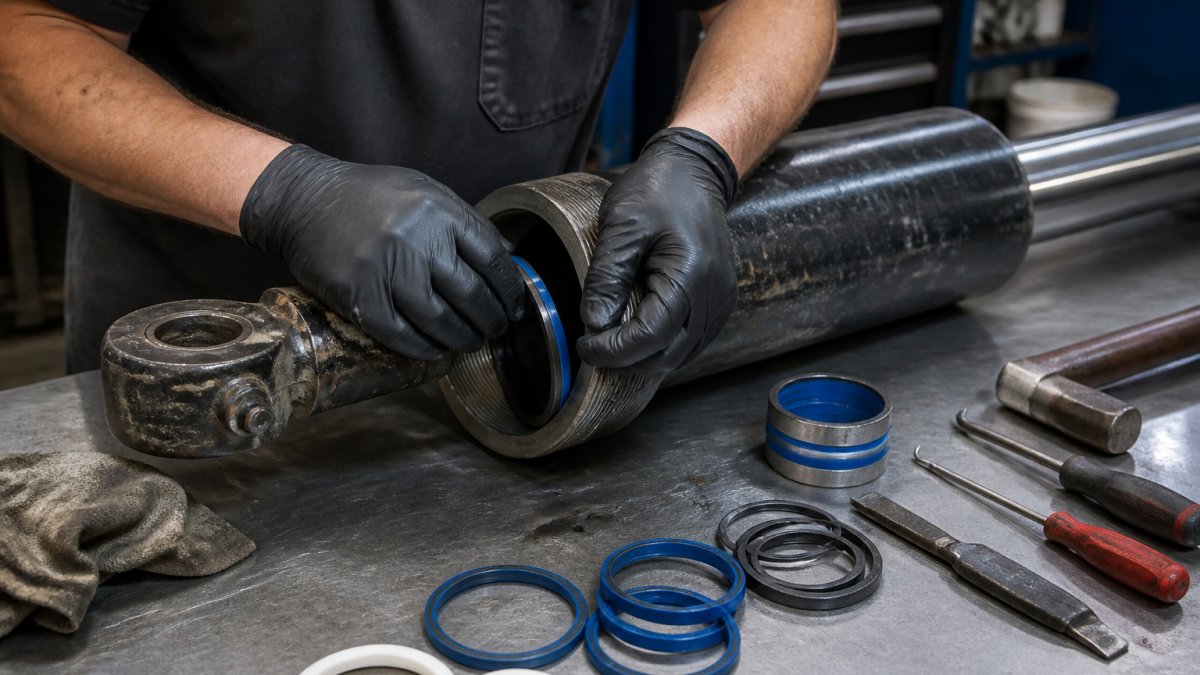
The process runs in a fixed sequence:
- Depressurize and drain. Release all system pressure and drain the cylinder before opening anything.
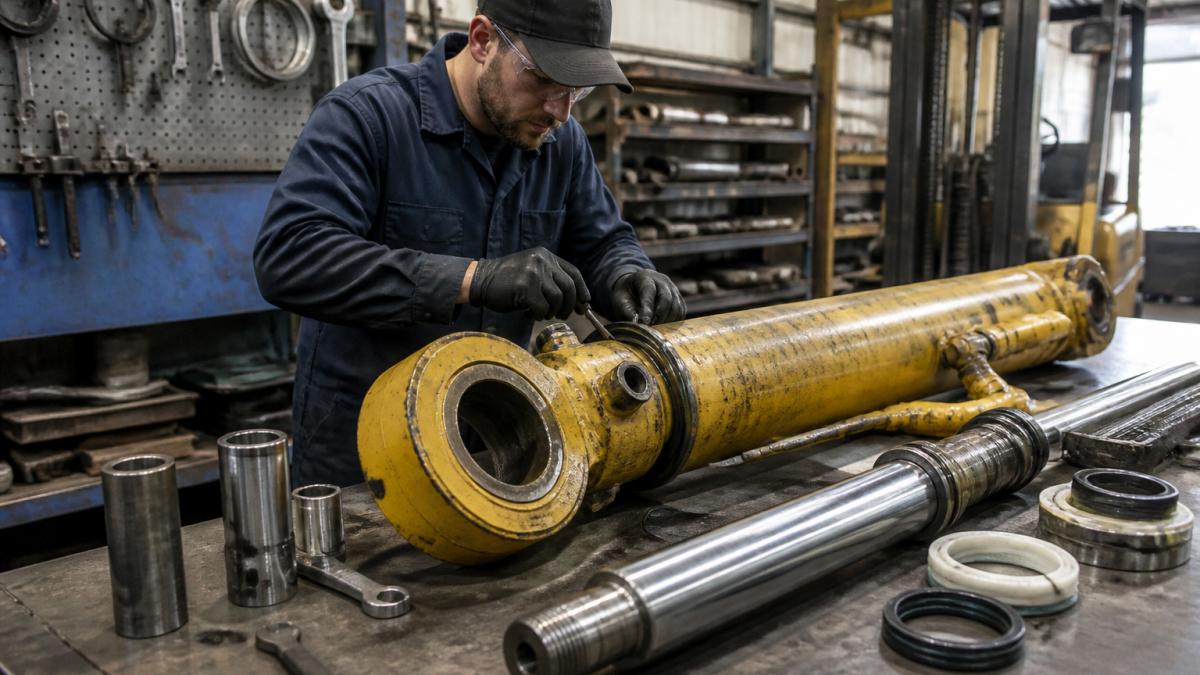
- Disassemble cleanly. Remove the gland and pull the rod and piston, keeping every component labeled and in order.
- Inspect every surface. Check the rod for scoring, the bore for wear, and the gland for cracks. This is where the real diagnosis happens.
- Clean thoroughly. Any grit left behind will destroy the new seals. Cleanliness is not optional.
- Install the new seals. Use the correct seal kit, lubricate seals with clean hydraulic oil, and seat them without twisting or nicking.
- Reassemble and torque to spec. Follow the manufacturer's torque values and bleed air from the circuit.
- Test under pressure. Cycle the cylinder and check for leaks and drift before it goes back into service.
The step most DIY attempts get wrong is number three. If the rod is scored and you install new seals over it, the seals fail again quickly. That is why a proper repair often includes rechroming the rod, not just a seal swap.
What Is Included in Fixed Price Hydraulic Cylinder Repair Services
A fixed price is only meaningful if you know exactly what it covers. The scope should be defined in writing before work begins, so there is no room for interpretation later.
What the Fixed Price Covers
- Full teardown and inspection of the cylinder.
- Seal replacement using the correct seal kit for the application.
- Rod and bore assessment, with any rechroming or honing quoted as part of the agreed scope.
- Cleaning and reassembly to manufacturer specifications.
- Pressure testing before the unit leaves the shop.
- Custom part fabrication when a component is obsolete or hard to find, quoted up front.
What a fixed price does not cover is damage discovered only after teardown that was not visible from the outside. The right way to handle that is a phone call: we stop, explain what we found, and give you a revised number to approve before continuing. No surprise line items, no work done without your sign-off.
Since 2013, this approach has kept Brothers Hydraulics LLC customers coming back.
Turnaround Times and How to Get Started
Turnaround depends on the job. A straightforward seal replacement moves quickly; a cylinder that needs a new rod manufactured or a barrel honed takes longer, and obsolete parts add sourcing or fabrication time.
The honest answer is that we quote a timeline when we see the unit, and we tell you what is driving it. For equipment that cannot easily be moved, such as tow trucks and hydraulic breakers, we can discuss on-site diagnosis.
Getting started takes three steps:
- Send us the details. Cylinder make, model, and the symptoms you are seeing.
- Get your fixed quote. We confirm scope and price before any work begins.
- Approve and schedule. Once you sign off, we get it into the queue and back to work.
Current pricing and contact details are on our website.
Frequently Asked Questions
Is it cheaper to repair or replace a hydraulic cylinder?
Repair is usually cheaper than replacement, especially for custom or obsolete cylinders. Replacing a cylinder can cost several times more than a rebuild. If the barrel and rod are in good condition, a seal kit and labor will get you back to work for far less. Replacement only makes sense when the barrel is scored, the rod is bent beyond repair, or the cylinder is no longer manufactured.
What factors influence the cost of hydraulic cylinder repair?
Several factors affect the cost of hydraulic cylinder repair: cylinder size and type, extent of damage (seals only vs. rod or barrel damage), whether rechroming or machining is needed, and turnaround time. Fixed price hydraulic cylinder repair services quote based on these variables upfront, so you know the total before work begins. Always ask what is included, such as testing and warranty.
How do I know if my hydraulic cylinder needs a rebuild?
Common signs include drifting under load, external leaks around the rod or end cap, unusual noises, slow operation, and visible rod damage like scoring or pitting. If you notice any of these, a rebuild is likely needed. Ignoring early signs can lead to more extensive damage and higher repair costs. A professional inspection can confirm whether a rebuild or just a seal replacement is required.
How long does a professional hydraulic cylinder repair take?
Turnaround varies by shop and cylinder condition. Turnaround varies, and custom parts or extensive machining may add time. When you contact a fixed price hydraulic cylinder repair service, ask for their current lead time and whether rush options are available. Getting a clear timeline upfront helps you plan downtime and avoid surprises.
Hydraulic downtime is expensive, and the last thing you need is a repair bill that grows after the fact. Brothers Hydraulics LLC offers fixed price hydraulic cylinder repair services backed by over a decade of experience, custom fabrication for hard-to-find parts, and fast turnaround times that get your equipment back to work. Get a quote from Brothers Hydraulics LLC and put a firm number on your next repair before the cylinder comes apart.