 How-to
Why Hydraulic Cylinders Fail Prematurely (and How to Stop It)
Last Updated: October 28, 2026
Quick Summary
Most hydraulic cylinders fail prematurely for one of two reasons: contaminated fluid or side loading. Both problems start small and both are cheap to prevent, so catching contamination and misalignment early stops seal damage at the source.
- Common contamination entry points include worn breathers, failed wiper seals, dirty top-off fluid, and cracked hoses.
- Signs of failure include fluid weeping at the gland, drift under load, jerky movement, and a scored rod.
- Check fluid level and color weekly and inspect the rod weekly to catch problems early.
- Check pins and bushings monthly to prevent side loading that damages seals.
- Repair if the bore is clean and the rod is straight; replace if the barrel is cracked or heavily scored.
Table of Contents
- Why Hydraulic Cylinders Fail Prematurely: The Root Causes
- Signs of Hydraulic Cylinder Failure You Should Never Ignore
- Hydraulic Cylinder Seal Failure Causes
- Hydraulic Cylinder Troubleshooting: A Step-by-Step Diagnostic
- Hydraulic Cylinder Maintenance That Prevents Premature Failure
- Repair or Replace: Making the Call on a Failing Cylinder
- Get Your Cylinder Back to Work with Brothers Hydraulics LLC
- Frequently Asked Questions
Why Hydraulic Cylinders Fail Prematurely: The Root Causes
Most hydraulic cylinders fail prematurely for one of two reasons: contaminated fluid or side loading. Both problems start small and both are cheap to prevent.
Contamination: The Silent Killer
Common entry points include:
- Worn breathers and damaged breather caps
- Failed wiper seals that let grit past the rod
- Dirty fluid added during top-offs
- Cracked hoses pulling in air and dust
A peer-reviewed analysis of zero-leak hydraulic cylinder research groups the field's work into fault detection, seal systems and tribology, and modeling. That breakdown matches what we see on the bench: seals and wear are where most failures begin.
Side Loading and Misalignment
For bent, worn, or scored rods, our shaft and hydraulic rod repair service in Phoenix, AZ covers rod repair, bushings, pins, and adapters.
Signs of Hydraulic Cylinder Failure You Should Never Ignore
- Fluid weeping at the gland or rod seal
- The cylinder drifts down when holding a load
- Movement gets slow, jerky, or uneven
- Hissing, knocking, or grinding sounds
- A scored, pitted, or discolored rod
- Fluid that looks milky or dark
Hydraulic Cylinder Seal Failure Causes
If your seals keep failing, the fix is a proper rebuild, not another quick seal swap. Our hydraulic cylinder rebuild and reseal service includes inspection, new seals, component repair, reassembly, and testing so the root cause gets handled, not just the symptom.
Hydraulic Cylinder Troubleshooting: A Step-by-Step Diagnostic
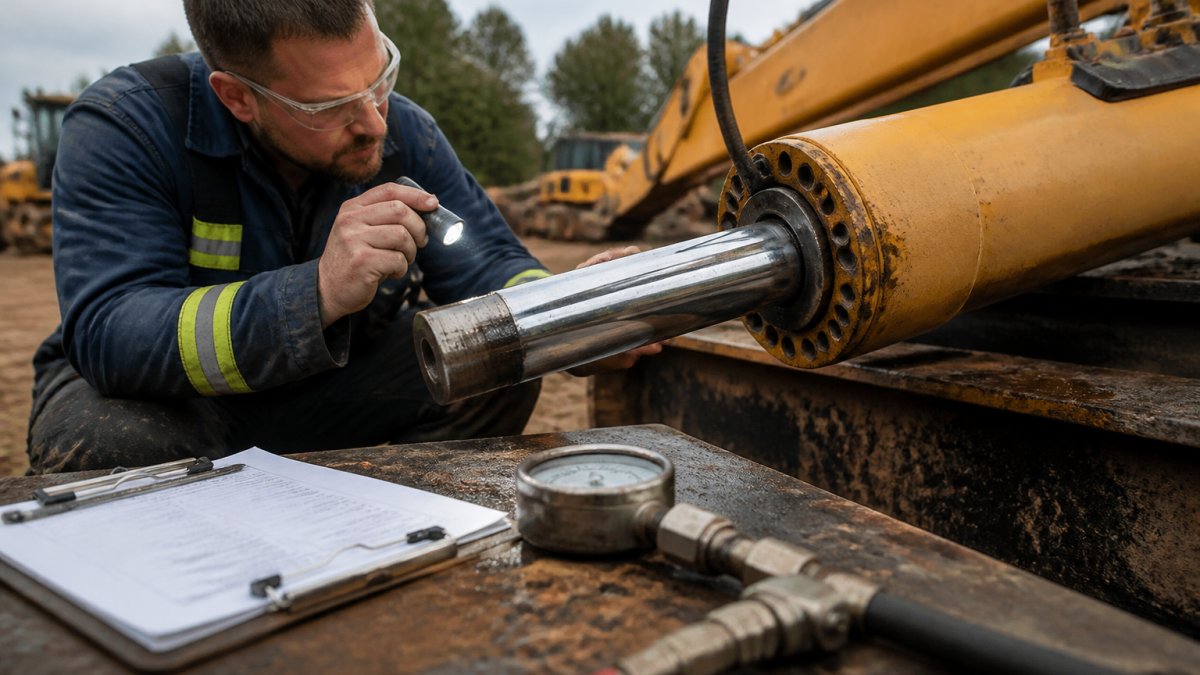
- Check fluid level, color, and smell. Milky or dark fluid means contamination or heat.
- Inspect the rod for scoring, pitting, or bends.
- Look for leaks at the gland, ports, and hose fittings.
- Test for drift under load to confirm internal bypass.
- Check pins, bushings, and mounts for wear that causes side load.
- Verify pressure and flow against the machine's spec.
- Pull the cylinder only after the external checks are done.
Hydraulic Cylinder Maintenance That Prevents Premature Failure
| Task | Frequency | Why It Matters |
|---|---|---|
| Check fluid level and color | Weekly | Catches contamination early |
| Inspect rod for score or bend | Weekly | Stops seal damage at the source |
| Check pins and bushings | Monthly | Prevents side loading |
| Replace breathers and filters | Per schedule | Blocks grit entry |
| Full fluid analysis | Quarterly | Finds water and wear metals |
| Torque and mount check | Quarterly | Keeps alignment true |
Repair or Replace: Making the Call on a Failing Cylinder
- Repair if the bore is clean, the rod is straight, and only seals and wear parts are gone. Hydraulic cylinder repair turnaround time explains how long the shop will have your cylinder.
- Replace if the barrel is cracked or heavily scored beyond honing.
- Rebuild if the part is discontinued and a new one is not available.
Get Your Cylinder Back to Work with Brothers Hydraulics LLC
We have handled hydraulic cylinder repair and precision machining since 2013, with fast turnaround times, fair pricing, and the ability to manufacture hard-to-find or discontinued components.
We support construction, agriculture, industrial, and transportation equipment.
Get started with Brothers Hydraulics LLC and get a quote.
Frequently Asked Questions
What are the most common causes of hydraulic cylinder failure?
The most common causes are fluid contamination, seal wear, side loading, misalignment, corrosion, and overloading. Contamination is often the root problem: dirt and metal particles score the rod and bore, which destroys seals and causes leaks. A 2025 analysis in ResearchSquare grouped hydraulic cylinder research into three clusters, including seal systems and tribology, which shows how central seal performance is to failure. Regular fluid checks and alignment inspections catch most of these before they become breakdowns.
Why do hydraulic cylinder seals fail prematurely?
Seals fail early when the rod or bore is damaged, the fluid is contaminated, or the cylinder runs too hot. Abrasive particles act like sandpaper on the seal lip, and a scored rod tears new seals within weeks. Side loading also distorts the seal groove and lets fluid bypass. Fixing the surface finish and contamination source before installing new seals is the difference between a lasting repair and a repeat failure.
Can contaminated hydraulic fluid damage a cylinder?
Yes. Contaminated fluid is one of the leading causes of premature hydraulic cylinder failure. Particles wear the rod, bore, and seals, while water causes corrosion and breaks down the oil. The damage compounds: worn parts shed more metal, which contaminates the fluid further. Fluid sampling and filter changes are the cheapest prevention you can do, and they often reveal a failing component before it stops a machine.
When should a hydraulic cylinder be repaired or replaced?
Repair is usually the better call when the barrel and rod are within tolerance and the damage is limited to seals, glands, or minor scoring. Replacement makes more sense when the barrel is deeply scored, cracked, or the rod is bent beyond straightening. A shop with machining capability can often rechrome or fabricate a new rod for less than a replacement cylinder, especially on older equipment where parts are hard to find.