 How-to
How to Choose Industrial Hydraulic Component Repair Services
Last Updated: November 15, 2026
Quick Summary
Choose industrial hydraulic component repair services by verifying in-house machining and testing, a full teardown with root-cause analysis, and written test documentation. A competent shop restores pumps, motors, cylinders, valves and power units to OEM tolerances, and quotes labor, parts, machining and testing separately after inspection.
- Full-service shops rebuild pumps, motors, cylinders, valves and power units in-house rather than brokering work out.
- Every repair should follow eight steps from intake and tagging through pressure testing and documentation.
- Repaired pumps, motors and valves should maintain original dimensions, tolerance and clearance limits.
- Repair cost depends on teardown findings, machining scope, parts sourcing, testing and shop workload.
- Ask what pressure and flow the test stand reaches and whether test documentation comes with the component.
Table of Contents
- What Industrial Hydraulic Component Repair Services Should Cover
- Hydraulic Cylinder Repair: Seals, Shafts, and Hard-to-Find Parts
- Hydraulic Pump Repair and Failure Diagnosis
- What Drives Hydraulic Repair Cost and Turnaround Time
- Hydraulic Component Testing and Post-Repair Validation
- Repair or Replace? A Decision Checklist for Plant and Fleet Managers
- How to Vet a Repair Shop Before You Hand Over a Component
- Get a Quote From Brothers Hydraulics LLC
- Frequently Asked Questions
What Industrial Hydraulic Component Repair Services Should Cover
Industrial hydraulic component repair services restore pumps, motors, cylinders, valves and power units to working condition through disassembly, inspection, machining and testing. The global hydraulic components repair market was projected to grow from USD 5.31 billion in 2025 to USD 9.17 billion by 2035, according to Spherical Insights market forecast, which tells you downtime pressure is not going away. Most shops sell you a rebuild. Fewer sell you a diagnosis. Below, we break down what a competent hydraulic component repair shop should actually cover, from tear-down to the test stand, so you can judge a quote before you commit to a repair.
Component Coverage: Pumps, Motors, Cylinders, Valves, and Power Units
Full-service coverage means the shop can take in every major component in the hydraulic system, not just the easy ones. A pump shop that sends cylinders out and a cylinder shop that farms out valve work both add days to your repair turnaround. Ask which components are rebuilt in-house and which are brokered.
- Hydraulic pumps, piston, vane and gear types, including failure analysis on the rotating group
- Hydraulic motors, drive motors, winch motors and gearbox-adjacent units
- Hydraulic cylinders, rod and barrel repair, honing, resealing, shaft fabrication
- Hydraulic valves, directional, pressure and flow control, plus servo valves on precision systems
- Hydraulic power units, reservoir, accumulator and pump-motor assemblies
- Hose assemblies and fittings, replacement and pressure-rated hose fabrication
- Filters and fluid power accessories, contamination control components that protect everything above
The Repair Workflow From Tear-Down to Documentation
A disciplined workflow separates a real repair from a parts swap. The best shops follow the same sequence every time, and they will walk you through it before you commit.
- Intake and tagging, component logged, photographed and assigned a job number
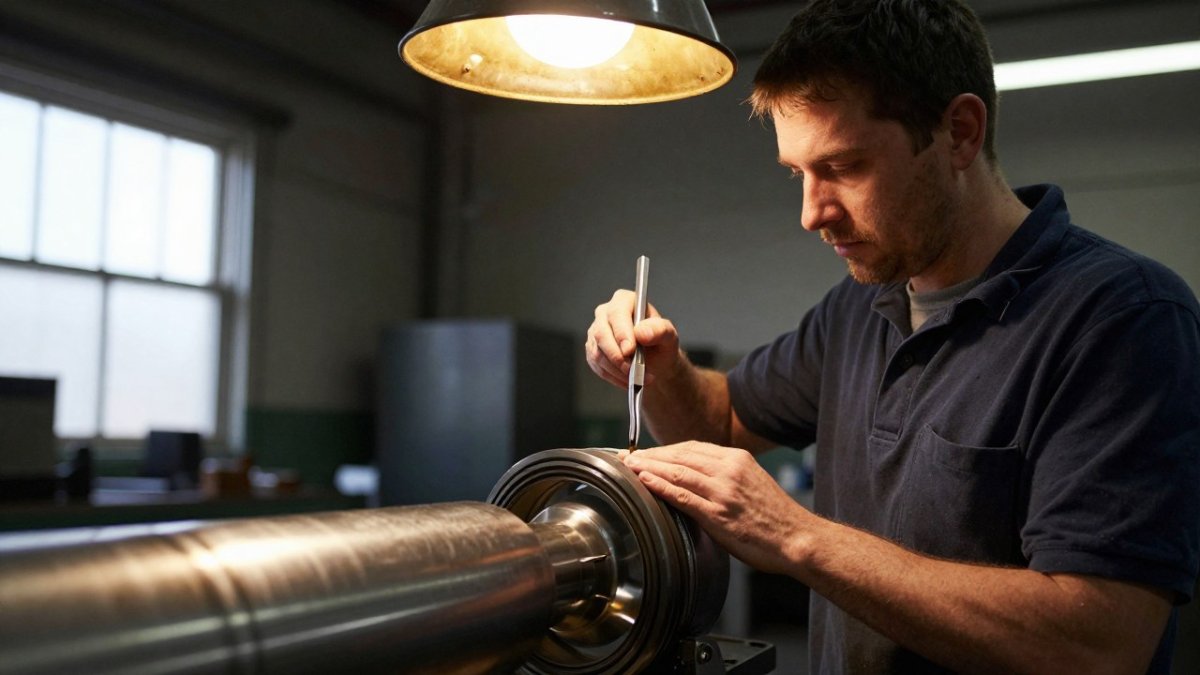
- Complete disassembly, every unit torn down, not just the visibly damaged section
- Inspection and evaluation, measurements against OEM tolerances and clearances
- Root-cause analysis, why it failed, not just what failed
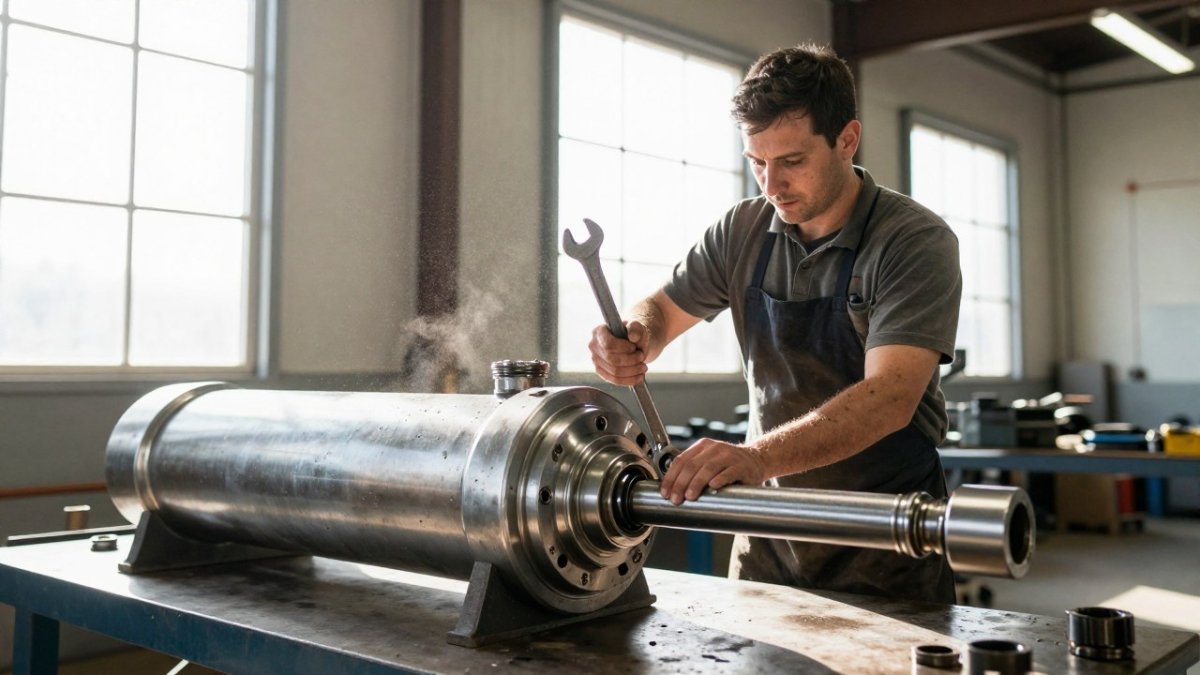
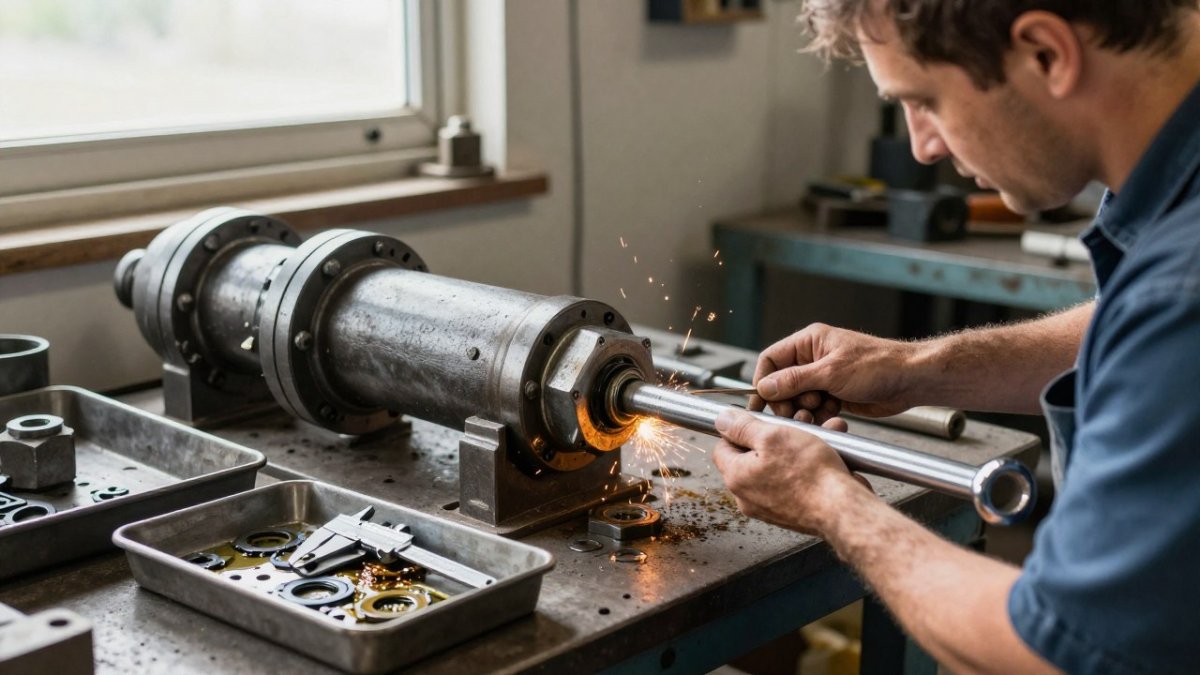
- Machining and component repair, honing, chroming, shaft fabrication, seal replacement
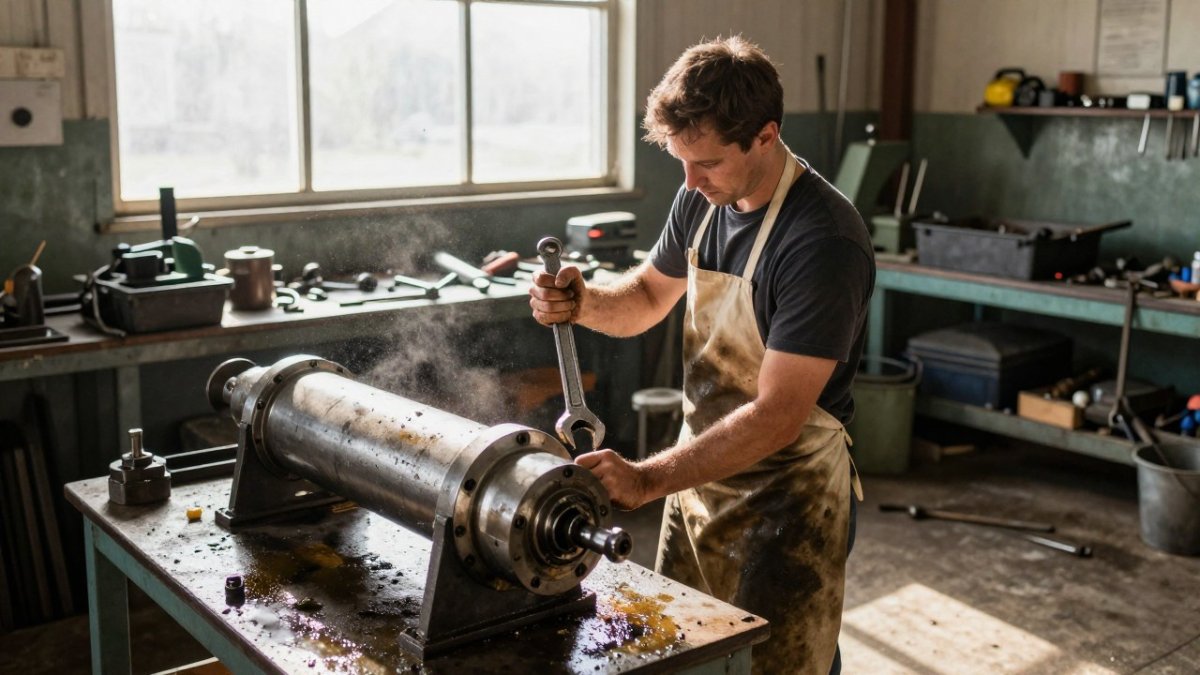
- Reassembly, new seals, correct torque, clean-room discipline
- Pressure testing and validation, test stand verification before release
- Documentation, findings, measurements and test results handed to you
A teardown and evaluation step to identify root causes of failure is the standard to hold any shop to. If a quote arrives without it, you are buying guesswork.
Hydraulic Cylinder Repair: Seals, Shafts, and Hard-to-Find Parts
Hydraulic cylinder repair is a common job in hydraulic shops, and shortcuts there show up quickly. A hydraulic repair guide cautions that repaired pumps, motors and valves should maintain original dimensions, tolerance and clearance limits to meet manufacturer standards, per ML Utilities hydraulic repair guide.
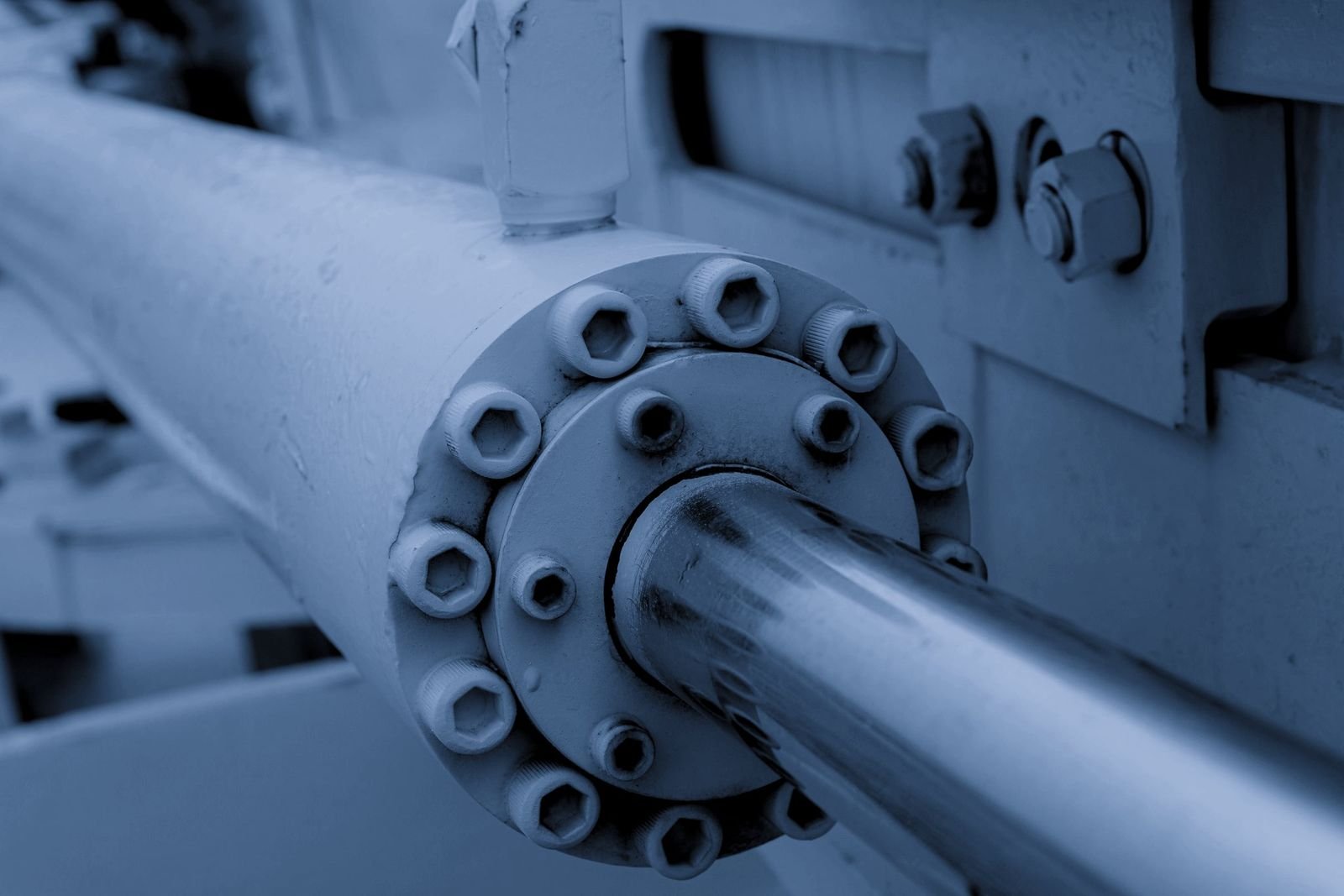
What separates a lasting repair from a three-month callback:
- Seal replacement with the right compound, matching seal material to fluid type and operating temperature
- Rod repair or replacement, bent, scored or worn rods reworked or fabricated new
- Honing and bore restoration, removing scoring and out-of-round wear inside the barrel
- Hard-to-find and discontinued parts, manufactured to print when OEM supply is gone
That last point matters more than most buyers expect. Older equipment is where parts availability quietly kills projects. Our hydraulic cylinder rebuild and reseal service covers inspection, new seals, honing and testing, our shaft and hydraulic rod repair handles bent and scored rods plus bushings and pins, and our in-house machine shop manufactures discontinued and hard-to-find components to specification.
Hydraulic Pump Repair and Failure Diagnosis
Hydraulic pump repair starts with failure diagnosis, because a pump that failed from contamination will fail again if you only replace the worn parts. A 2023 SpringerLink chapter on predictive maintenance for hydraulic components describes a Bosch case study applying predictive maintenance to hydraulic systems, and the lesson is simple: catch degradation before catastrophic failure. Most pumps do not die of old age. They die of dirty fluid, heat or aeration.
Common failure symptoms and what they usually mean:
| Symptom | Likely Root Cause | Diagnostic Step |
|---|---|---|
| Loss of pressure or slow cycle | Internal wear, worn piston/slipper group | Flow and pressure test on test stand |
| Overheating | Fluid viscosity, cooler restriction, internal leakage | Temperature and case drain check |
| Noise or whine | Aeration, cavitation, inlet restriction | Inlet vacuum and fluid level inspection |
| Metal in fluid | Component wear, pump or motor breaking down | Fluid sampling and filter inspection |
Root-cause analysis is the difference between a repair and a repeat visit. A shop that rebuilds the pump without asking where the metal came from has not fixed your system.
What Drives Hydraulic Repair Cost and Turnaround Time
Hydraulic repair cost depends on component type, damage severity, parts availability and whether machining is required, so any shop quoting a flat number before teardown is guessing. That does not mean you should accept a blank check.
What drives the estimate:
- Teardown findings. Hidden damage found after disassembly is the single biggest cost variable. A unit that looked like a reseal can turn into a barrel hone and a new rod once it is open.
- Machining scope. Honing, chroming, boring, welding and shaft fabrication add labor and lead time. In-house machining usually shortens the schedule; subcontracted machining adds a handoff.
- Parts sourcing. OEM availability versus custom manufacturing for obsolete components. A part on the shelf is days; a part made to print is weeks.
- Testing requirements. Full test stand validation adds time but prevents comebacks, and a shop that skips it is transferring risk to you.
- Shop workload. Turnaround slips when a shop overbooks. Ask for a realistic date after teardown, not a guaranteed date before inspection.
What a realistic timeline looks like. Turnaround depends on the teardown findings, the parts required and current shop workload. Ask any shop for a realistic date after teardown, and for a range by component type, so you can plan your downtime.
How to read a quote. A useful quote separates labor, parts, machining and testing so you can see where the money goes, states what happens if teardown reveals more damage, and names the warranty terms.
Be cautious of a quote that is dramatically lower than the others, since it may leave out teardown evaluation and post-repair testing.
For a deeper breakdown of scheduling expectations, read our guide to hydraulic cylinder repair turnaround time.
Hydraulic Component Testing and Post-Repair Validation
Hydraulic component testing is the step that proves the repair, and it is the step most buyers never ask about. Pressure testing on a test stand can verify that a component performs to specification under load before it is returned. Hydraulic Supply lists a 200 HP test stand among its capabilities, per Hydraulic Supply service capabilities, which shows what proper validation infrastructure looks like.
Ask any shop three questions before you commit:
- What pressure and flow does your test stand reach?
- Do I receive test documentation with the component?
- What is covered if the repair fails within the warranty period?
Service documentation matters as much as the test itself. A repair report with measurements, replaced parts and test results gives your maintenance team a baseline for the next failure and supports any warranty claim.
Repair or Replace? A Decision Checklist for Plant and Fleet Managers
Repair usually wins when the component is rebuildable, the parts are available and the housing is sound. Replace when the cost of repair approaches the cost of new, or when the component is obsolete and a modern equivalent improves the system. Use this checklist to decide:
- Is the housing, barrel or case free of cracks and structural damage?
- Are critical parts available, or can they be manufactured?
- Is repair cost clearly below replacement cost?
- Will the repaired unit meet original tolerances and clearances?
- Does downtime favor a rebuild with faster turnaround?
- Is the rest of the system healthy, or will a new unit fail the same way?
If you answer yes to the first four, repair is usually the better financial call. If the unit is obsolete and a modern replacement improves efficiency, replacement deserves a hard look.
How to Vet a Repair Shop Before You Hand Over a Component
Vetting a repair shop comes down to capability, transparency and documentation, and you can check all three before the first component ships. Do not rely on a website. Ask directly, and expect specific answers.
| What to Verify | What a Good Answer Sounds Like | Red Flag |
|---|---|---|
| In-house capability | Machining and testing done on site | Everything subcontracted |
| Diagnostic process | Full teardown and root-cause evaluation | "We just rebuild it" |
| Testing | Calibrated test stand with documentation | No test data provided |
| Parts sourcing | OEM plus custom manufacturing | "We'll see what we can find" |
| Warranty | Written terms, clear coverage | Verbal only |
| Turnaround | Realistic date after teardown | Guaranteed date before inspection |
OEM versus third-party repair is the other decision. OEM service protects a factory warranty and uses genuine parts, but it often costs more and takes longer. Independent shops with in-house machining can manufacture hard-to-find components and move faster. The trade-off is real: choose OEM when the warranty is active and the component is under contract, and choose a capable independent shop when speed, obsolete parts or custom machining are the deciding factors.
Get a Quote From Brothers Hydraulics LLC
The hardest part of a hydraulic failure is often finding a shop you can trust. We have been doing this work since 2013, with a focus on fast turnaround, competitive pricing, and the ability to manufacture hard-to-find or discontinued components. Our team specializes in cylinder repair, shaft fabrication, precision machining and hard-to-find components for construction, agriculture, industrial and transportation equipment.
Call or text us at (602) 675-1710 with photos of your cylinder or part, and we will tell you what we are looking at. Get a quote from Brothers Hydraulics LLC and get your equipment back to work.
Frequently Asked Questions
How much does industrial hydraulic component repair cost?
Hydraulic repair cost depends on the component, the damage found during tear-down, and whether parts need machining or sourcing. Shops commonly bill hourly labor or a flat rate per component, and rechroming, shaft fabrication, or obsolete-part manufacturing add to the total. Ask for a written estimate after inspection and confirm what triggers a change order. You can request a quote from Brothers Hydraulics LLC or check its website for current pricing.
How do I know whether a hydraulic component needs repair or replacement?
Start with the failure symptoms: slow cycle times, overheating, external leaks, noise, or loss of holding pressure. A shop that fully disassembles the unit and performs root-cause analysis can tell you whether wear is confined to seals and surfaces or has damaged bores, shafts, and precision fits. Repair usually wins when the housing and critical dimensions are salvageable. Replacement makes more sense when the core is cracked or wear exceeds the manufacturer's tolerance limits.
Can hydraulic cylinders, pumps, and motors all be repaired?
Yes. Hydraulic cylinder repair typically covers seal kits, rod and barrel restoration, and rechroming. Hydraulic pump repair and motor repair address wear plates, gears, pistons, and bearings, then verify output on a test stand. Valves are rebuilt or replaced depending on spool and bore condition. The deciding factor is whether the repaired unit can be returned to original dimensions, tolerances, and clearances, which is the standard a reputable shop should hold itself to.
What should I look for in a hydraulic repair service?
Look for complete disassembly and root-cause evaluation rather than parts swapping, in-house machining for hard-to-find components, pressure testing and validation before the unit ships, and written documentation of what was replaced. Ask about turnaround time, warranty terms, and whether on-site diagnosis is available for equipment that is hard to move. A shop that explains the failure and shows test results is a better long-term partner than one that only quotes a price.