 Ultimate guide
Hydraulic Repair Shop Selection Guide: 2026
Table of Contents
- What Separates a Qualified Hydraulic Repair Shop From a Parts Swapper
- How to Inspect Hydraulic Hoses for Wear Before You Call a Shop
- Vetting a Repair Shop: A 10-Point Checklist
- Hydraulic Cylinder Repair Cost Factors: What Drives the Quote
- Turnaround Time for Hydraulic Cylinder Rebuilds: What to Expect
- Total Cost of Ownership: Why the Cheapest Quote Often Costs More
- Contamination Control and Fluid Management: The Root Cause Most Shops Miss
- Frequently Asked Questions
Last Updated: October 4, 2026
What Separates a Qualified Hydraulic Repair Shop From a Parts Swapper
Choosing the right hydraulic repair shop selection guide starts with one distinction: a qualified shop diagnoses the root cause of a failure, while a parts swapper replaces whatever looks broken and sends the unit back out the door. That difference decides whether your equipment runs for years or fails again in months. At Brothers Hydraulics LLC, we have handled hydraulic cylinder repair and precision machining for construction, agriculture, industrial, and transportation equipment since 2013, and the pattern rarely changes.
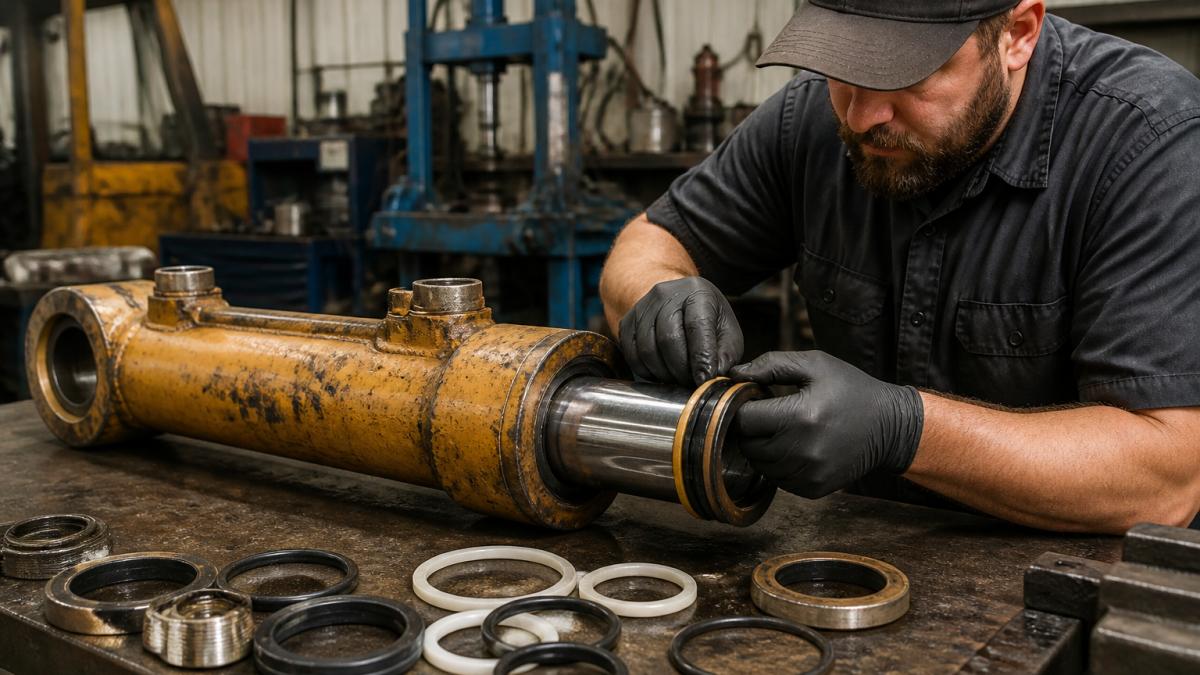
Hydraulic repair is the process of diagnosing, disassembling, and restoring hydraulic components so they meet original performance specifications. It covers hydraulic cylinder repair, hydraulic pump and hydraulic motor rebuilds, seal kits, and precision machining of worn shafts.
The stakes are simple. A cylinder that comes back with the same contamination still inside it will fail again, and the second failure usually costs more than the first.
The Difference Between Diagnosis and Guesswork
A genuine diagnostic process measures before it replaces. A parts swapper skips that step.
- Pressure testing at operating temperature, not just cold
- Fluid sampling to check for contamination and viscosity breakdown
- Cylinder bore measurement and rod straightness checks
- Component compatibility review before any seal kit goes in
What most guides miss is that the failure you can see is rarely the failure that matters. A scored rod usually means contaminated fluid, not a bad rod.
How to Inspect Hydraulic Hoses for Wear Before You Call a Shop
You can catch most hose problems in five minutes with the machine off and cool. How to inspect hydraulic hoses for wear comes down to checking four things: the outer cover, the fittings, the routing, and the fluid beneath.
Work through this sequence:
- Wipe the hose and fitting dry, then run a gloved hand along the full length.
- Look for cracked, blistered, or rubbed-through outer cover.
- Check fittings for weeping, corrosion, or a loose hose assembly crimp.
- Flex the hose gently and watch for stiffness or bulging.
- Inspect routing for abrasion points against frame or guards.
A hose that weeps at the fitting is a leak detection signal, not a cosmetic issue. Left alone, it drops system pressure and pulls air into the circuit.
Vetting a Repair Shop: A 10-Point Checklist
Use this checklist before you hand over a single cylinder. It works for any provider, and it takes about 15 minutes on the phone.
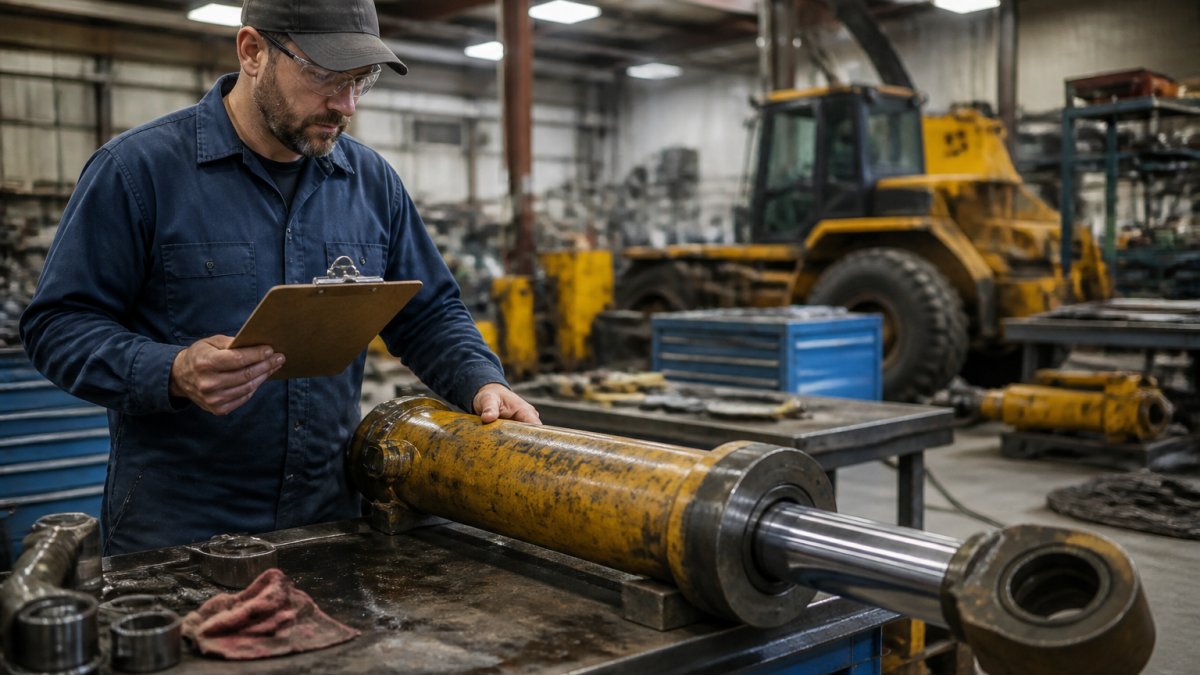
- Do they diagnose before quoting, or quote from a phone description?
- Can they machine or source hard-to-find and discontinued components?
- Do they pressure test to rated pressure before release?
- Is the warranty in writing, and what does it actually cover?
- Do they document the root cause, not just the parts replaced?
- [ ]
- What is their stated turnaround time, and is it realistic?
- Do they show you the failed parts and explain the failure mode?
- [ ]
- Do they check fluid condition as part of the repair?
Certifications, Insurance, and Warranty Terms
Ask for proof, not assurances. A shop doing hydraulic cylinder repair on heavy equipment should carry liability insurance and be able to name the standards it works to. The OSHA machine guarding and servicing requirements set the baseline for how equipment is handled during service, and a shop that cannot speak to them is a risk to your operation.
Warranty terms matter more than the headline number. Ask what voids it, how long the turnaround time is on a warranty claim, and whether fluid contamination found after the repair counts as their problem or yours.
Hydraulic Cylinder Repair Cost Factors: What Drives the Quote
Hydraulic cylinder repair cost factors come down to five variables: bore and rod size, damage severity, whether the rod needs rechroming or replacement, seal kit availability, and whether custom machining is required.
But the quote you receive is built from four cost buckets, and knowing them lets you read a quote instead of just accepting it.
1. Diagnostic and teardown labor. A shop that diagnoses before quoting will charge for teardown, cleaning, and inspection, often a flat bench fee, and credit it toward the repair if you approve the work.
2. Parts. Seal kits, wear rings, bushings, rod ends, and gland nuts. Standard seal kits for common bore sizes are commodity items.
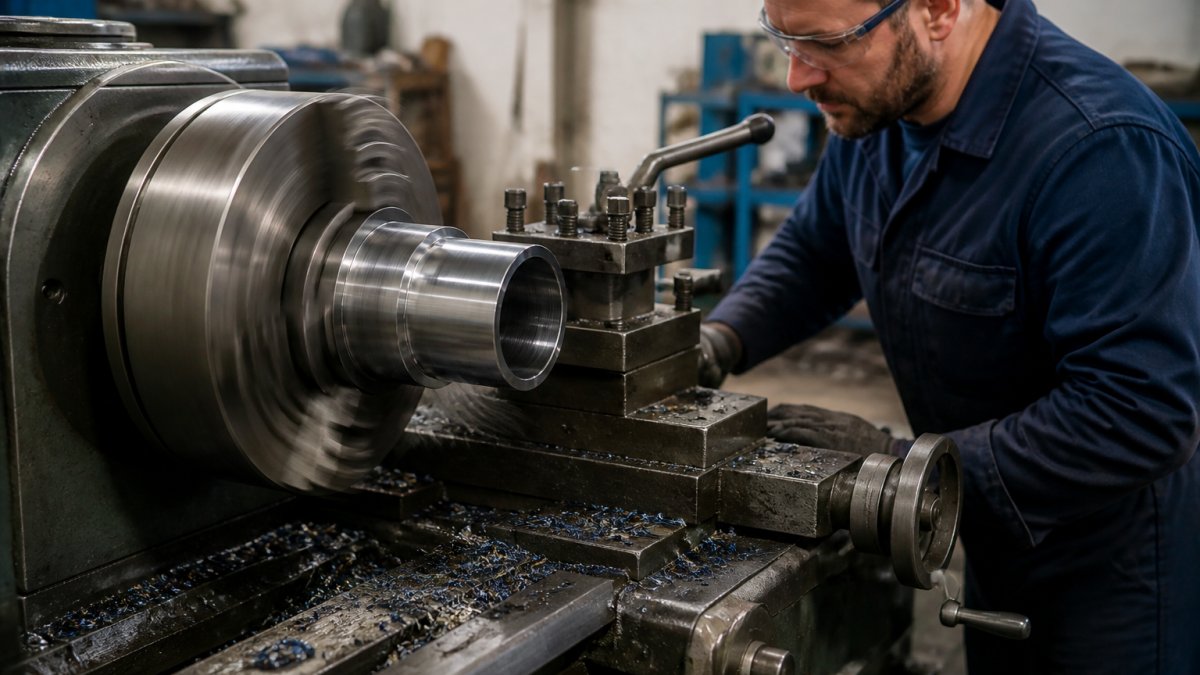
3. Machining and rechroming. A scored rod can be repaired two ways: grind undersize and rechrome back to spec, or replace the rod outright.
4. Assembly, testing, and fluid work. Pressure testing to rated pressure, flushing the circuit, and replacing filters belong in the quote, not on a separate invoice.
| Cost Factor | What Drives It Up | What Keeps It Down |
|---|---|---|
| Cylinder size | Large bore and long stroke | Standard bore sizes |
| Rod condition | Scoring, bending, chrome loss | Clean, straight rod |
| Seal availability | Discontinued or custom seals | Standard seal kits |
| Component sourcing | Obsolete parts, custom fabrication | Off-the-shelf parts |
| Turnaround pressure | Rush jobs, weekend work | Scheduled, planned repair |
| Diagnostic scope | Quote from phone description | Teardown, measure, then quote |
| Fluid work | Contaminated circuit requiring flush | Clean fluid, filters changed on schedule |
Pricing depends on the specific cylinder, damage, and parts required. We publish current rates on our website rather than quoting blind over the phone, because a quote without a diagnosis is a guess.
Turnaround Time for Hydraulic Cylinder Rebuilds: What to Expect
Turnaround time for hydraulic cylinder rebuilds depends on parts availability and shop workload, not on how fast someone can turn a wrench. A standard cylinder with available seal kits moves through teardown, inspection, machining, assembly, and pressure testing in a predictable sequence. One needing custom-machined or discontinued components takes longer, because the part has to be made.
The realistic answer to "how long will this take?" is a range, and a shop that gives you a firm date before inspecting the unit is guessing. Ask what stage your job is at, and ask for that update in writing.
Total Cost of Ownership: Why the Cheapest Quote Often Costs More
The lowest quote is rarely the lowest cost.
Most guides stop there. Here is how to actually build the number.
The TCO equation for a single repair:
TCO = repair invoice + downtime cost + repeat-failure cost + fluid and filter work + freight and handling
The invoice is the only line most buyers compare. The other four usually decide the outcome.
Downtime cost. Downtime is the hourly or daily cost of the equipment sitting idle, lost production, rented replacement, or crew standing around.
Repeat-failure cost. A cylinder that fails twice in a season means two teardowns, two freight bills, and two stretches of idle equipment. The second failure is not a discount, it is the first repair plus everything again.
Fluid and filter work. Flushing a contaminated circuit and replacing filters is a line item, not an upsell. Skipping it is how a repaired cylinder becomes a repeat failure.
Freight and handling. Cylinders are heavy.
For fleet managers running multiple units across a region, the calculation compounds. One reliable provider with predictable turnaround beats three cheap ones with unpredictable results, because every unpredictable turnaround multiplies downtime across the fleet.
Contamination Control and Fluid Management: The Root Cause Most Shops Miss
Contamination is the leading cause of repeat hydraulic failure, and it is the step most shops skip. Fluid viscosity breakdown, particulate ingress, and water in the oil all damage seals, score rods, and wear pumps long before anything visibly fails.
Proper fluid management means sampling before and after a repair, flushing the circuit when contamination is found, and replacing filters as part of the job, not as an upsell. A shop that returns your cylinder without addressing the fluid has fixed the symptom.
This is where a repair partner and a parts supplier diverge permanently. One restores system performance. The other resets the clock on the same failure.
Hydraulic failures never arrive at a convenient time, and the shop you choose decides how long your equipment sits idle. Brothers Hydraulics LLC has handled hydraulic cylinder repair and precision machining for construction, agriculture, industrial, and transportation equipment since 2013, with fast turnaround times and the ability to manufacture hard-to-find or discontinued components. We diagnose before we quote, pressure test before we release, and document the root cause so the same failure does not come back. Get a quote from Brothers Hydraulics LLC and get your equipment back to work.
Frequently Asked Questions
What criteria should you use to evaluate a hydraulic repair shop?
Start with diagnostic capability: a qualified shop tests pressure, flow, and contamination levels before quoting. Check for in-house machining, warranty terms in writing, and turnaround commitments. Ask whether they manufacture hard-to-find parts or rely on third-party suppliers. Verify insurance and review recent work on similar equipment. A hydraulic repair shop that explains the root cause, not just the failed part, is usually the better long-term partner.
How do I know if a hydraulic repair shop is qualified for heavy-duty equipment?
Ask about their experience with your specific equipment class: construction, agricultural, mining, or transportation. A shop set up for automotive hydraulics rarely has the tooling for a 6-inch bore cylinder or a piston pump rebuild. Request references from fleet managers with similar machinery. Confirm they have a test bench capable of replicating your system's pressure rating and flow rate before the unit leaves the building.
What questions should I ask before hiring a hydraulic repair service?
Ask: What is your typical turnaround time for hydraulic cylinder rebuilds? Is the quote fixed or will rechroming and machining be billed separately? Do you warranty the repair, and for how long? Can you source parts for equipment older than 15 years? Will you provide a written failure analysis? These answers separate a shop that repairs from one that simply replaces parts and hopes the failure does not return.
Why is precision machining important in hydraulic repair?
Tolerances on a hydraulic cylinder rod or bore are measured in thousandths of an inch. A scored rod that is polished rather than rechromed to specification will destroy the seal within weeks. Precision machining lets a shop restore the original dimensions, match component compatibility, and manufacture obsolete parts instead of waiting on a supplier. Without it, the repair is a temporary patch on a mechanical failure that will repeat.
What are the signs of a high-quality hydraulic cylinder repair facility?
Clean work areas, documented disassembly photos, and a written failure report are strong indicators. The shop should test the assembled cylinder under pressure before pickup and provide a warranty covering both parts and labor. Ask whether they track fluid viscosity and contamination control recommendations. A facility that returns your cylinder with a root-cause explanation and a preventive maintenance schedule is doing more than repairing; it is protecting your uptime.
How do I inspect hydraulic hoses for wear before calling a repair shop?
Check for cracks, blisters, or exposed wire braid along the hose assembly. Look for weeping fittings and chafed areas where the hose contacts a frame or another component. Run a gloved hand along the length to feel soft spots or bulges. Check the date code; most hoses have a shelf life even if unused. If you find damage on more than one hose, the system likely has a pressure or alignment issue worth diagnosing before replacement.