 blog
Are You Winterizing Heavy Equipment the Right Way?
Last Updated: November 2, 2026
Quick Summary
Effective heavy equipment maintenance in cold weather starts with pre-season fluid checks, winter-grade oil and fuel, and daily walk-arounds for cracked hoses and weeping fittings. Warm engines and hydraulics slowly before applying load, and drain water separators daily to prevent fuel gelling and frozen lines.
- Switch to the winter oil viscosity grade your manual lists before the first freeze.
- Crank in short bursts and let the engine build oil pressure before touching any control.
- Add anti-gel additive at the pump, not after the fuel filter plugs.
- Test battery charge and load before the season, not after a failure.
- Park on firm, drained ground and fill the fuel tank before shutdown to reduce condensation.
Table of Contents
- Cold Weather Hits Harder Than You Think
- Your Heavy Equipment Winter Maintenance Checklist
- Heavy Equipment Cold Weather Starting Tips
- How to Prevent Diesel Fuel Gelling in Heavy Equipment
- Cold Weather Hydraulic System Maintenance
- Batteries, Belts, Hoses, and Traction: The Parts That Fail First
- Temperature Thresholds, Schedules, and Overnight Storage
- Book Cold-Weather Hydraulic Service Before the Next Freeze
- Frequently Asked Questions
Cold Weather Hits Harder Than You Think
Cold weather does not just make operators uncomfortable. It changes how every system on a machine behaves.
The stakes are simple. A machine that will not start costs you a day. A hydraulic system that fails mid-lift costs you a repair and a safety incident.
Below, we break down the heavy equipment maintenance tips for cold weather that help prevent both, starting with the checks that matter most before the first hard freeze.
Your Heavy Equipment Winter Maintenance Checklist
A heavy equipment winter maintenance checklist is a set of pre-season inspections and fluid checks that keep machines starting, lifting, and moving in freezing temperatures. The list below covers the items that commonly fail first.
Pre-Operation Walk-Around
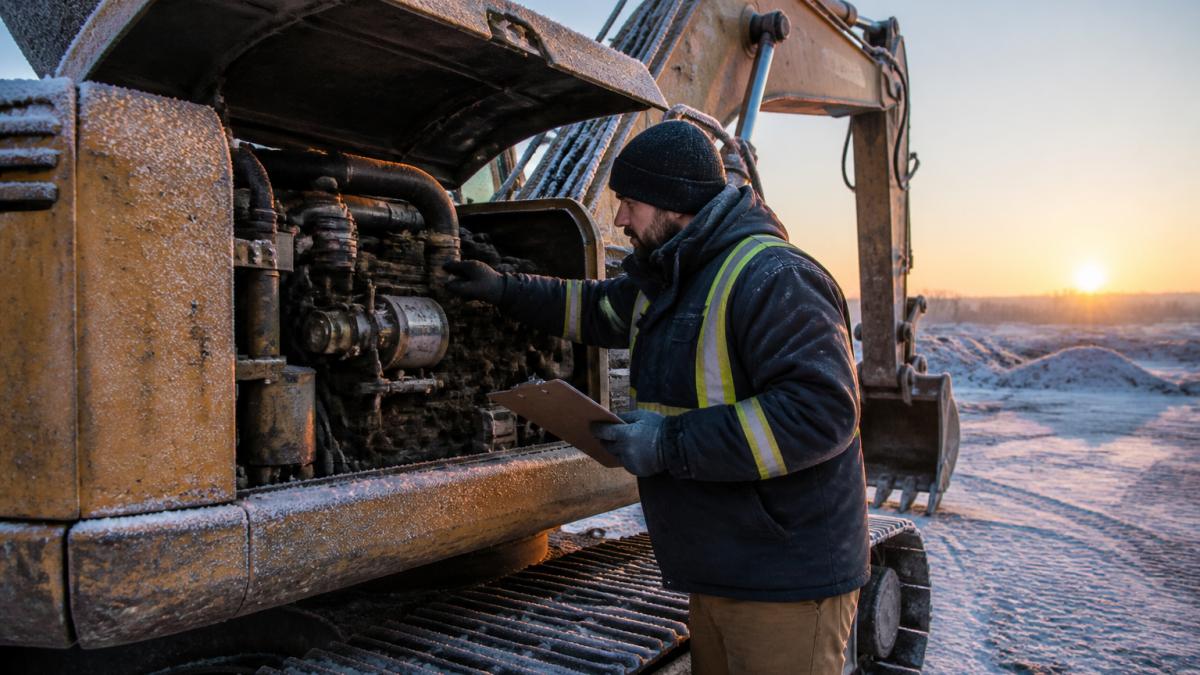
Start every cold morning with a slow walk around the machine. Look for cracked hoses, loose fittings, and fluid weeping at the cylinder glands. Check tire pressure and track tension, since both change with temperature. Clear ice and snow from steps and handholds before anyone climbs up. A two-minute walk catches most problems before they become breakdowns.
Fluids, Filters, and Freeze Protection
Fluid levels matter more in winter, not less. Cold oil is thicker, so a low sump works the pump harder on startup.
- Engine oil: switch to the viscosity grade your manual lists for freezing conditions.
- Coolant: test the freeze point and top off with the correct mix.
- Hydraulic fluid: check the reservoir cold and look for milky fluid, which signals water contamination.
Heavy Equipment Cold Weather Starting Tips
Cold starts are where engines and hydraulic pumps take the most wear. The fix is patience and a few habits:
- Turn the key to run and let the glow plugs or grid heater cycle fully.
- Crank in short bursts, not long grinds that flood the cylinders with unburned fuel.
- Let the engine idle and build oil pressure before touching any control.
- Cycle the hydraulics slowly with no load to move warm oil through the system.
- Watch gauges for the first few minutes and shut down if pressure looks wrong.
A common mistake is revving a cold engine to "warm it faster." That starves the top end of oil and hammers the hydraulic pump. Slow and steady wins here.
How to Prevent Diesel Fuel Gelling in Heavy Equipment
Diesel fuel gelling happens when cold temperatures cause wax in the fuel to crystallize and clog filters. The engine starves and quits, often at the worst moment.
To prevent diesel fuel gelling in heavy equipment, treat the fuel before the cold arrives:
- Use a winter-blend diesel rated for your lowest expected temperature.
- Add an anti-gel additive at the pump, not after the filter plugs.
- Keep tanks full overnight to reduce condensation and water contamination.
Water is the quiet killer. It freezes in lines and feeds bacteria that foul filters. Drain it out and the rest gets easier.
Cold Weather Hydraulic System Maintenance
Cold weather hydraulic system maintenance comes down to keeping clean, correct fluid moving through healthy seals. Thick oil raises pressure on startup, and worn seals give out first. Check fluid condition, confirm the right viscosity for winter, and inspect for leaks at every fitting.
hydraulic fluid selection guidance from machinery lubrication experts is worth reading before you top off with the wrong grade.
Hoses, Fittings, and Cylinder Seals
Cold rubber gets stiff and cracks. Inspect hoses for weather checking, chafing, and soft spots, and check fittings for weeping. Look closely at cylinder rods for scoring, pitting, or a bent shaft, since these tear seals and cause leaks. Brothers Hydraulics LLC offers hydraulic cylinder rod repair and shaft repair services.
Brothers Hydraulics LLC also provides seal replacement; see our hydraulic cylinder rebuild and reseal service for details.
Batteries, Belts, Hoses, and Traction: The Parts That Fail First
Batteries, belts, hoses, and traction are the components most likely to end a cold-weather shift early. But knowing they fail is less useful than knowing what a failure looks like and what to do about it. The symptom-to-fix map below is the part most winter guides skip.
Cold-Weather Troubleshooting: Symptoms and Safe Next Steps
| Symptom | Likely Causes | Safe Next Steps |
|---|---|---|
| Slow, labored cranking | Cold battery with reduced cranking amps; corroded terminals; wrong oil viscosity | Test battery charge and load; clean and tighten terminals; confirm winter oil grade; use block heater before next start |
| No crank, dash dim | Discharged or failed battery; loose ground; parasitic draw | Load-test battery; check grounds and cable ends; charge or replace; investigate draw if it recurs |
| Engine cranks but will not fire | Gelled or clouded fuel; plugged fuel filter; water in separator; glow plugs not cycling | Drain separator; inspect filter bowl for wax; confirm winter-blend fuel and anti-gel; allow full glow cycle |
| Engine starts then dies | Fuel starvation from gelling; air in fuel system; frozen line | Do not repeatedly crank; warm the machine per manual; check filter and lines; treat fuel before next cold snap |
| Sluggish hydraulics, slow cycle times | Cold, thick hydraulic fluid; restricted filter; low reservoir level | Warm up with unloaded cycles; check fluid level cold; inspect filter; confirm winter viscosity per manual |
| Hydraulic whine or high pressure on startup | Thick fluid; clogged suction strainer; aeration | Shut down and inspect; do not force controls; check fluid condition and filter; warm slowly before load |
| Leaks appearing at cylinder glands | Stiff, cold seals; scored or pitted rod; loose fittings | Inspect rod for scoring and pitting; tighten fittings to spec; plan reseal or rod repair before failure |
| Belt squeal or accessory loss | Glazed, cracked, or loose belt; cold-stiffened rubber | Inspect and tension per manual; replace cracked belts before they fail |
| Poor traction or steering | Low tire pressure from cold; worn tread; incorrect track tension | Check pressure cold and adjust to spec; inspect tread; set track tension per manual; add sand on walkways |
Batteries
Batteries are a common weak point in cold weather because cold reduces cranking power at the moment the engine needs more of it. Test charge and load, clean terminals, and keep stored machines on a maintenance charger, and test before the season rather than after.
Belts and Hoses
Cold rubber stiffens and cracks. Check belts for glazing, cracks, and tension, and inspect hoses for weather checking, chafing, and soft spots. Pay close attention to cylinder rods for scoring, pitting, or a bent shaft, since these can tear seals and cause leaks. Brothers Hydraulics LLC offers hydraulic cylinder rod repair and shaft repair services and seal replacement through its hydraulic cylinder rebuild and reseal service.
Traction and Visibility
Traction is a safety issue as well as a performance one. Check tire pressure and tread cold, adjust track tension to spec, and clear ice from walkways and steps. Add sand where crews climb. Keep lighting and wipers working, since short winter days mean more operating time in the dark.
Temperature Thresholds, Schedules, and Overnight Storage
Many winter failures have a temperature trigger that operators often discover only after a breakdown. The thresholds below are general industry rules of thumb, not machine specifications. Always confirm the actual limits in your equipment manual, because engine, hydraulic, and fuel-system ratings vary by model and manufacturer.
Temperature Thresholds to Watch
- Approaching freezing (around 32°F): water in fuel, separators, and lines becomes the primary risk. Drain water separators daily, keep tanks full overnight to limit condensation, and confirm coolant freeze protection with a refractometer or hydrometer rather than guessing from the jug.
- Well below freezing (roughly 15°F and lower): standard No. 2 diesel can begin to cloud and gel, and conventional engine oil thickens enough to slow cranking and oil pressure buildup. Switch to a winter-blend fuel, treat with anti-gel at the pump, and move to the lower-viscosity oil grade your manual specifies.
- Deep cold (single digits and below): cold starts themselves become the wear event. Use block heaters or coolant heaters, extend warm-up time, cycle hydraulics unloaded before loading the machine, and limit unnecessary shutdowns and restarts.
A Repeatable Cold-Weather Maintenance Schedule
General advice only pays off when it becomes a routine. Organize winter checks into three cadences:
Daily (before first start):
- Walk-around for cracked hoses, weeping fittings, and damaged cylinder rods
- Check tire pressure and track tension (both shift with temperature)
- Drain water separators; inspect fuel filter bowl for clouding or wax
Weekly:
- Test battery charge and clean terminals; top off with distilled water on serviceable batteries
- Inspect belts for glazing and cracks; confirm tension
- Check coolant freeze point and hydraulic reservoir level (cold)
Seasonal (before first freeze and mid-winter):
- Change engine oil to the winter viscosity grade in the manual
- Replace fuel, hydraulic, and air filters
- Full hydraulic fluid condition check; look for milky fluid indicating water contamination
Overnight Storage and Shutdown
How a machine is parked matters as much as how it is started. For overnight or extended storage:
- Park on firm, drained ground; set the brake and lower attachments to the ground to take load off hydraulics.
- Fill the fuel tank before shutdown to reduce condensation and overnight gelling risk.
- If a repair is coming, schedule it before the freeze rather than during a breakdown. See our hydraulic cylinder repair turnaround time guide to plan downtime around the weather.
Book Cold-Weather Hydraulic Service Before the Next Freeze
Cold weather exposes every weak seal, scored rod, and contaminated system. The smart move is fixing them before the first freeze, not after a machine goes down on a job site.
Brothers Hydraulics LLC has provided hydraulic cylinder repair and precision machining since 2013, including custom parts for construction, agriculture, industrial, and transportation equipment. If a cylinder is leaking or a rod is damaged, book heavy equipment hydraulic repair now. You can also request a quote to get the process moving.
Frequently Asked Questions
How often should heavy equipment be started in cold weather?
Start equipment at least once a week during cold weather and let it reach operating temperature before shutting it down. Short start-stop cycles do more harm than good because they leave condensation in the engine and never burn off moisture in the oil. If a machine sits idle for long stretches, run it under a light load for 20 to 30 minutes, cycle the hydraulics, and top off fluids afterward. Consistent weekly runs also keep the battery charged and reveal weak components before they strand you on a job.
What engine oil is best for heavy equipment in winter?
Follow the viscosity chart in your owner's manual and step to a lighter grade when temperatures drop. Many fleets run 15W-40 in summer and switch to 10W-30 for cold months, since the lower cold-cranking number lets oil reach the bearings faster on startup. Synthetic blends hold their viscosity better in deep cold. Never mix grades to stretch an oil change, and check the API service category on the jug matches the engine maker's requirement.
How do you prevent diesel fuel from gelling in cold weather?
Switch to winter-blend diesel before the first hard freeze, since it carries a lower cloud point than summer fuel. Add a quality anti-gel treatment at the recommended ratio, keep tanks full to limit condensation, and drain water separators daily. Replace fuel filters on schedule, because a partially clogged filter gels faster. If a machine already gelled, move it to a heated space rather than cranking it repeatedly, then treat the fuel and change the filter before restarting.
How can you keep hydraulic systems working in freezing temperatures?
Use hydraulic fluid rated for your coldest expected temperature and warm the machine at low idle for several minutes before loading the system. Check hoses and fittings for cracks and weeping seals before each shift, because cold rubber gets brittle and fails fast. Keep hydraulic filters changed on schedule and watch for milky fluid, which signals water contamination. If a cylinder is leaking or slow to respond, have it inspected before the damage spreads to the pump.