 How-to
Fast Hydraulic Cylinder Repair in Phoenix: A Step-by-Step Guide
Table of Contents
- Diagnose Hydraulic Cylinder Problems Before Calling for Repair
- Prepare Your Equipment for Safe Removal and Transport
- Understanding Hydraulic Cylinder Repair Turnaround Time
- Hydraulic Cylinder Repair Cost: What Affects Your Quote
- Choosing the Right Hydraulic Cylinder Repair Shop
- The Hydraulic Cylinder Repair Process Explained
- Post-Repair Maintenance and Avoiding Future Downtime
- Frequently Asked Questions
Last Updated: October 11, 2026
Diagnose Hydraulic Cylinder Problems Before Calling for Repair
A failing hydraulic cylinder costs money every hour it sits idle. Spend 15 minutes diagnosing the problem before calling for hydraulic cylinder repair in Phoenix, you might catch a simple issue that saves days of downtime.
Common signs of cylinder failure
Visible warning signs include fluid leakage around the rod or cap end, reduced force or speed, or failure to reach full pressure under load. These indicate seal failure or internal damage.
A grinding sound indicates internal rod or barrel damage. Jerky movement suggests fluid contamination, which damages seals and components.
What to check before contacting a repair shop
Check fluid level and condition, low fluid accelerates seal wear and introduces air. Dark or burnt-smelling fluid indicates contamination. Document fluid color, leakage location, and whether the problem started suddenly or developed gradually.
Note the equipment's age and duty cycle, this helps repair shops estimate turnaround time and cost accurately.
Prepare Your Equipment for Safe Removal and Transport
Moving a damaged hydraulic cylinder requires care: pressurized fluid can cause serious injury, and a dropped cylinder can damage threads and make repair impossible.
Depressurize the system completely. Close isolation valves on both sides if available; otherwise cycle equipment slowly to bleed pressure, then lock out the machine. Wipe away fluid and debris to see connection points clearly.
Cap or plug every opening immediately, hydraulic systems are sensitive to contamination. Transport the cylinder horizontally in a padded crate, never upright or unsecured.
Understanding Hydraulic Cylinder Repair Turnaround Time
Turnaround time depends on repair complexity, shop workload, and parts availability. Seal replacement takes one business day; rechroming or custom fabrication takes longer. Understanding the timeline helps you plan downtime and choose between repair and replacement.
How repair complexity drives timeline
Repair shops typically categorize jobs into three complexity tiers, each with a different turnaround expectation:
Tier 1: Seal and gasket replacement (1-2 business days). The cylinder is disassembled, old seals removed, rod inspected, and new seals installed. If the rod is undamaged, reassembly and testing happen the same day or next morning.
Tier 2: Rod rechroming or minor machining (3-7 business days). Scored or pitted rods are sent to a chrome plating vendor, adding 2-5 days. Specialty cylinders with non-standard sizes may extend this to 10+ days.
Tier 3: Custom fabrication or complete rebuild (7-14+ business days). Bent barrels, internal rod damage, or missing components require precision machining and skilled technicians. If parts must be ordered, add another week.
Factors that compress or extend turnaround
Parts availability is the biggest variable. Standard seal kits cost $50-$200 and are stocked by most shops. Specialty seals must be ordered, adding 3-7 days. Ask whether the shop stocks seals for your model before dropping it off.
Shop workload directly affects your start date. Ask "When can you start work?" not "How long does repair take?" Start date plus repair duration equals your actual downtime.
Testing capacity determines whether the cylinder ships same-day or waits for the next test slot. Confirm the shop tests every repaired cylinder before it leaves, not just on request.
Transport time adds 1-2 days if you're shipping the cylinder to an out-of-area shop or if the shop must send a technician to your location for on-site work. Local same-day drop-off and pickup eliminates this delay.
Same-day and expedited service: realistic expectations
Same-day service is possible only for Tier 1 repairs on standard cylinders with no backlog. Do not assume same-day service; confirm it when you call.
Expedited service makes financial sense when downtime costs exceed the rush fee.
Ask the shop for a realistic start date and completion date before authorizing work. A written estimate with turnaround dates protects both parties and sets clear expectations.
Hydraulic Cylinder Repair Cost: What Affects Your Quote
Repair cost depends on damage severity, parts needed, and labor time. Seal replacement costs less than rechroming or custom fabrication.
Estimate factors and how pricing works
Most shops quote based on repair scope: inspection, disassembly, parts, machine time, reassembly, and testing. Ask for a detailed breakdown. Some charge flat rates for common repairs; others bill hourly plus parts.
Standard seals are inexpensive; custom-fabricated parts cost more. Confirm whether the estimate includes testing and pressure verification. A cylinder that fails testing gets reworked at no extra charge, that's the mark of a quality provider.
Choosing the Right Hydraulic Cylinder Repair Shop
Not all repair shops have the same capabilities or speed. Some handle only seal replacements and basic repairs. Others offer precision machining, custom fabrication, and specialized diagnostics. Choosing the right shop depends on your equipment's needs, your budget, and whether repair or replacement is actually faster.
Repair versus replacement: the decision framework
Before contacting a repair shop, determine whether repair makes sense. If repair takes two weeks and replacement takes three days, replacement is faster if downtime costs exceed the price difference.
Repair is the right choice when:
- The cylinder is less than 10 years old with no history of repeated failures.
- Damage is limited to seals, gaskets, or rod surface wear (Tier 1 or Tier 2 repairs).
- The cylinder is a specialty size with long lead time for replacements.
- The cylinder is under warranty or the manufacturer offers refurbished exchange units.
- Your equipment is difficult to reconfigure for a different cylinder.
Replacement is faster or more economical when:
- The cylinder is more than 15 years old with repeated failures.
- Damage is extensive (bent barrel, internal rod damage). Tier 3 repairs take 10-14+ days.
- A new or refurbished cylinder is in stock locally or ships within 2-3 days.
- The cylinder is a common industrial size with many aftermarket suppliers.
- Your equipment is old and nearing end-of-life.
Ask the repair shop for a diagnostic assessment before committing to repair. A professional technician can tell you within 30 minutes whether the cylinder is worth repairing or should be replaced. If they recommend repair, ask for a written estimate with turnaround dates. If they recommend replacement, ask whether they stock or can source a replacement quickly.
What to look for in a repair provider
Experience with your equipment type matters. Ask how long the shop has been operating and whether they've worked on your brand and model before.
Verify they can test cylinders after repair. Pressure testing confirms the repair holds under real operating conditions. A shop without testing equipment cannot guarantee the work. Ask about their testing capacity and whether they test every cylinder or only on request. A quality shop tests every repair at operating pressure and documents the results.
Check whether they offer on-site diagnostics and repair. Some cylinders are difficult to remove or transport. A shop that sends technicians to your location can diagnose problems faster and sometimes repair equipment in place, eliminating transport time and risk. On-site service costs more per hour but saves days of downtime for critical equipment.
Confirm they provide a warranty on repair work. If a repaired cylinder fails within the warranty period, they rework it at no charge. This guarantee is a sign of confidence in their workmanship.
On-site versus shop-based repair
On-site repair is faster when the cylinder is hard to access. A technician can diagnose and perform seal replacements without transport. This costs more per hour but saves days of downtime and eliminates transport risk.
Shop-based repair is more economical for complex work. For Tier 2 and Tier 3 repairs, shop-based work is usually the only option. The trade-off is transport time and longer turnaround.
Ask the shop whether they recommend on-site or shop-based repair for your specific cylinder. A shop that offers both options will be honest about which approach saves you time and money. If they push one option without considering your equipment's accessibility or repair complexity, that's a warning sign.
The Hydraulic Cylinder Repair Process Explained
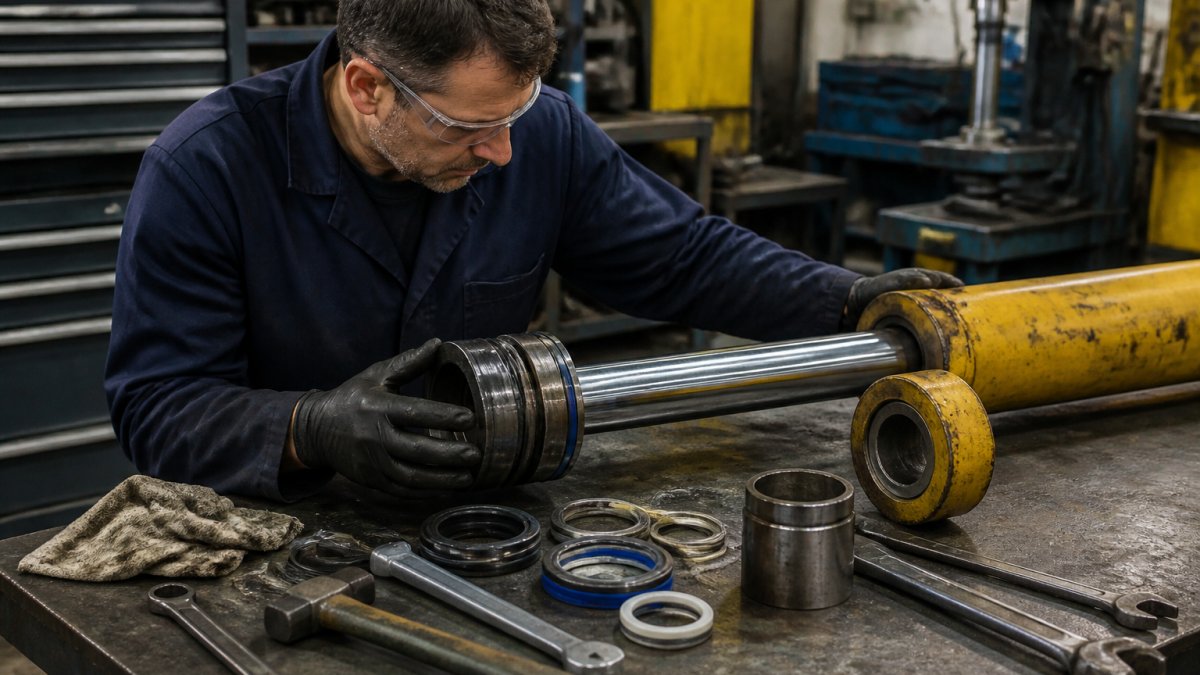
Understanding what happens during repair builds confidence in the work and helps you plan for equipment downtime.
Inspection and diagnosis
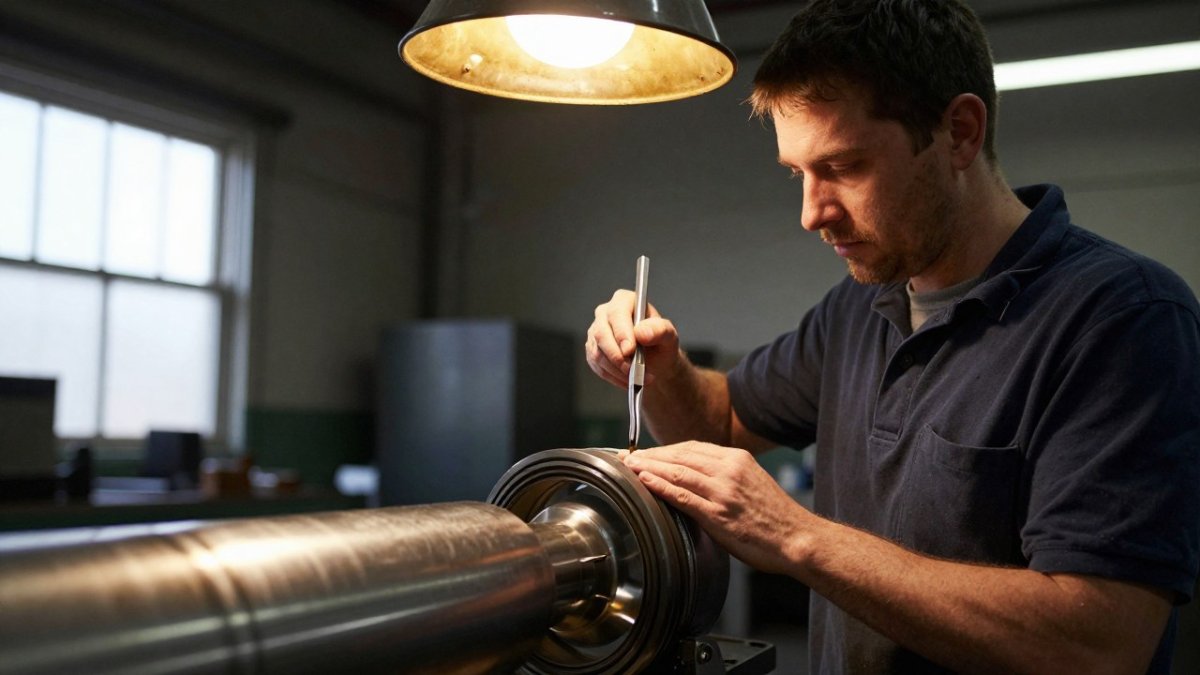
When your cylinder arrives at the shop, the technician inspects it visually for obvious damage: leaks, dents, corrosion, or rod scoring. Then they measure the rod for wear and check the barrel for internal damage using specialized gauges. This inspection determines whether repair is cost-effective or replacement makes more sense.
Next comes pressure testing at operating conditions. The technician pressurizes the cylinder and observes where fluid leaks. This pinpoints which seals are failing and whether the problem is internal or external. A cylinder that leaks from the rod end needs new rod seals. Leakage from the cap end indicates cap seal failure. Internal leakage, where pressure drops under load but no external fluid appears, means piston ring wear or rod damage.
Disassembly, seal replacement, and testing
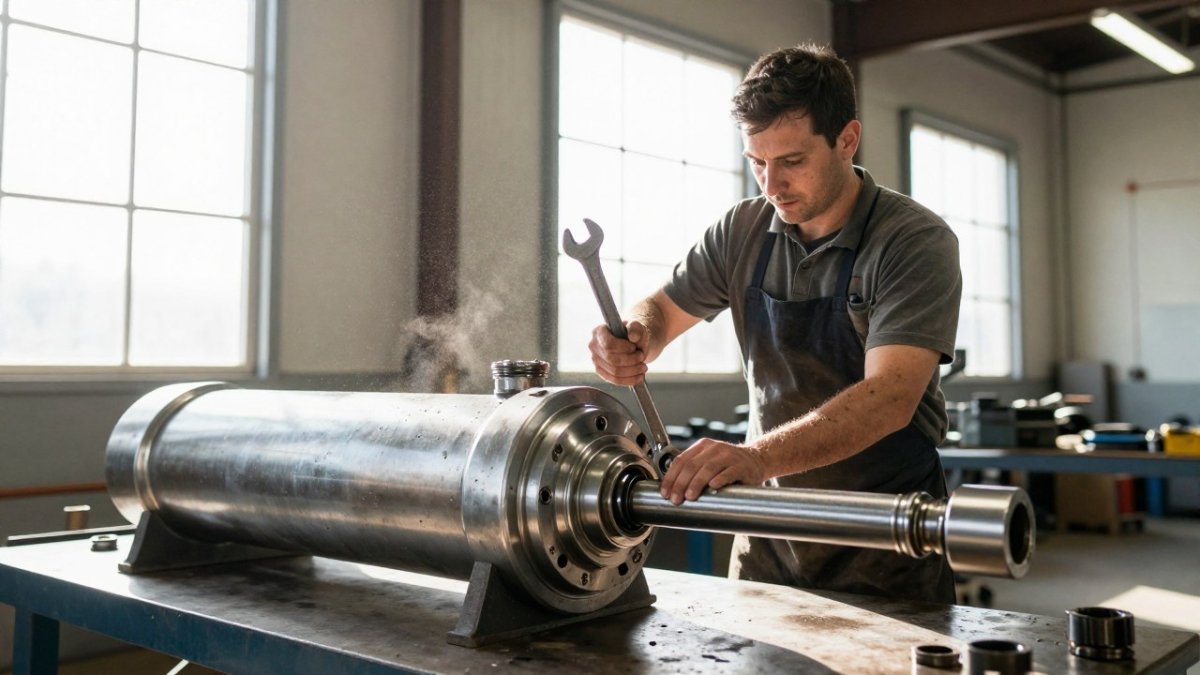
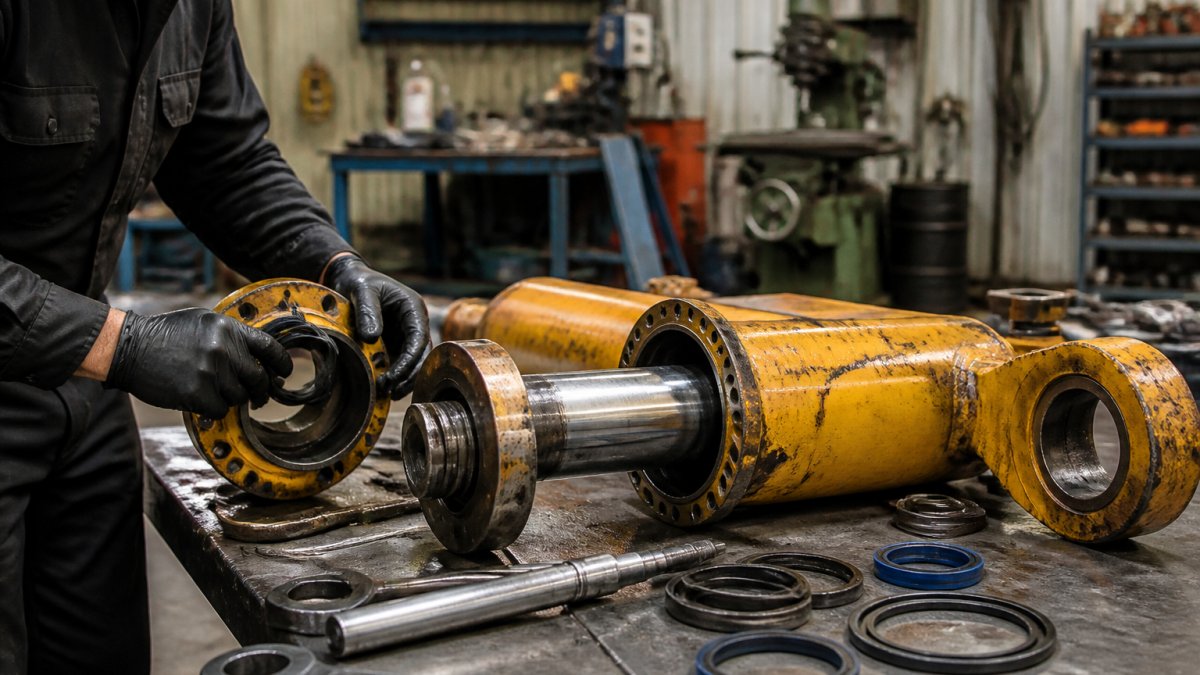
Once diagnosis is complete, the technician disassembles the cylinder. The rod is carefully extracted, cleaned, and inspected for scoring or chrome wear. Seals are removed and replaced with new ones matched to the cylinder's specifications. If the rod is scored or pitted, it must be rechromed to restore a smooth surface for the new seals.
After reassembly, the cylinder undergoes pressure testing again. The technician cycles it through full extension and retraction while monitoring pressure and flow. If the test shows the cylinder holds pressure and moves smoothly, the repair is complete. If leakage reappears, seals are replaced again at no extra cost.
Post-Repair Maintenance and Avoiding Future Downtime
A repaired cylinder lasts longer when you maintain the hydraulic system properly. Contamination is the fastest way to fail new seals and damage internal components again.
Change your hydraulic fluid on schedule and use the correct viscosity grade for your equipment. Contaminated fluid kills seals faster than anything else. If your system has been leaking for weeks, flush it thoroughly before installing the repaired cylinder.
Check hoses and connections for leaks weekly. A small weep at a connection can introduce air and contaminate fluid. Tighten loose fittings and replace damaged hoses before they fail completely. Keep the equipment clean, dirt on the rod surface gets pushed into seals during operation and accelerates wear.
Schedule preventive maintenance during slow seasons when equipment downtime costs less. A cylinder inspection before it fails costs far less than emergency repair and lost productivity. Brothers Hydraulics LLC can help you develop a maintenance schedule tailored to your equipment's duty cycle and operating environment.
| Maintenance Task | Frequency | Impact |
|---|---|---|
| Hydraulic fluid check | Weekly | Catches contamination early |
| Visual hose inspection | Weekly | Prevents leaks and air entry |
| Fluid change | Per manufacturer specs | Extends seal and component life |
| Pressure test (preventive) | Annually | Detects wear before failure |
| System flush (if contaminated) | As needed | Protects repaired cylinders |
Equipment downtime from a failed hydraulic cylinder disrupts your schedule and costs money every hour. When repair is needed, fast turnaround and quality workmanship determine how quickly you're back to production.
Frequently Asked Questions
How do I know if my hydraulic cylinder needs repair?
Common warning signs include visible leaks around the rod or base, slower or jerky equipment movement, loss of pressure, and unusual noise during operation. If your equipment is losing power or responding slowly, the cylinder may have internal seal wear or rod damage. Check for fluid pooling under equipment or on the ground, external leaks are the most visible indicator that repair is needed soon.
What should I do before taking a hydraulic cylinder in for repair?
First, safely depressurize the system and isolate the cylinder from the hydraulic circuit. Document the equipment model, cylinder specifications, and the problems you've observed. If possible, photograph any visible damage or leaks. When contacting a hydraulic cylinder repair shop, provide this information along with details about your equipment's age and usage. This speeds up diagnosis and helps the shop prepare for the work ahead.
How long does hydraulic cylinder repair turnaround time typically take?
Turnaround time depends on shop workload, whether parts are in stock, and whether the cylinder needs rechroming or other specialized services.
What factors affect hydraulic cylinder repair cost?
Cost depends on the type and extent of damage, whether seals, rods, or bore need replacement, and if rechroming or custom fabrication is required. Labor time, parts availability, and the complexity of your equipment also influence the final price. A simple seal replacement costs less than a full rebuild. Contact a repair shop with your cylinder specifications for an accurate estimate, transparent pricing should include labor, parts, and any specialized services without surprise charges.