 How-to
Custom Hydraulic Component Fabrication in Phoenix
Table of Contents
- Custom Hydraulic Component Fabrication in Phoenix: What You'll Need
- Step 1: Start With Custom Hydraulic Component Design
- Step 2: Sourcing Hard-to-Find Hydraulic Parts
- Step 3: Hydraulic Shaft Fabrication and Machining
- Step 4: Hydraulic Cylinder Repair or Full Replacement?
- Step 5: Testing, Inspection, and What Drives Your Quote
- Common Mistakes That Lead to Repeat Failures
- Frequently Asked Questions
Last Updated: October 9, 2026
Custom Hydraulic Component Fabrication in Phoenix: What You'll Need
Custom hydraulic component fabrication is the process of designing, machining, and assembling hydraulic parts to fit equipment that no longer has off-the-shelf support.
That is why the first step is not calling a shop. It is gathering the right information so the first call produces a real answer instead of a callback.
Below, we break down the five-step process we follow, from design inputs through testing, plus the mistakes that cause the same cylinder to fail twice.
Information to Gather Before You Call a Fabricator
Gather five things before you contact anyone: the equipment make and model, the part number if one exists, measured dimensions of the failed component, the operating pressure and flow rate of the system, and photos of the part in place.
The most common delay we see is a machine sitting idle while the owner hunts for a manual. Pull the specs first.
- Equipment make, model, and serial number
- Original part number, even if it is discontinued
- Measured bore, rod diameter, and stroke length
If the part number is gone and the manual is lost, measurements and photos still get you most of the way there. A good shop can reverse-engineer from a physical sample.
Step 1: Start With Custom Hydraulic Component Design
Custom hydraulic component design starts with the system, not the part. A cylinder that fits the mounting bracket but ignores the system's pressure rating will fail again within months. Design inputs come first, then dimensions.
Engineering Inputs and Compatibility Checks
The core inputs are working pressure, flow rate, bore and rod size, stroke, mounting style, and port configuration. Each one constrains the others. Increase the bore to gain force and you may exceed what the rod and seals can handle at that pressure.
Compatibility checks matter just as much:
- Pressure rating must meet or exceed the system's relief setting
- Port threads and flange styles must match existing hoses and fittings
- Rod and bore tolerances must suit the duty cycle
Get these wrong and the part will fit but not last. We check every one before a drawing is finalized.
Step 2: Sourcing Hard-to-Find Hydraulic Parts
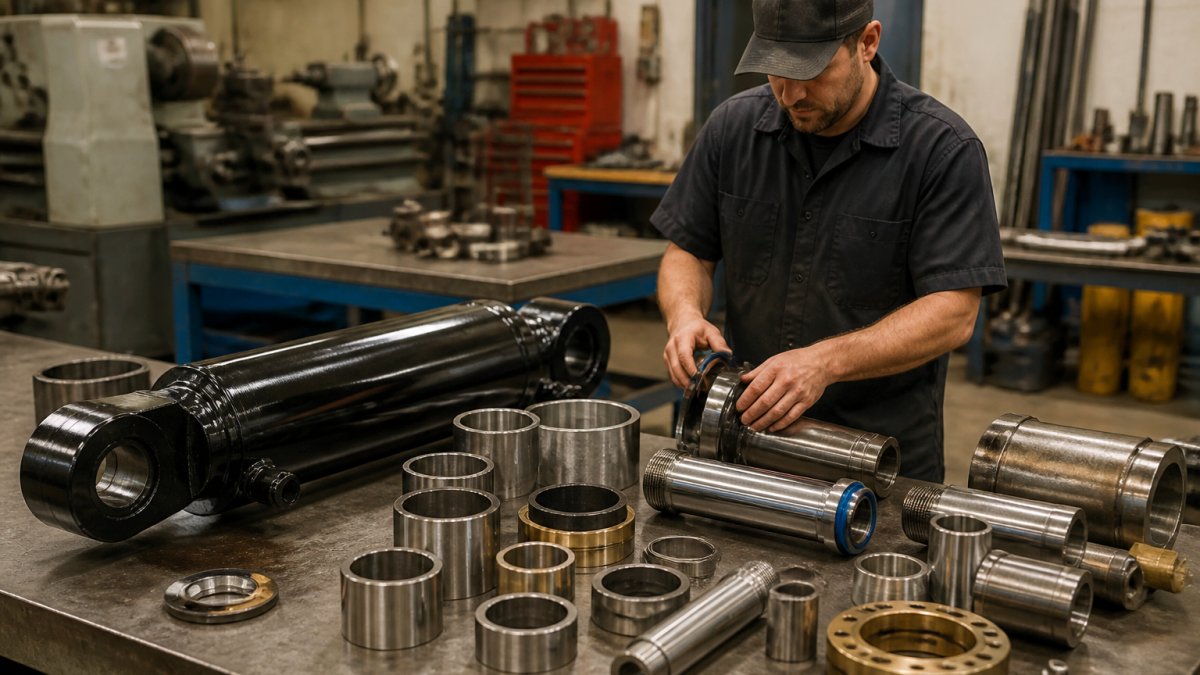
Hard-to-find hydraulic parts fall into two groups: components that still exist somewhere in a warehouse, and components that no longer exist at all. The first group is a sourcing problem. The second is a fabrication problem.
For discontinued OEM parts, we start with cross-reference databases and surplus networks. When that comes up empty, we manufacture the component to the original specifications or an improved version.
Step 3: Hydraulic Shaft Fabrication and Machining
Hydraulic shaft fabrication and machining is where tolerance and surface finish decide how long the repair lasts.
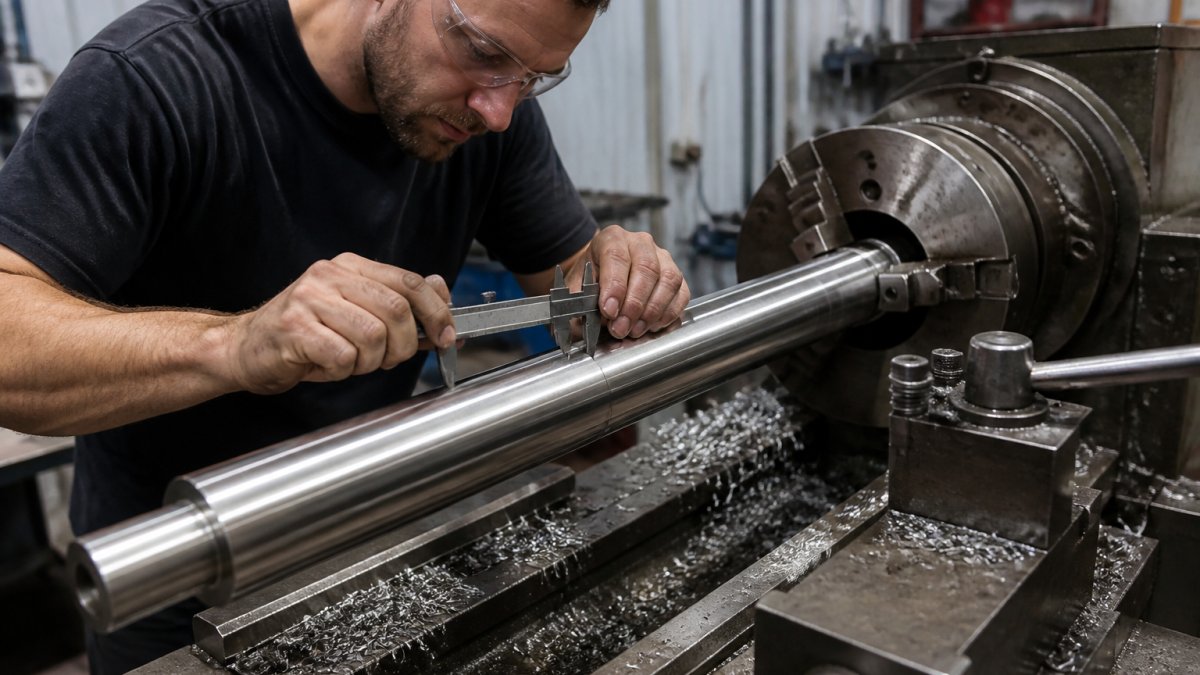
We machine from raw stock when a replacement rod is unavailable, matching the original diameter, hardness, and chrome thickness.
Step 4: Hydraulic Cylinder Repair or Full Replacement?
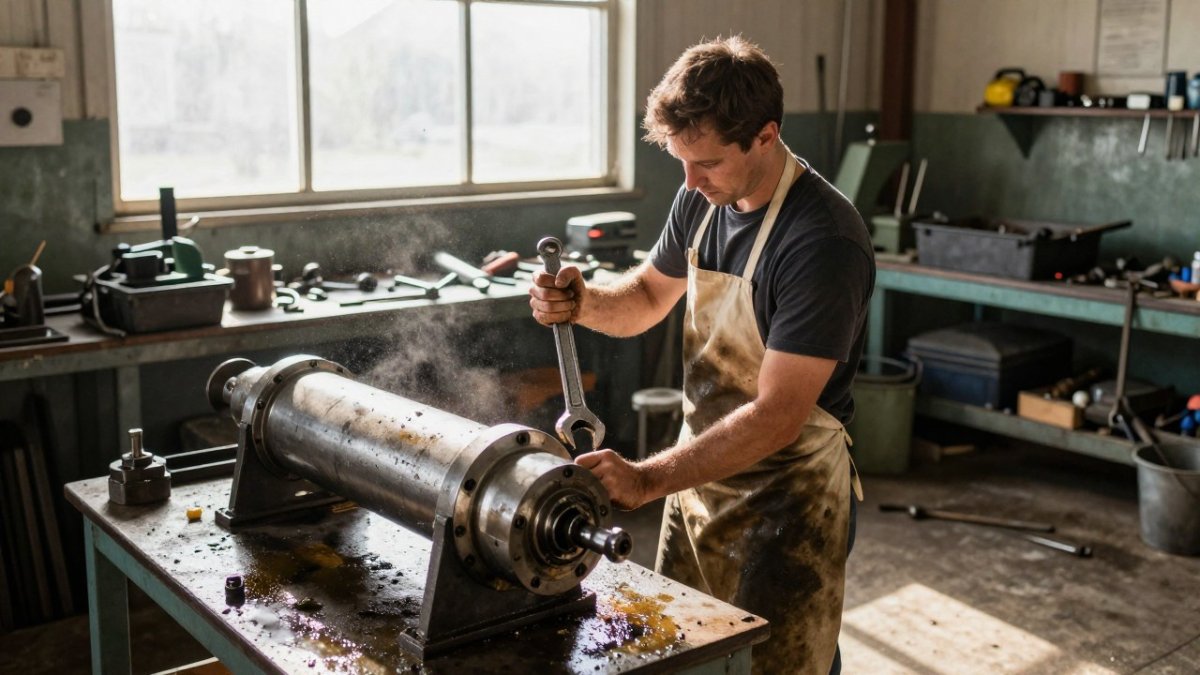
Hydraulic cylinder repair is usually the faster and cheaper path when the barrel and rod are still structurally sound. Full replacement makes more sense when the barrel is scored, cracked, or out of round beyond what honing can fix. The decision is not a coin flip, it follows from diagnosing why the cylinder failed in the first place.
Diagnosing the Failure Before You Decide
A cylinder that failed once will fail again if the cause is not identified. Start with the symptoms:
- External leaks at the rod. Usually a worn or damaged rod seal, or a scored rod surface chewing the seal. Often repairable with a reseal and rechrome.
- External leaks at the barrel or end cap. A failed weld, a cracked end cap, or a damaged O-ring. Weld repair or cap replacement may be enough.
- Loss of force or slow drift. Internal bypass past the piston seal, or a worn bore. This points to internal seal replacement or honing.
A shop that replaces parts without diagnosing the cause is just resetting the clock. Root-cause diagnosis is not optional.
When Repair Makes More Sense Than Replacing
Repair wins when the damage is limited to seals, rod surface, or end caps. A reseal and rechrome can restore a cylinder to service in a fraction of the cost and lead time of a new unit, especially for obsolete models.
Replacement wins when:
- The barrel is deeply scored, cracked, or out of round beyond honing
- The rod is bent beyond straightening
- The cylinder is a matched set and one unit is already compromised
Repair, Reproduce, or Redesign
For older equipment, repair is often the only realistic option because replacements are not manufactured anymore. When repair is not possible, there are two paths:
- Reproduce. Manufacture a new component to the original specifications. This is the right call when the original design was sound and the failure was wear or contamination.
- Redesign. Manufacture an improved version when the original design was undersized, used a discontinued seal profile, or failed repeatedly. A redesign can use a current seal standard and a more available material.
That is where custom fabrication earns its keep. A fabricator who can reverse-engineer from a physical sample and machine a replacement keeps equipment running that the OEM has long abandoned.
Step 5: Testing, Inspection, and What Drives Your Quote
Testing and inspection confirm the part works before it leaves the shop. A fabricated or repaired cylinder that is not verified under pressure is a guess, not a finished component. The verification stage is where a good fabricator separates from a parts counter.
How We Test and Inspect a Finished Component
Every repaired or fabricated cylinder goes through the same sequence before it is released:
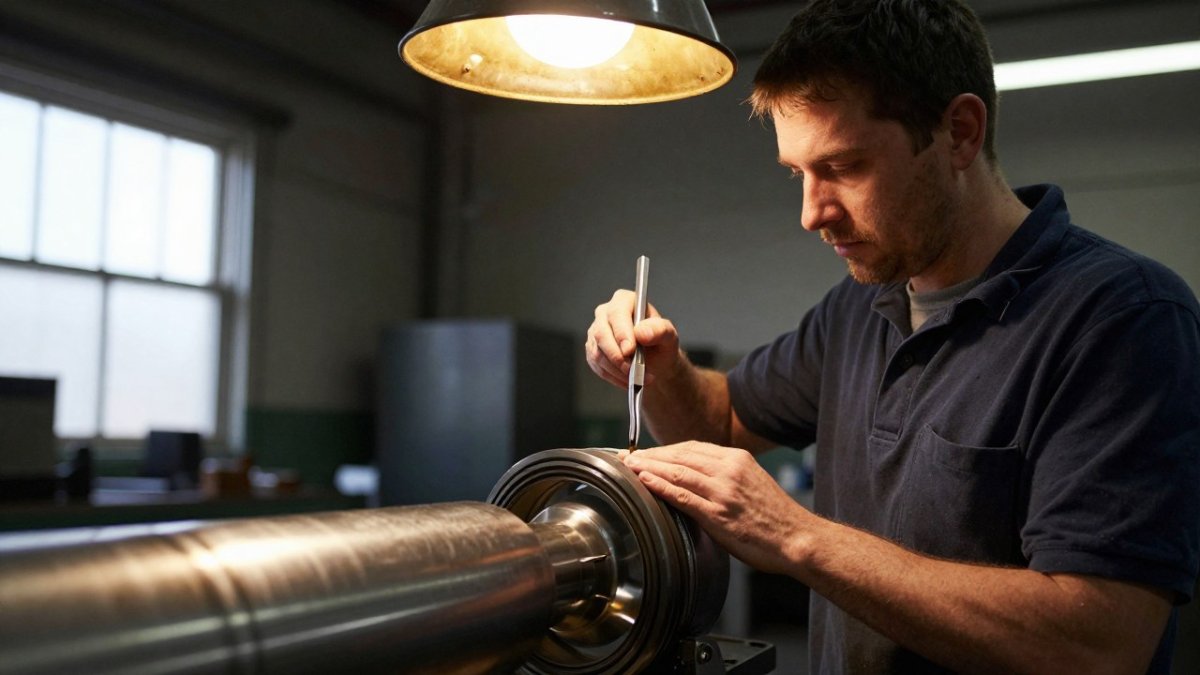
- Dimensional inspection. Bore, rod diameter, stroke, and mounting hole spacing are measured against the original drawing or the reverse-engineered sample. Tolerances are checked with calipers and micrometers, not by eye.
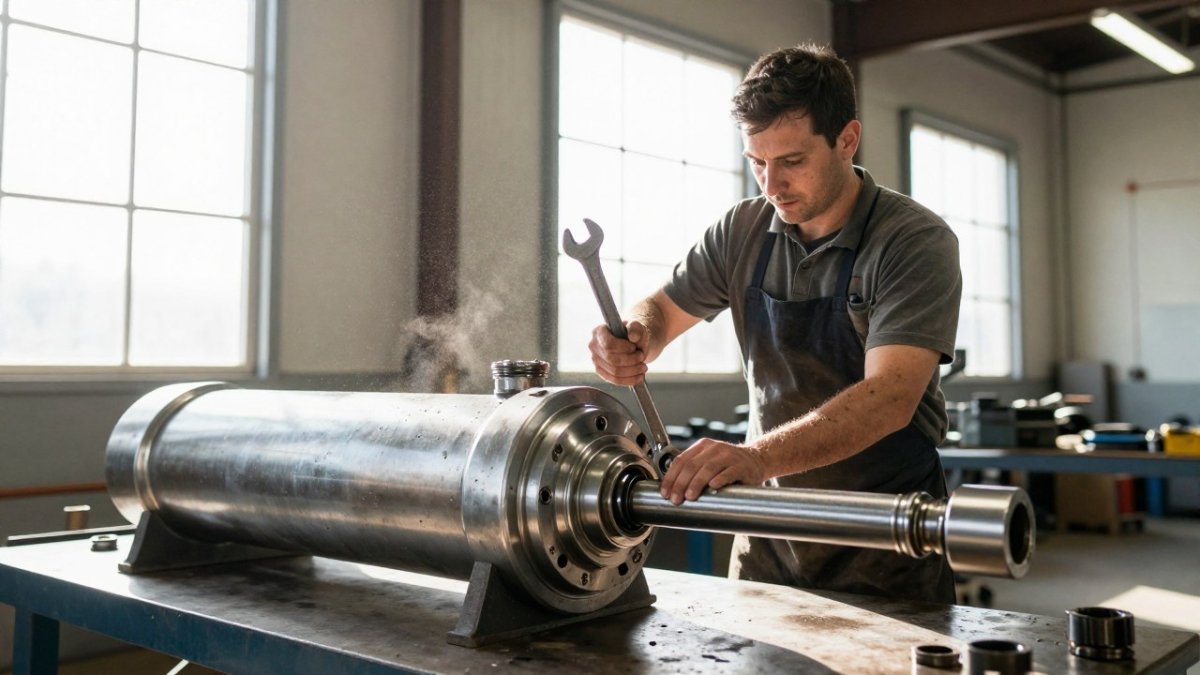
- Pressure testing. The assembled cylinder is pressurized to its rated working pressure and held to confirm the barrel, end caps, and welds hold. Most shops test to at least the system's relief setting so the part is never the weakest link.
- Leak checks. Seals, port threads, and rod wiper areas are inspected under pressure for weeping or drips. A slow leak at the port is a fitting problem; a leak at the rod is a seal or surface-finish problem.
- Stroke and alignment verification. The rod is cycled through full stroke to confirm it extends and retracts smoothly and that the mounting aligns with the equipment without binding.
For safety, hydraulic systems store energy even when the pump is off. Testing is done with proper guarding and never with a person positioned in line with the rod or a pressurized fitting.
What Actually Drives Your Quote
Quote drivers are straightforward once you see them broken out. The price of a custom hydraulic component comes down to five inputs:
- Design and engineering time. Reverse-engineering a discontinued part or creating a new drawing takes shop time before any metal is cut. A part with an existing drawing skips most of this.
- Material. Standard carbon steel is the baseline. Stainless, chromoly, or specialty alloys for corrosive or high-cycle service cost more and may add lead time.
- Machining and welding time. A simple reseal is measured in hours. A custom-machined rod with new chrome, or a barrel that needs honing and rewelding, is measured in days.
- Quantity. A one-off prototype carries the full setup cost on a single unit. A production run spreads setup across many parts, so the per-unit price drops as quantity rises.
A clear quote should list every line before work starts: labor, materials, machining, rechroming or coating, testing, and any expedite fee. Shops that quote a flat labor rate and then add rechroming or machining charges later are the ones that surprise you at pickup.
Preparing a Request That Gets a Fast, Accurate Quote
A complete request includes the equipment make and model, the original part number if one exists, measured dimensions, system working pressure and flow rate, fluid type and operating temperature, and photos of the part in place. Include whether you need one unit or a production run, and your deadline. The more of these you provide up front, the fewer callbacks stand between you and a scheduled job.
Common Mistakes That Lead to Repeat Failures
Repeat failures almost always trace back to one of four mistakes. Skipping the compatibility check tops the list, followed by reusing contaminated fluid, installing a part that meets dimensions but not pressure rating, and skipping the post-repair flush.
| Mistake | What It Causes | The Fix |
|---|---|---|
| Skipping pressure-rating checks | Seal blowout under load | Verify rating against relief setting |
| Reusing contaminated fluid | Repeat seal and pump damage | Flush the system after repair |
| Matching dimensions only | Early rod or bore wear | Check material and finish too |
| No post-repair flush | Metal debris circulates | Flush and filter before restart |
Fluid contamination deserves special attention. If a shop replaces parts without diagnosing why the last set failed, the new parts will fail the same way. Root-cause diagnosis is not optional.
Frequently Asked Questions
How do you get a custom hydraulic component made?
You start by documenting the failed or missing part: dimensions, pressure rating, flow rate, port sizes, and the equipment it serves. A fabricator then reverse-engineers or designs the component, selects material, machines it to tolerance, and tests it before installation. For obsolete parts, bring the original if possible. Brothers Hydraulics LLC handles this full sequence in-house, from measurement through final inspection, so you are not coordinating between multiple shops.
What information does a fabricator need to make a replacement hydraulic part?
Bring the part itself or clear photos with measurements. Key details include bore and rod diameter, stroke length, mounting style, port thread type, working pressure, and fluid type. If you have OEM documentation or a part number, that speeds things up. For hard-to-find hydraulic parts, the original component is the best reference. Missing data means the fabricator has to reverse-engineer more, which adds time to your turnaround.
When should a hydraulic component be repaired instead of replaced?
Repair usually wins when the cylinder barrel and rod are structurally sound and the failure is limited to seals, minor scoring, or worn bushings. Replacement makes more sense when the barrel is cracked, the rod is bent beyond straightening, or the cost of machining exceeds a new unit. A fabricator can assess this quickly. For older equipment where replacements are discontinued, repair or custom fabrication is often the only path.
How long does custom hydraulic component fabrication take?
Turnaround depends on complexity, material availability, and current shop load. Simple seal replacements and standard shaft fabrication can move quickly, while one-off production of obsolete components takes longer because of design and machining time. Ask for a timeline upfront and confirm whether testing is included. Brothers Hydraulics LLC provides turnaround estimates when you submit your part details, so you can plan downtime around a real date.
When a machine is down, the cost climbs by the hour, and a repair that fails in three months costs more than doing it right the first time. Brothers Hydraulics LLC brings over a decade of experience to hydraulic cylinder repair, hydraulic shaft fabrication, and custom parts manufactured to your specifications, with fast turnaround times and competitive pricing. If you are tired of quick fixes that do not hold, get a quote from Brothers Hydraulics LLC and get your equipment back to work.