 How-to
Hydraulic Cylinder Warranty: Guarantee Terms Guide
Table of Contents
- How Hydraulic Cylinder Warranty Terms Actually Work
- Hydraulic Cylinder Warranty Period: Reading the Clock Correctly
- What Hydraulic Cylinder Warranty Coverage Includes
- Hydraulic Cylinder Warranty Exclusions and What Voids Coverage
- The Hydraulic Cylinder Warranty Claim Process, Step by Step
- The Warranty Comparison Worksheet: What to Ask Before You Buy
- Frequently Asked Questions
Last Updated: October 5, 2026
How Hydraulic Cylinder Warranty Terms Actually Work
A hydraulic cylinder warranty is a written promise from a supplier or repair shop covering defects in materials and workmanship for a set period. That promise rarely means what buyers assume.
Most warranty disputes start not with a bad product but with a misunderstanding about how the coverage clock runs.
The Two Clocks: Calendar Time and Operating Hours
Every hydraulic cylinder warranty runs on two clocks at once, and the shorter one wins.
- Calendar time: months from a fixed start date
- Operating hours: hours of actual use on the machine
A warranty might read "12 months or 3,000 operating hours, whichever occurs first." Hit 3,000 hours in month eight and coverage is gone; let the machine sit for a year and the calendar clock still runs.
Hydraulic Cylinder Warranty Period: Reading the Clock Correctly
The hydraulic cylinder warranty period is the window during which a supplier will honor a claim, and its start date matters more than its length.
Suppliers use different triggers for that start date:
| Start Trigger | What It Means | Who It Favors |
|---|---|---|
| Date of dispatch | Clock starts when the part ships | Supplier |
| Date of delivery | Clock starts when the part arrives | Buyer |
| Date of acceptance | Clock starts when you sign off on receipt | Buyer |
| Date of first use | Clock starts at installation | Buyer |
Standard terms often run 12 months; heavier-duty coverage may stretch to 18 months, with operating-hour caps of 3,000 or 5,000 hours on top. Ask for the start trigger in writing before you order, a delivery-date trigger can buy weeks of extra coverage on a part that sits in your warehouse.
What Hydraulic Cylinder Warranty Coverage Includes
Hydraulic cylinder warranty coverage typically protects against defects in materials and workmanship, not wear, abuse, or normal service life.
Covered defects usually include:
- Failed seals from a production defect
- Cracks or porosity in the barrel or rod
- Incorrect machining on a component
- Improper assembly at the factory or shop
In practice: a cylinder leaking fluid in its first weeks is a strong claim; one that fails after two years of hard digging usually is not.
New, Repaired, and Rebuilt Cylinders: Different Coverage, Different Rules
Coverage changes depending on what you bought.
New cylinders carry the fullest terms: longest calendar window, highest hour cap, and coverage for materials and workmanship.
Repaired cylinders usually carry a shorter window focused on the specific repair, if a shop replaced a seal, coverage often applies to that seal and its labor, not the whole cylinder.
Rebuilt cylinders sit in between: a full rebuild may cover all replaced components, but the reused core (barrel, rod, end caps) may be excluded or covered only briefly.
Remedies: Repair, Replacement, or Refund
Most written warranties offer repair, replacement, or refund, and the supplier usually picks which applies. This exclusive remedy clause limits you to that single option.
- Repair: the shop fixes the defective unit
- Replacement: the supplier ships a new or rebuilt cylinder
- Refund or credit: you get your money back or a credit toward future orders
Read it closely: if repair is the exclusive remedy, you cannot demand a refund because a repair is inconvenient, a distinction that matters for a fleet on a deadline.
Hydraulic Cylinder Warranty Exclusions and What Voids Coverage
Hydraulic cylinder warranty exclusions remove your coverage and cause more denied claims than defective parts do. Most documents bury them in dense legal language, so many buyers only learn them after a claim is refused.
The exclusions fall into three buckets: system conditions, operating conditions, and owner actions. Understanding which bucket a denial falls into tells you whether you have any path to appeal.
System Conditions That Void Coverage
- Fluid contamination. Metal shavings, water, grit, or degraded fluid scores the rod, tears seals, and destroys the bore. Suppliers treat this as a system problem, not a cylinder defect, the most commonly invoked exclusion.
- Wrong fluid or viscosity. Fluid outside the cylinder's rated spec can cause seal swell, internal bypass, and premature failure, all classified as owner-caused.
- Overpressure. A relief valve set too high, a deadheaded circuit, or a shock-load spike can balloon a barrel or blow a seal, usually detectable from the failure pattern.
- Overheating. Sustained fluid temperatures above the seal's rated range harden and crack seals. Hour-meter records and fluid condition often reveal this after the fact.
Operating Conditions That Void Coverage
- Operation beyond rated capacity. Every cylinder has a rated pressure, load, and duty cycle; exceeding any shifts the failure from defect to misuse.
- Side loading and misalignment. A bent rod or scored bore from a misaligned mount is almost always classified as an installation or application problem, not a manufacturing defect.
- Use in an unrated application. A standard-duty cylinder in a high-cycle application, or one rated for a different fluid, is a common denial trigger.
- Normal wear. Seals, bushings, rod surfaces, and wipers are wear items; a materials-and-workmanship warranty does not cover their expected service life.
Owner Actions That Void Coverage
- Unauthorized repairs or disassembly. Opening a cylinder before the supplier authorizes it is one of the fastest ways to lose coverage. Even a well-intentioned inspection can be treated as tampering.
- Improper installation or mounting. Wrong torque, missing alignment shims, or a mismatched mount can void coverage on the whole unit.
- Missed reporting deadlines. Many warranties require reporting within a set number of days of discovery; a cylinder that sat a month before anyone called it in may be denied on that basis alone.
- Missing proof of purchase. Without an invoice, packing slip, or serial number, most suppliers will not process a claim regardless of cause.
How to Protect Your Coverage
The practical defense is documentation and discipline. Keep fluid analysis records, log hour-meter readings, photograph installations, and never open a cylinder before you have return authorization in writing. If your hydraulic system keeps killing cylinders, fixing the cylinder alone will not stop it, the contamination or pressure problem will simply destroy the replacement too. Address the root cause first, then file the claim.
The Hydraulic Cylinder Warranty Claim Process, Step by Step
The hydraulic cylinder warranty claim process follows a predictable path, and skipping a step is the fastest way to a denial.
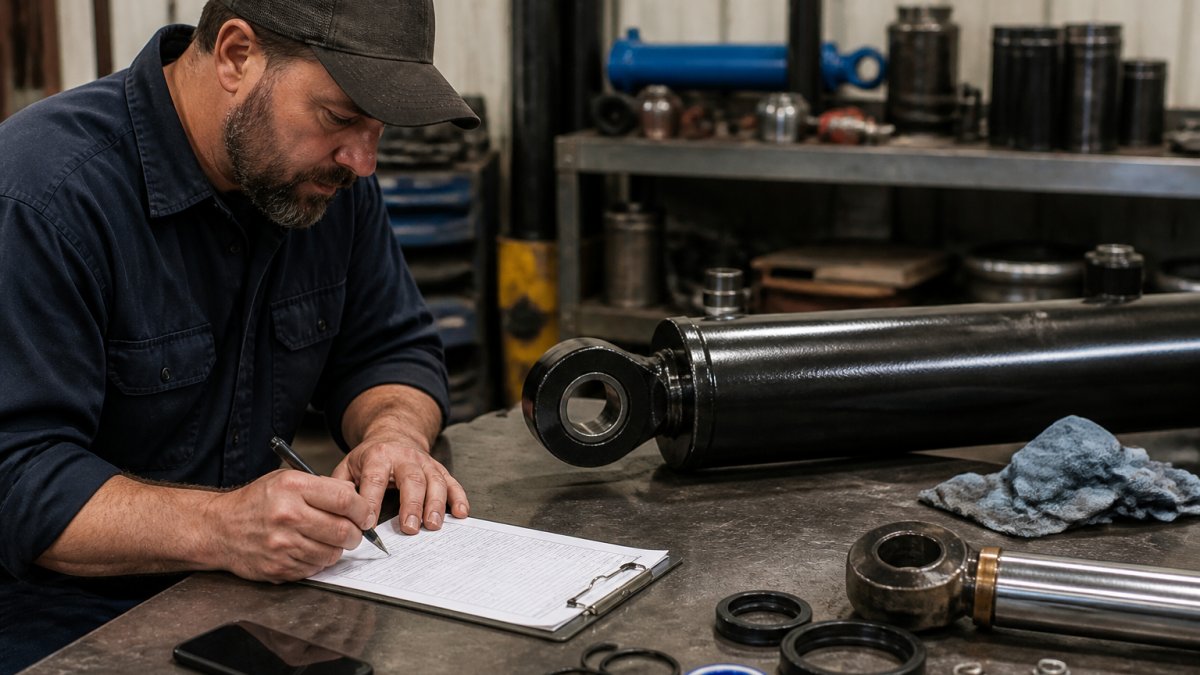
Step 1: Confirm you are inside the warranty period. Check both clocks, calendar months and operating hours, and write down the earlier of the two expiration dates.
Step 2: Stop using the cylinder immediately. Continued operation after a failure can turn a covered defect into an excluded one.
Step 4: Gather your proof of purchase. Invoice, packing slip, serial number, and the original order or repair record.
Step 5: Meet the return deadline. Warranty terms often set a short window, sometimes as few as 10 to 30 days, between reporting the failure and shipping the unit back.
Step 6: Document everything before it ships. Photos of the failure, the hour meter, the fluid condition, and the installation protect you if the supplier disputes the cause.
Claim Documentation Checklist
Use this list before the cylinder leaves your yard:
- Purchase invoice or repair order with date
- Delivery or acceptance record
- Machine hour-meter reading at failure
- Cylinder serial number and any tags
- Photos of the leak, damage, or failure point from multiple angles
- Photos of the installation and mounting
- Fluid sample or fluid analysis report if contamination is suspected
- Written description of when the failure started and how the machine behaved
- Return authorization number from the supplier
- Ship-by date and carrier tracking number
Proving Cylinder Failure: Evidence That Gets Claims Approved
Evidence decides claims. A leaking cylinder or a cylinder bypassing under load is easy to demonstrate; internal damage is not. What to capture before the unit leaves your yard:
- Photos of the leak or damage from multiple angles, including a wide shot showing the cylinder in the machine
- A reading of the machine's hour meter, photographed with the cylinder in frame if possible
- The cylinder's serial number and any tags
- A short written note on when the failure started and how the machine behaved, loss of speed, drift under load, fluid temperature rise, or external leakage
- Fluid samples if contamination is suspected, sent to a lab if the supplier requires it
A failed component with clean documentation moves through approval fast. A bare cylinder with no paperwork invites questions, delays, and denials. If the supplier asks for a teardown report, ask whether they will perform it or whether you need a third party, and get that in writing before anyone opens the unit.
The Warranty Comparison Worksheet: What to Ask Before You Buy
Before you buy or authorize a repair, get answers to these questions in writing. This worksheet is the difference between coverage you can use and coverage that exists only on paper.
- What triggers the warranty start date: dispatch, delivery, acceptance, or first use?
- What is the calendar limit, and what is the operating-hour limit?
- Which applies first, and how is that calculated?
- Does coverage apply to new, repaired, and rebuilt units differently?
- Which components are covered on a rebuilt cylinder?
- What is the exclusive remedy: repair, replacement, or refund?
- What voids coverage, and how is contamination handled?
- What is the return deadline after a failure is reported?
- What proof of purchase and documentation is required?
- Who pays shipping on a warranty return?
For a fleet running older equipment, add one more question: does the warranty still apply if the cylinder was custom-machined to replace a discontinued part? The answer varies, and it's worth knowing before you sign off.
Warranty terms only protect you if the shop behind them stands by the work. Brothers Hydraulics LLC has repaired and rebuilt hydraulic cylinders for construction, agriculture, industrial, and transportation equipment since 2013, with fast turnaround times and the ability to manufacture hard-to-find or discontinued components. When a cylinder comes back to us, we diagnose the root cause, not just the symptom. Get a quote from Brothers Hydraulics LLC and get your equipment back to work.
Frequently Asked Questions
What does a hydraulic cylinder warranty usually cover?
Most written warranties cover defects in materials and workmanship on new cylinders, such as failed seals, cracked rods, or manufacturing flaws. Repaired and rebuilt cylinders typically carry a shorter warranty on the specific work performed and parts installed. Coverage usually includes repair or replacement of the defective unit, though labor and shipping terms vary by supplier. Always ask whether parts and labor are both covered before you buy.
What can void a hydraulic cylinder warranty?
Common actions that void coverage include using the cylinder outside its rated pressure or operating-hour limits, skipping required maintenance, installing unapproved parts, or damaging the unit through misuse or contamination. Fluid contamination is a frequent cause of denied claims because it points to system-level problems rather than a defect in the cylinder itself. Keep proof of purchase and maintenance records to protect your claim.
How long does a hydraulic cylinder warranty period typically last?
Standard hydraulic cylinder warranty periods run 12 to 18 calendar months from date of delivery or first use, often paired with an operating-hour cap like 3,000 or 5,000 hours, whichever occurs first. Repaired and rebuilt cylinders usually get shorter terms than new ones. The start date matters: some suppliers count from dispatch, others from acceptance or first use, so confirm which date applies to your purchase.