 How-to
How to Inspect Hydraulic Hoses for Wear: A Step-by-Step Guide
Last Updated: November 24, 2026
Quick Summary
To inspect hydraulic hoses for wear, shut the machine down, relieve system pressure, then check each hose from fitting to fitting for cuts, abrasion, bulges, leaks, and cracks in the outer cover. Regular visual checks catch small wear before it causes a failure.
- Park on firm, level ground, lower all attachments, and shut off the engine before touching any hose.
- Relieve stored pressure by cycling every control through its full range with the engine off.
- Never check for leaks with your bare hand; use cardboard or a wooden stick instead.
- Work from one fitting to the other, inspecting the full length including bends and clamp points.
- Replace any hose showing exposed reinforcement, a bulge, a leak, or a crushed section immediately.
Table of Contents
- How Do You Inspect Hydraulic Hoses for Wear?
- Why Regular Hydraulic Hose Inspection Prevents Failure
- Hydraulic Hose Inspection Intervals: How Often to Check
- Preparing the Equipment Safely Before You Inspect
- Hydraulic Hose Inspection Checklist: Step-by-Step From Fitting to Fitting
- Hydraulic Hose Wear Signs and Severity Levels
- When to Replace Hydraulic Hoses and Documenting Your Inspection
- Schedule Your Hydraulic Hose Inspection or Repair With Brothers Hydraulics
- Frequently Asked Questions
How Do You Inspect Hydraulic Hoses for Wear?
To inspect hydraulic hoses for wear, shut the machine down, relieve system pressure, and check each hose from fitting to fitting for cuts, abrasion, bulges, leaks, and cracks in the outer cover. Hydraulic cylinders and the hoses that feed them can both show wear through regular visual checks. Most hose failures give warning signs first, so a short, regular inspection can catch a problem before it strands a machine.
This guide walks through what to look for, how often to check, how to work safely, and when a hose should be replaced. Hydraulic fluid under pressure can cause serious injury, so the safety steps come first.
Why Regular Hydraulic Hose Inspection Prevents Failure
A hose that fails under pressure can spray hot fluid, stop a machine mid-job, and damage nearby components. A regular inspection finds wear while it is still small, when a hose can be replaced in an hour instead of after a breakdown. If an inspection turns up damage to a cylinder or hose, you can find heavy equipment hydraulic repair in Phoenix, AZ.
Hoses wear from the outside in. Rubbing against a frame, heat from an engine, sun exposure, and flexing at the fittings all break down the outer cover over time. Once the cover is cut through, the reinforcement layer underneath weakens quickly. For the full range of repair and rebuild services offered, review what is available.
Regular inspection also gives you a record. Logging what you saw and when shows whether a hose is wearing faster than expected, which points to a routing or operating problem rather than bad luck.
For a deeper look at the broader causes of hydraulic failure, see how to prevent hydraulic system failure.
Hydraulic Hose Inspection Intervals: How Often to Check
Inspect hydraulic hoses at regular intervals and any time the machine has been in a harsh environment, hit something, or shown a new leak. Many operators check hoses on a set schedule and add extra checks for equipment that runs in dusty, hot, or abrasive conditions.
Heavier-duty use calls for tighter intervals. A machine that works daily in rock, grit, or high heat will wear hoses faster than one used occasionally on clean ground.
Your equipment manual is the best starting point. It lists the manufacturer's recommended inspection points and any replacement intervals for hoses.
Preparing the Equipment Safely Before You Inspect
Safety comes before any close look at a hose. Hydraulic systems can hold pressure even when the engine is off, and a pinhole leak can inject fluid through skin, which is a medical emergency. The steps below follow standard lockout/tagout shutdown practice for hydraulic equipment.
Follow these steps in order before you touch a hose:
- Park on firm, level ground. Set the parking brake, lower all attachments, blades, buckets, and outriggers to the ground, and chock the wheels if the machine can roll.
- Shut off the engine and remove the key. On electric-drive equipment, open the disconnect. Follow the manufacturer's lockout/tagout procedure and apply your own lock and tag so no one can restart the machine while you are under it.
- Relieve stored hydraulic pressure. Cycle every control, boom, bucket, steering, stabilizers, auxiliary circuits, through its full range several times with the engine off. Accumulators and pilot circuits can hold pressure after the pump stops, so check the manual for any bleed-down procedure.
- Let hot components cool. Hydraulic fluid and hose fittings can reach temperatures that cause burns. Wait until surfaces are safe to approach before handling them.
- Wear safety glasses and gloves. Add a face shield when working under a machine where fluid could drip or spray.
Never check for leaks with your bare hand. Use a piece of cardboard or a wooden stick to look for spray, and keep your body clear of any pressurized line. A high-pressure injection injury may look like a small puncture, but hydraulic fluid can spread through tissue; seek emergency medical care immediately and tell the provider the injury involved hydraulic fluid under pressure.
Watch out: do not crack a fitting to "check for pressure" on a hose you have not confirmed is depressurized. Loosening a fitting on a live circuit can release fluid at full system pressure and cause injection or burns.
If a hose must be removed for closer inspection, cap or plug the open ports and fittings to keep dirt out, and label the hose so it goes back on the correct circuit.
Hydraulic Hose Inspection Checklist: Step-by-Step From Fitting to Fitting
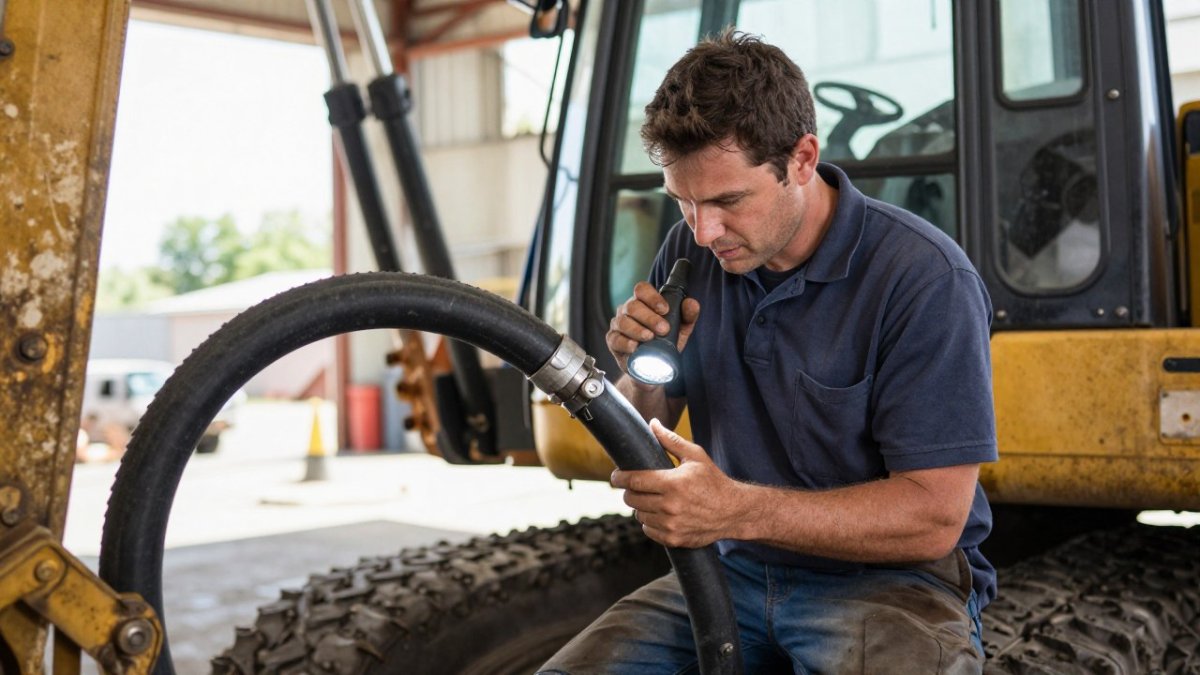
Work from one fitting to the other, and inspect the full length of each hose, including the bends and the spots near clamps and fittings. Most damage hides where a hose bends or rubs.
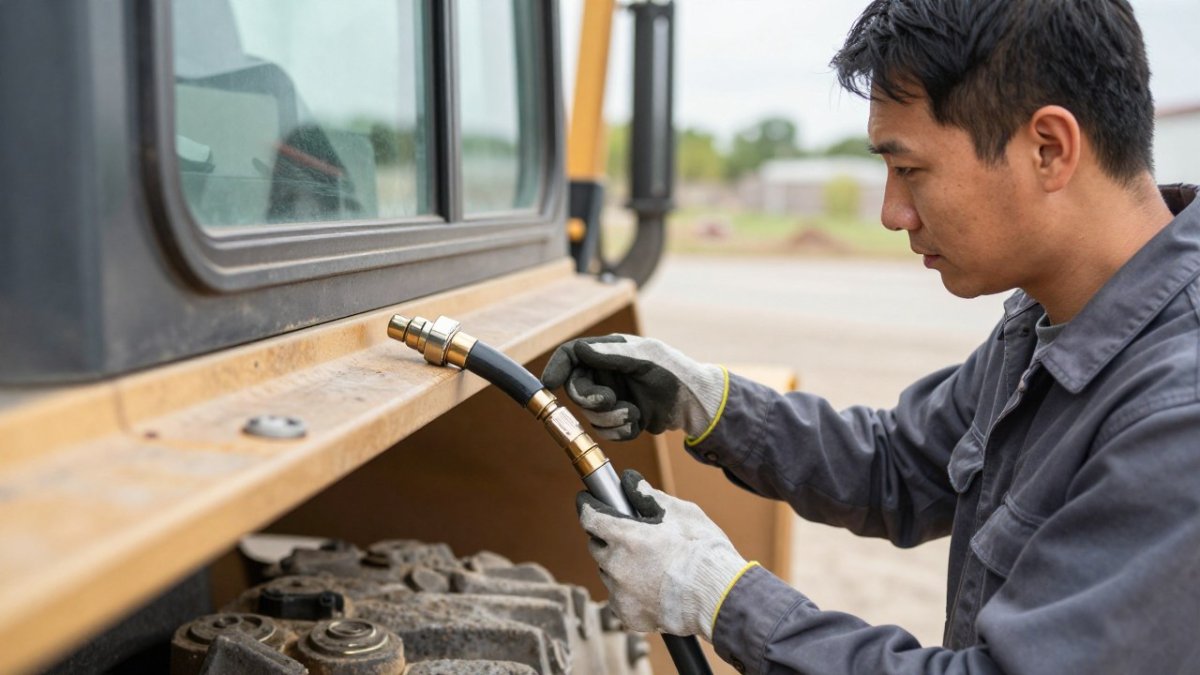
- Check the fittings first. Look for wet spots, crusted fluid, or loose connections at each end.
- Run your eyes along the outer cover. Look for cracks, cuts, and fissures.
- Look for abrasion. Find bare spots, flattened areas, or a worn outer layer where the hose rubs.
- Check for bulges and blisters. Swelling means the inner tube may be failing and fluid is getting into the cover.
- Inspect the routing. Confirm the hose is not kinked, twisted, crushed, or pinched against a frame edge.
- Look for exposed reinforcement. Wire or fabric showing through the cover is a replacement sign.
- Check clamps and supports. Make sure they hold the hose without squeezing it.
- Record what you found. Note the hose location, the condition, and the date.
Some damage is hard to see from the outside. A hose can look fine while the inner tube has cracked, so if the machine loses power or runs hot, check the hose more closely before you return it to service.
Hydraulic Hose Wear Signs and Severity Levels
Not every mark means a hose must come off today, but the decision has to be consistent from one inspection to the next. Use the three levels below to sort findings, then apply the decision rules that follow.
- Minor, monitor. Surface scuffing or light abrasion where the outer cover is intact and the reinforcement is still covered. No cracks, no bulges, no wet spots. Record it and recheck at the next scheduled interval.
- Moderate, plan replacement. Deep abrasion that has thinned the cover, small cracks or fissures in the cover, a slight bulge or soft spot, or a fitting that is seeping but not spraying. Schedule the replacement before the next heavy-duty cycle and keep the hose under closer watch in the meantime.
- Severe, remove from service now. Exposed wire or fabric reinforcement, a large or growing bulge, a leak at the fitting or along the hose, a crushed or kinked section that restricts flow, or any sign of fluid under pressure. Take the machine out of service until the hose is replaced.
A few defect types deserve special handling:
- Exposed reinforcement. Once wire or fabric is visible, the pressure-retaining layers are compromised. Do not tape, coat, or cover it and return it to work.
- Bulges and blisters. A bulge usually means the inner tube has failed and fluid is pushing into the cover. It can burst without warning under load.
- Leaks and seepage. A wet fitting or a crusted residue trail is a leak, even if it is not spraying. Treat it as severe until the source is confirmed.
- Crushed or kinked sections. A permanent flattening or sharp bend restricts flow, builds heat, and can fail at the bend.
Watch out: a hose that is leaking at a fitting can fail suddenly under load. Do not run the machine to finish a job, and do not reuse a hose that has been kinked, crushed, or has exposed reinforcement.
When a finding is moderate or severe, the next step depends on the defect. Fittings that are loose or damaged can sometimes be repaired by a qualified technician with the correct crimp or reusable fitting and a hose rated for the same pressure. Cuts, bulges, exposed reinforcement, and crushed sections mean the hose assembly must be replaced, not patched. If you are unsure whether a hose meets the return-to-service criteria, have a qualified technician inspect it before the machine goes back to work.
The article sorts hose findings into three severity levels, each with a clear action.
| Severity | Typical sign | Action |
|---|---|---|
| Minor | Surface scuffing, cover intact | Monitor and recheck next interval |
| Moderate | Deep abrasion, small cracks, slight bulge | Plan replacement before next heavy cycle |
| Severe | Exposed reinforcement, large bulge, leak | Remove from service now |
When to Replace Hydraulic Hoses and Documenting Your Inspection
Replace a hose at once if you see exposed reinforcement, a bulge, a leak, or a crushed section. If the damage extends to a cylinder, see the cylinder rebuild and reseal service. Plan a replacement for hoses with deep cuts or heavy abrasion before they reach the severe stage.
Use the same hose type and rating as the original, and make sure the new hose is routed so it does not rub, kink, or twist. Pressure-test the repaired system before you return the machine to work.
Keep a simple inspection log. For each hose, write the location, the date, what you found, what you did, and who checked it. Over time, this record shows which hoses wear fastest and helps you plan replacements before they fail.
Schedule Your Hydraulic Hose Inspection or Repair With Brothers Hydraulics
If you have found a damaged hose, or you want a professional check of your hydraulic system, Brothers Hydraulics LLC can help. Brothers Hydraulics LLC provides hydraulic cylinder repair and precision machining for construction, agriculture, industrial, and transportation equipment. Contact us for a quote. Visit brothershydraulicsllc.com to get started.
Frequently Asked Questions
How often should hydraulic hoses be inspected?
Inspect hydraulic hoses on a regular schedule set by the equipment manufacturer and your operating conditions. Many operators check hoses at every pre-shift or daily walkaround, then perform a more thorough inspection at scheduled maintenance intervals, such as every three months for equipment working in harsh conditions. Equipment that runs in dusty, hot, or abrasive environments, or that vibrates heavily, should be inspected more often. Record each inspection so you can spot trends in wear over time and adjust the interval as needed.
What signs indicate a hydraulic hose needs to be replaced?
Replace a hydraulic hose when you see cracks or cuts through the outer cover that expose the reinforcement, bulges or blisters, leaks or fluid seepage at the fittings or along the hose body, or abrasion that has worn through the cover. Kinks, crushing, and hardening or stiffness also call for replacement. Any hose that shows external damage should be taken out of service until it is replaced or repaired by a qualified technician.
Can you inspect a hydraulic hose while the system is pressurized?
Do not touch or handle a hydraulic hose while the system is pressurized. Shut down the machine, relieve all stored pressure according to the manufacturer's procedure, and lock out the power source before you begin a hands-on inspection. Visual checks from a safe distance are acceptable while the system runs, but never place your hands on a pressurized hose, because hydraulic fluid under pressure can penetrate skin and cause serious injury.
What should you do if you find a hydraulic hose leak?
Shut down the equipment, relieve system pressure, and lock out the power source before touching the leaking area. Identify the source of the leak, whether it is the hose, a fitting, or a coupling. Do not tighten a fitting on a pressurized system. Replace hoses that show cuts, bulges, or fluid seepage rather than patching them. Document the leak, the location, and the repair, and return the equipment to service only after the damaged hose or fitting is fixed and checked.