 How-to
Finding Obsolete Hydraulic Cylinder Parts: 2026 Guide
Table of Contents
- Start With Identification: Nameplates, Tags, and Missing Data
- Measuring Bore, Rod, and Stroke on Obsolete Hydraulic Cylinder Parts
- Hydraulic Cylinder Seal Kit Identification for Legacy Equipment
- Cross-Referencing Obsolete Parts and Aftermarket Components
- Reverse Engineering Hydraulic Components With 3D Scanning
- Custom Hydraulic Cylinder Machining: When a Machine Shop Makes the Part
- Repair or Replace? A Decision Framework for Legacy Cylinders
- Frequently Asked Questions
Last Updated: October 2, 2026
Start With Identification: Nameplates, Tags, and Missing Data
Finding obsolete hydraulic cylinder parts starts with one question: what are you holding? Measure the cylinder and record its nameplate before you call anyone, that determines whether a replacement exists or someone has to make it.
Reading Nameplate Data and Serial Numbers
A nameplate typically lists the model number, serial number, bore diameter, rod diameter, stroke length, and pressure rating. Copy every line, including codes you do not recognize, serial numbers often decode the build year and production run, which matters when a manufacturer changed a seal profile mid-year without changing the model number.
What to Do When the Tag Is Gone
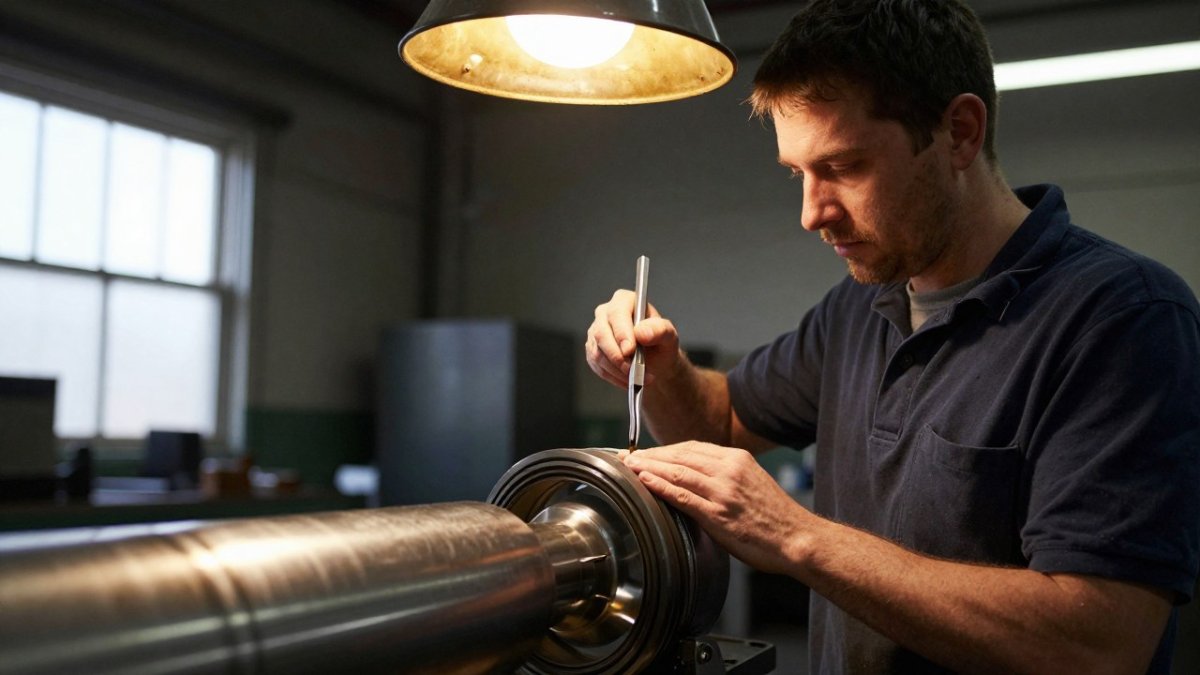
When the nameplate is missing, corroded, or painted over, you build the identification from measurements instead, a normal part of sourcing obsolete hydraulic cylinder parts.
Gather these before you call:
- Bore diameter, measured at the cylinder barrel interior
- Rod diameter, measured on the exposed chrome surface away from wear
- Stroke length, measured from fully retracted to fully extended
- Mounting style, including pin size, clevis dimensions, and bolt pattern
- Port size and thread type on both ends
- Overall retracted length, pin center to pin center
Measuring Bore, Rod, and Stroke on Obsolete Hydraulic Cylinder Parts
Accurate measurement is the whole game. A bore reading off by a fraction of a millimeter sends you to the wrong seal kit, which fails within weeks.
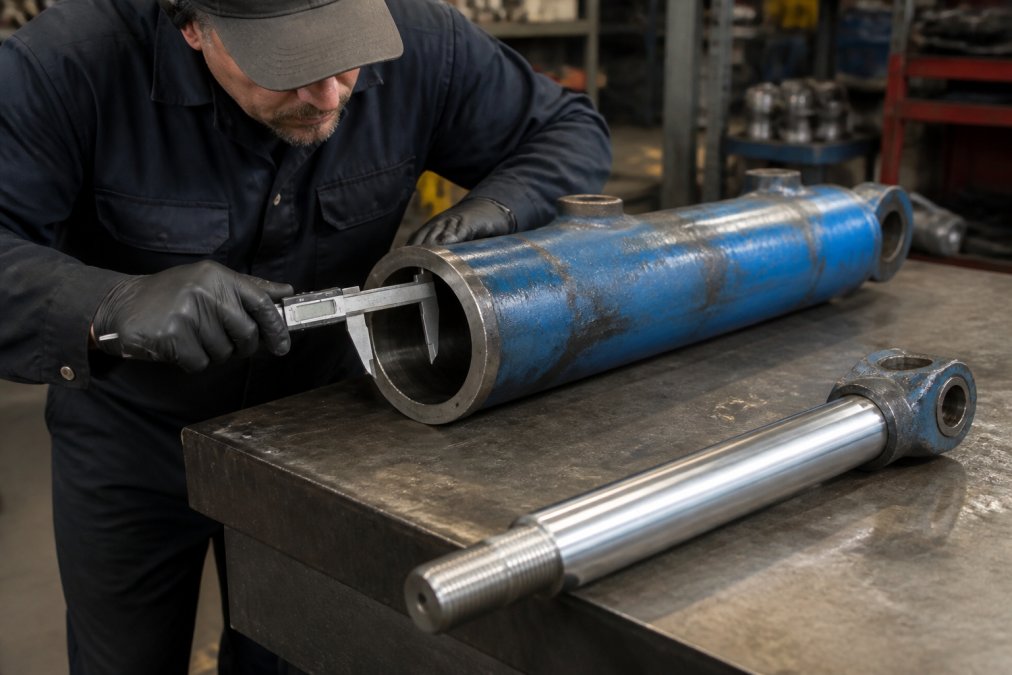
Component Identification: Gland Nuts, Rod Cartridges, and Piston Heads
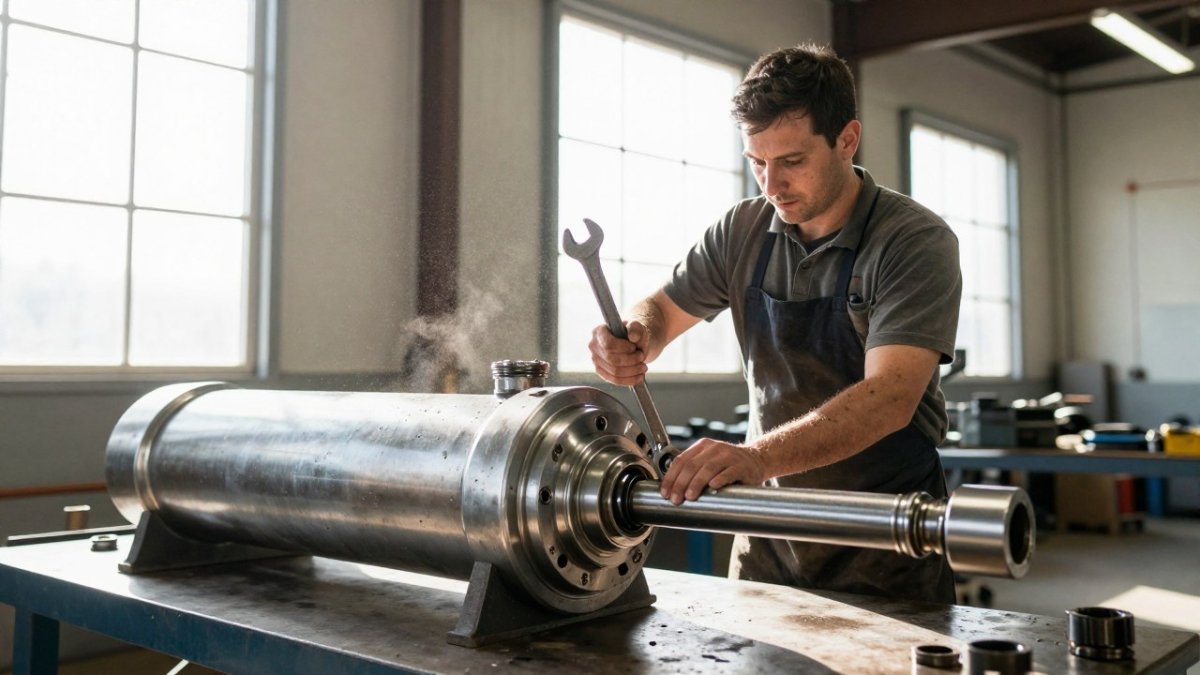
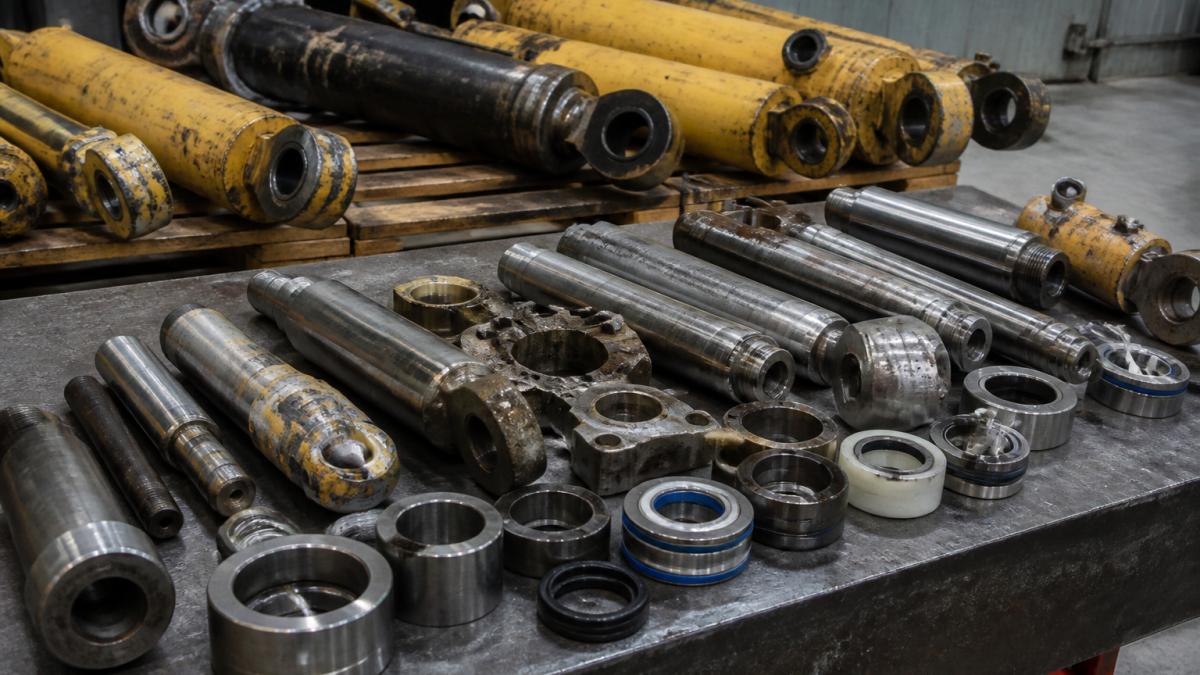
Once measurements are recorded, identify the internal assembly style. The gland nut threads onto the barrel and retains the rod seal package; a rod cartridge is a self-contained unit that threads or bolts in as one piece; the piston head mounts on the rod inside the barrel and carries the piston seals and wear rings.
Hydraulic Cylinder Seal Kit Identification for Legacy Equipment
Seal kit identification for legacy cylinders comes down to profile, not part number. Manufacturers discontinue part numbers constantly, but seal profiles stay in production for decades because they are standardized across the fluid power industry. The part number is a label; the profile is the engineering.
- Inner diameter and outer diameter of each seal
- Cross-section thickness
- Profile shape, such as U-cup, V-packing, or lip seal
- Material, if it can be identified from color and hardness
- Durometer reading, if you have a shore gauge on hand
How Seal Profiles Actually Seal
A U-cup seals because system pressure pushes the lips outward against the groove walls and the rod, the higher the pressure, the harder the lips press, the self-energizing principle. A V-packing stack does the same through nested rings, each adding a stage of sealing, while a lip seal relies on a molded edge that flexes against the mating surface.
Durometer and Extrusion: The Two Failure Modes Nobody Explains
Durometer is the hardness of the seal compound, measured on the Shore A scale. Harder compounds resist extrusion, a seal squeezing into the clearance gap between piston and barrel under high pressure, while softer compounds seal better at low pressure and conform to worn surfaces.
Diagnosing Why the Original Seal Failed
Before you install anything, read the old seal. The failure mode tells you what to fix:
- Extruded or nibbled edges, clearance too wide, bore worn, or pressure spike beyond the seal's rating
- Swollen or softened compound, wrong fluid, contaminated fluid, or incompatible seal material
- Hardened, cracked, or brittle compound, heat exposure beyond the compound's limit, or simple age
- Scored or gouged sealing surface, contamination in the fluid, or a damaged rod that needs rechroming
- Flattened or compressed cross-section, compression set from long service at temperature
Material Compatibility for Legacy Seals
Material choice matters more on legacy equipment than most guides admit. Older cylinders were built for a specific fluid, and the seal compound was matched to it; modern compounds often outperform the original spec, but only if the fluid chemistry allows it.
- Nitrile (Buna-N) works with petroleum-based hydraulic fluid across a wide temperature range, roughly -40°F to 250°F. It is the default for most mineral-oil systems and the cheapest option.
- Viton (FKM) handles higher temperatures, up to about 400°F, and resists many synthetic fluids and aggressive chemistries. It costs more and is the standard upgrade when heat is killing nitrile seals.
- Polyurethane offers excellent abrasion resistance and tear strength, which makes it a strong choice for rod seals on equipment that sees dirt and grit. It does not tolerate high heat as well as Viton.
- PTFE (Teflon) based seals handle extreme temperatures and nearly all fluids, but they are typically used as a cap or energizer combination rather than a standalone lip seal.
- EPDM is used where phosphate ester fluids are present, and it will swell and fail if exposed to petroleum oil. This is the single most common material mix-up on legacy equipment.
Cross-Referencing Obsolete Parts and Aftermarket Components
Cross-referencing is where obsolete hydraulic cylinder parts stop being obsolete. Aftermarket manufacturers produce seal kits and components for discontinued cylinders, and a good cross-reference table maps the original number to a current equivalent.
| What You Have | What to Match On | Where It Leads |
|---|---|---|
| Original part number | Manufacturer supersession list | Current OEM equivalent |
| No part number, seal in hand | ID, OD, cross-section, profile | Aftermarket seal by dimension |
| Nameplate data only | Bore, rod, stroke, mounting | Cylinder family identification |
| Nothing but the cylinder | Full measurement set | Custom fabrication |
Reverse Engineering Hydraulic Components With 3D Scanning
Reverse engineering hydraulic components is the answer when no catalog, cross-reference, or aftermarket source covers what you need.
Scanning earns its cost in three situations:
- The component is a one-off or a custom build with no documentation
- The original is worn enough that hand measurements are unreliable
- The part is complex enough that a drawing would take longer than a scan
Custom Hydraulic Cylinder Machining: When a Machine Shop Makes the Part
Custom hydraulic cylinder machining is the last resort that usually turns out to be the fastest option. When a part is genuinely unavailable, a machine shop can manufacture it to your measurements.
Repair or Replace? A Decision Framework for Legacy Cylinders
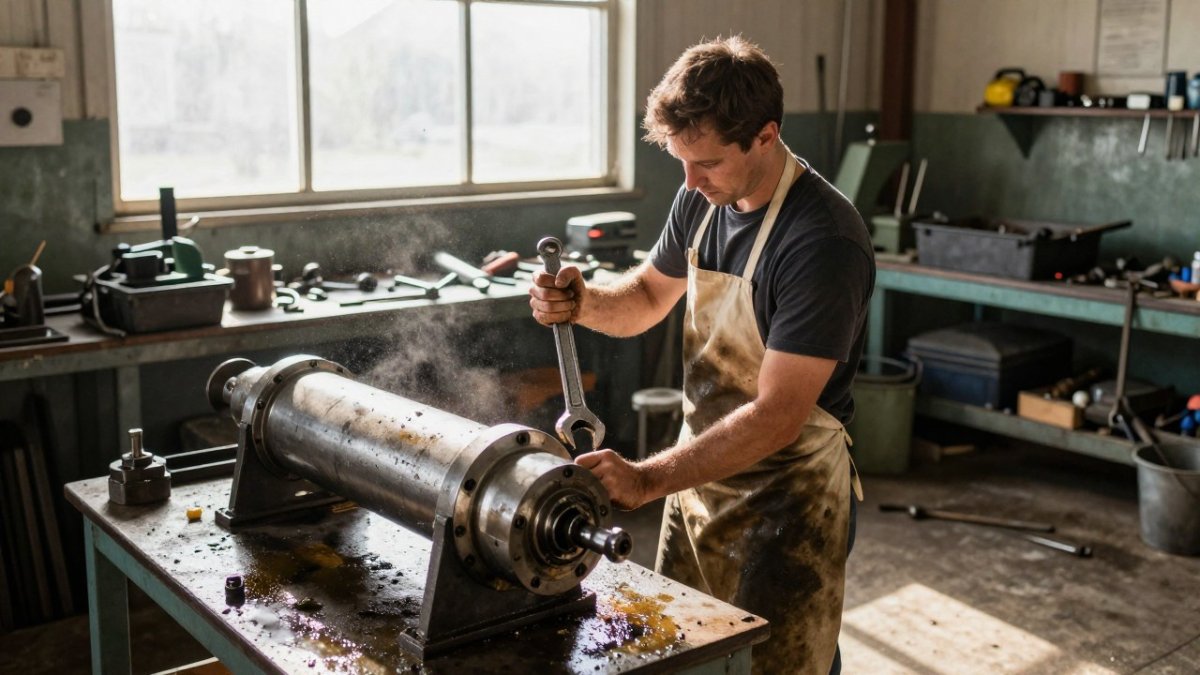
Repair or replace is a decision you can make in about ten minutes with the right criteria. The framework rests on three questions: is the cylinder structurally sound, is the failure understood, and does the economics favor a rebuild. Skip any of those and you are guessing.
Step 1: Structural Condition
Measure before you decide. The barrel bore should be round within the manufacturer's tolerance, typically a few thousandths of an inch for most industrial and mobile cylinders, checked at three points along the length and two angles 90 degrees apart. If the bore is out of round, tapered, or deeply scored, honing may restore it, but only up to the point where the piston seal can still bridge the clearance.
Step 2: Failure Analysis
A cylinder that failed once may have failed for a reason worth fixing. A cylinder that failed three times in a year is telling you the repair is treating a symptom.
- Single failure after years of service, normal wear, rebuild is appropriate
- Repeated seal failure on the same unit, suspect a bent rod, out-of-round bore, or contaminated fluid; rebuild without diagnosis is a repeat
- Failure shortly after a rebuild, suspect installation damage, wrong seal material, or a missed root cause
- Sudden failure with no warning, suspect a pressure spike, a failed relief valve, or a foreign object in the system
Step 3: Economics
Compare the full cost of each path, not just the parts:
- Rebuild cost, seal kit, labor, machining if needed, rod rechroming if needed
- Replacement cost, new cylinder, plus any mounting or plumbing changes required to fit it
- Downtime cost, lost production per day multiplied by the lead time of each option
- Future reliability, a rebuilt legacy cylinder may need attention again sooner than a new one
Step 4: The DIY vs. Professional Decision
Not every cylinder repair belongs in your shop, and not every repair needs a professional.
Safe to handle in-house if:
- The cylinder is a standard, low-pressure unit with a threaded gland
- You have the correct seal kit and a clean work area
- The failure is a straightforward seal leak with no rod or bore damage
- You can torque the gland to spec and pressure-test the assembly
Send it out if:
- The cylinder operates at high pressure or in a safety-critical application such as a lift, a press, or a man-lift
- The gland is welded, swaged, or retained by a method you cannot safely open
- The rod is bent, the bore is out of round, or the barrel is cracked
- The failure cause is unknown or the cylinder has failed repeatedly
- You lack a torque spec, a pressure test setup, or the tooling to reseat the gland
Step 5: When to Modernize Instead
Sometimes the right answer is neither repair nor like-for-like replacement. If the cylinder is a custom one-off, mounting geometry has been modified beyond any standard, or the machine is near end of life, a modern replacement cylinder with standard mounting may be cheaper over the next five years than another rebuild.
Frequently Asked Questions
What are my options when a hydraulic cylinder part is no longer manufactured?
You have four practical routes. First, cross-reference the original part number against aftermarket components, since many legacy cylinders share seals and wear rings with newer models. Second, have a machine shop fabricate the component from measurements or a sample. Third, adapt a current-production cylinder that matches your bore, rod, stroke, and mounting style. Fourth, rebuild the existing part if the damage is limited to wear surfaces. Most fleet managers combine cross-referencing with custom machining, which keeps the original cylinder and avoids re-plumbing the machine.
How do I identify my hydraulic cylinder if the tag is missing?
Measure instead of reading. Record bore diameter (inside the barrel), rod diameter, and stroke length (fully retracted to fully extended). Note the mounting style at both ends, port sizes and locations, and whether the gland is threaded, bolted, or retained by a wire ring. Photograph the cylinder from several angles next to a ruler. Those measurements plus photos give a machine shop or parts supplier enough to match or make the component, even without nameplate data.
Can custom precision machining replace obsolete hydraulic components?
Yes, and it is often the fastest path for legacy equipment. A shop machines a new piston head, gland nut, rod cartridge, or end cap to your measurements, then matches the surface finish and tolerances the cylinder needs. Hard chrome plating restores worn rod surfaces. Because the part is made to fit your cylinder rather than a catalog, you avoid the adapter plates and hose changes that come with swapping in a different unit. Lead times and pricing depend on the part's complexity and current shop load, so request a quote with your measurements and photos.
Is it better to repair an obsolete cylinder or replace the entire unit?
Repair usually wins when the barrel and rod are structurally sound, the mounting style is unusual, or downtime matters more than long-term cost. Replace when the barrel is deeply scored, the rod is bent, or the cylinder has failed repeatedly after prior repairs. A simple rule: if the cost to rebuild approaches the cost of a new cylinder and the machine still has years of service left, replace. If the machine is near end of life or the mounting is custom, rebuild and keep the original envelope.