 How-to
How Are Custom Hydraulic Cylinder Components Made?
Last Updated: November 12, 2026
Quick Summary
Custom hydraulic cylinder components are made by engineering and machining the barrel, piston, rod, gland, and end cap to meet a specific machine's load, stroke, and pressure requirements. The process starts with a specification sheet covering operating pressure, load, mounting space, and duty cycle, then moves through machining, assembly, and pressure testing. At Brothers Hydraulics LLC, we build and repair these parts for construction, agricultural, and industrial equipment.
- Bore diameter sets force output, rod diameter sets buckling resistance, and stroke length sets travel.
- A cylinder running continuously at high pressure needs more margin than one that strokes twice an hour.
- Single-acting cylinders extend with pressure and retract by gravity or spring; double-acting cylinders drive both directions.
- Reverse engineering reconstructs worn components and adds back wear to machine a replacement to original specification.
- Skipping the full-stroke test under pressure hides rod-seal and gland-alignment problems.
Table of Contents
- What Custom Hydraulic Cylinder Component Manufacturing Involves
- Custom Hydraulic Cylinder Design: From Specification to Drawing
- Hydraulic Cylinder Component Machining: Barrel, Piston, Rod, and Gland
- Custom Welded Hydraulic Cylinders and Assembly
- Materials, Surface Finish, and Tolerances That Decide Service Life
- Hydraulic Cylinder Repair Parts and Reverse Engineering Worn Components
- Inspection, Pressure Testing, and Acceptance Criteria
- Request a Quote for Your Custom Cylinder Components
- Frequently Asked Questions
What Custom Hydraulic Cylinder Component Manufacturing Involves
Custom hydraulic cylinder components manufacturing is the process of engineering and machining the individual parts of a cylinder, including the barrel, piston, rod, gland, and end cap, to meet a specific machine's load, stroke, and pressure requirements. At Brothers Hydraulics LLC, we build and repair these parts for construction, agricultural, and industrial equipment, and the work starts long before a cutting tool touches steel.
The global hydraulic cylinder market is projected to grow from USD 18.11 billion in 2026 to USD 27.19 billion by 2034, according to Fortune Business Insights market projections, which tells you one thing: downtime is expensive and replacement parts are in demand. A separate Spherical Insights market forecast puts growth at a 6.58% compound annual rate through 2035.
Here is the part most buyers get wrong. Custom manufacturing is not a single step. It is a chain of decisions, and a mistake at the drawing stage shows up as a cracked gland six months later. Below, we walk through that chain the way we actually run it, from specification to pressure test.
Custom Hydraulic Cylinder Design: From Specification to Drawing
Every custom cylinder begins with a specification sheet, not a sketch. Before we cut anything, we need the operating pressure, the load the cylinder must move, the available mounting space, and the duty cycle the machine sees in a normal shift. Get those four numbers right and the rest of the design follows.
The design process itself is more complex than it looks. A 2018 paper on hydraulic cylinder cushioning system design notes that cushioning-system design is a demanding engineering exercise in its own right, which is why we treat deceleration and end-of-stroke control as a design input rather than an afterthought.
What most guides miss is that the drawing is a contract. Once the bore, rod, stroke, and port locations are fixed on paper, every machined component downstream is measured against that document.
Sizing the Bore, Rod, and Stroke
Bore diameter sets force output. Rod diameter sets column strength and buckling resistance. Stroke length sets travel. Push those three into a sizing table before you commit to a drawing:
| Specification | What It Controls | Typical Input |
|---|---|---|
| Bore diameter | Force output at a given pressure | Required load and operating pressure |
| Rod diameter | Buckling resistance and return force | Stroke length and mounting style |
| Stroke length | Travel distance | Machine geometry and clearance |
| Port size | Flow rate and cycle speed | Pump output and duty cycle |
A common mistake is sizing the bore for peak load and ignoring duty cycle. A cylinder that runs continuously at high pressure needs more margin than one that strokes twice an hour.
Hydraulic Cylinder Component Machining: Barrel, Piston, Rod, and Gland
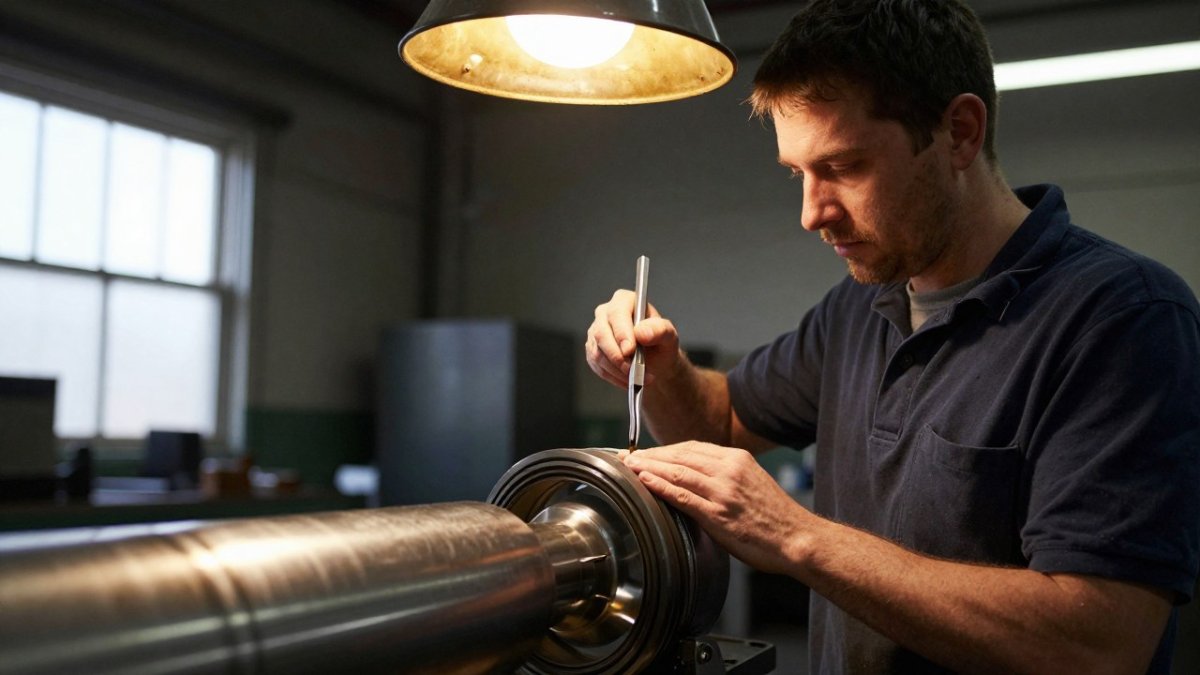
Machining hydraulic cylinder components turns the drawing into four precision parts, and each one has its own tolerance story. The barrel is honed to a smooth internal finish so the seals can travel without scoring. The piston is turned to match the bore with a controlled clearance. The rod is machined, sometimes chromed, and checked for straightness. The gland holds the rod seal and rod wiper in alignment.
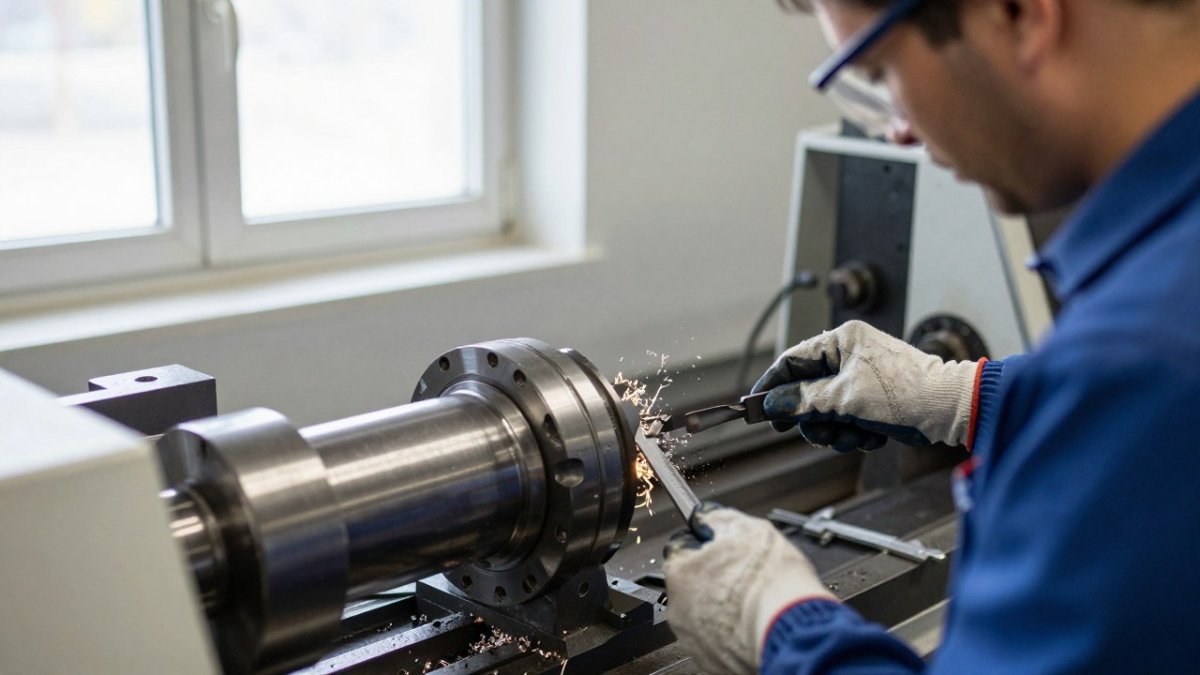
Manufacturers across the industry promote precision machining as the core of their cylinder capabilities. Carlson Hydraulics on CNC machining capability points to investment in advanced CNC equipment for custom cylinder components, and Hydraulic Cylinders, Inc. on custom design describes custom manufacturing built on precision-machined parts. We run that same logic in-house: if the barrel and piston clearances are not right, no seal on the shelf will save the assembly.
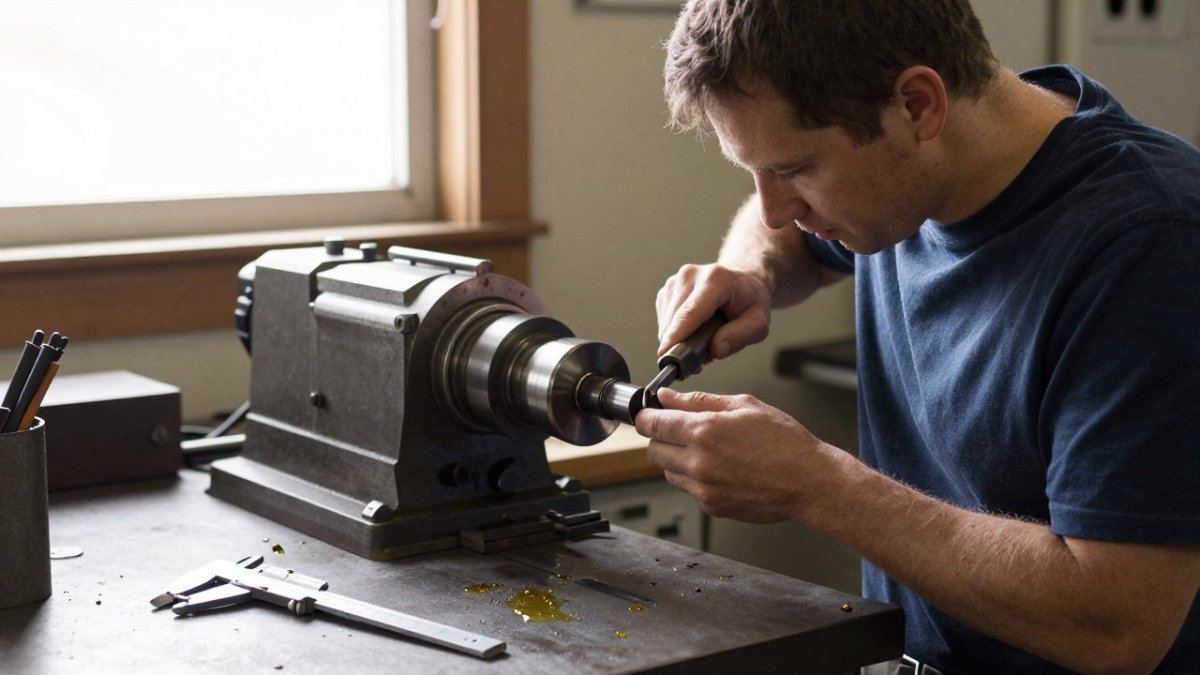
Our in-house machine shop handles custom machined parts and hard-to-find components.
Custom Welded Hydraulic Cylinders and Assembly
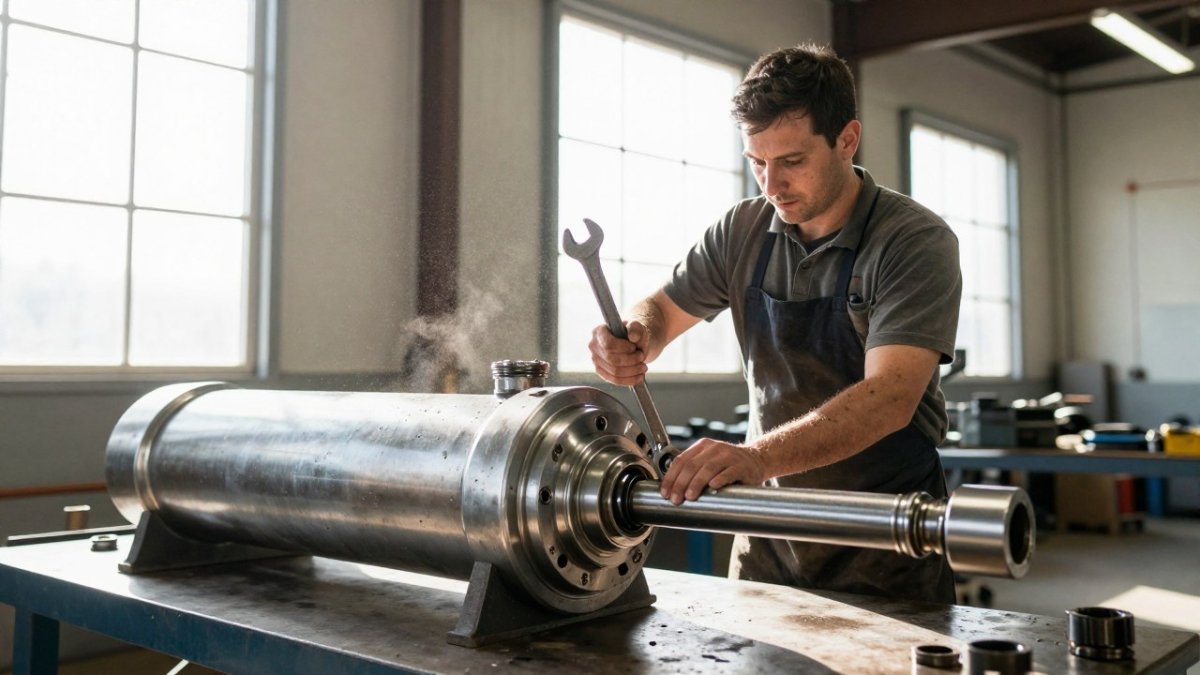
Assembly is where the individual parts come together into a finished cylinder, and every unit is checked before it leaves the shop.
Two configurations drive most of this work. A single-acting cylinder uses hydraulic pressure to extend and relies on gravity or a spring to retract. A double-acting cylinder drives both directions with pressure, which is why it dominates construction and agricultural equipment.
Assembly discipline matters more than most buyers realize, because a cylinder that fits the test stand but not the boom is still downtime.
Materials, Surface Finish, and Tolerances That Decide Service Life
Material and finish decisions are where a custom component either earns its service life or becomes a repeat repair.
Hydraulic Cylinder Repair Parts and Reverse Engineering Worn Components
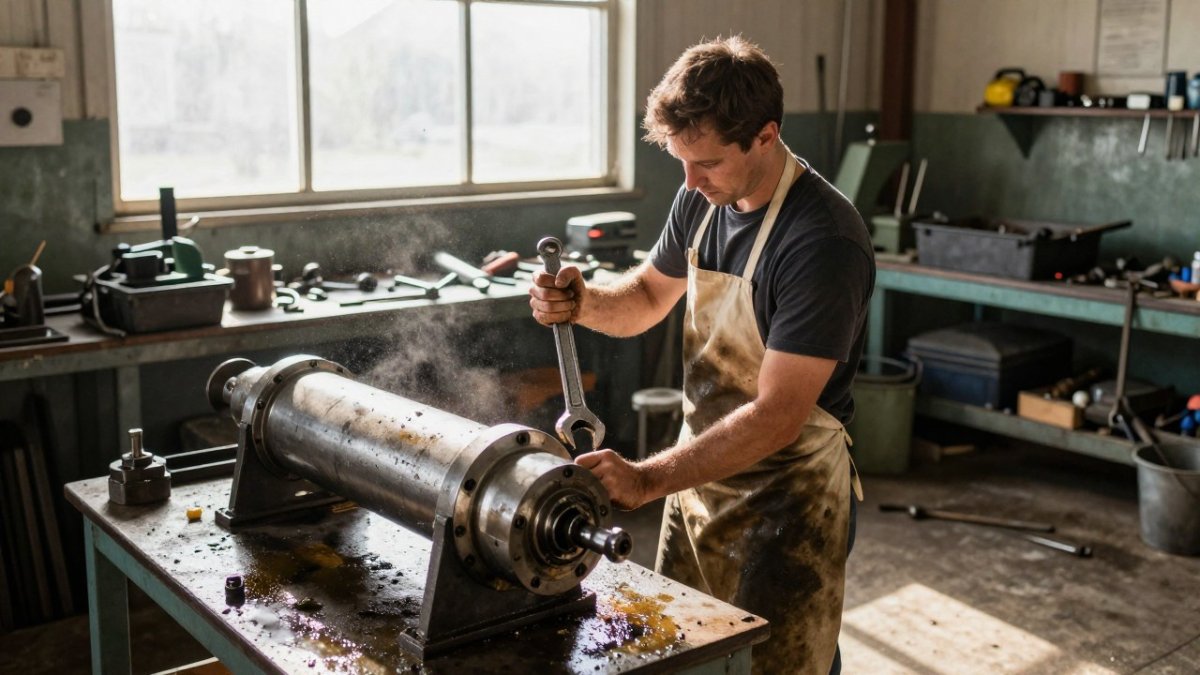
Reverse engineering is how we keep older equipment running when the original part number no longer exists. We measure the worn component, reconstruct the dimensions, account for the wear that has to be added back, and machine a replacement to the original specification.
Equipment that has been in service for many years often has no available OEM part. Brothers Hydraulics focuses on manufacturing hard-to-find and discontinued components.
Our shaft and hydraulic rod repair service and hydraulic cylinder rebuild and reseal service cover worn components and cylinders.
Inspection, Pressure Testing, and Acceptance Criteria
Watch out: skipping the full-stroke test under pressure hides rod-seal and gland-alignment problems that only appear when the rod travels through its whole stroke.
Request a Quote for Your Custom Cylinder Components
The fastest way to start is to send us the details: the machine, the failed or worn part, the operating pressure, and photos if you have them. From there we can tell you whether a component can be machined, a cylinder rebuilt, or a replacement fabricated to spec.
Brothers Hydraulics LLC has been doing this work since 2013, with fast turnaround times and competitive pricing on custom parts and repairs. We specialize in manufacturing hard-to-find or discontinued components. Review our full range of hydraulic and machining services to confirm what fits your job, then call or text us at (602) 675-1710 with photos of your cylinder or part.
Downtime does not wait for a convenient week. If a cylinder is down and the part is not in a catalog, send us the measurements and photos, and we will tell you what we can build. Brothers Hydraulics LLC combines precision lathe machining, custom parts fabrication, and cylinder rebuilds under one roof so your equipment gets back to work. Get started with Brothers Hydraulics LLC and put a hard-to-find part back into production.
Frequently Asked Questions
What information do I need to order custom hydraulic cylinder components?
Bring the bore diameter, rod diameter, stroke length, operating pressure, mounting configuration, and port sizes. If the original drawing exists, send it. If not, a worn part or a few measurements from the machine will usually get a machinist close enough to quote. Duty cycle and fluid type matter too, because they affect seal selection and surface finish.
Can hydraulic cylinder components be made from a sample or worn part?
Yes. Reverse engineering is standard practice for obsolete and discontinued cylinders.
How are custom hydraulic cylinder components inspected for quality?
Inspection covers dimensions, surface finish, and pressure integrity. Bore and rod diameters are measured against tolerance, chrome plating is checked for thickness and adhesion, and weld joints get visual and dye penetrant inspection where specified. The finished assembly is then pressure tested above its rated operating pressure to confirm the seals hold and there are no leaks at the ports or gland. Ask for the inspection record with the part; it is the difference between a documented build and a guess.
What drives the cost of custom hydraulic cylinder component manufacturing?
Cost comes down to size, material, tolerance, and quantity. Cost generally depends on size, material, tolerance, and quantity. One-off parts carry setup cost that a small batch spreads across units. Pricing at Brothers Hydraulics depends on the specification, quantity, and turnaround you need, so request a quote with your dimensions and duty cycle for an accurate figure.